Bearings for Industrial Automation and Robot Axis Fits
Why does a robot axis vibrate when the motor, the gearbox and the new bearing all test fine on the bench? In many maintenance reports the answer sits in the least visible place: the fit between the bearing ring, the shaft and the housing. When Bearings for Industrial Automation sit in a bore that is slightly too open, or on a shaft that is slightly too loose, every direction reversal moves the ring by a few microns. That small movement shows up as chatter, a positioning error, or a tone you can hear at the end of a stroke.
This article gives maintenance and mechanical teams a diagnosis order. It starts with what you can check without pulling the axis apart. It then explains how fit selection works under reversing loads, and it states when to stop and escalate. Our aim is to help you decide before replacement or redesign, not after.
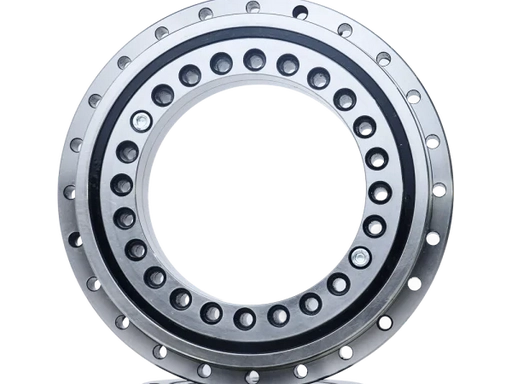
Separate the Symptom From the Suspected Cause
"The axis vibrates" is a symptom. "The bearing fit is loose" is a suspicion. Keep them apart in your notes, because the same symptom has several origins: servo tuning, a worn reducer, a loose coupling, a damaged raceway, or a fit problem. Automation bearing vibration that tracks direction changes rather than speed points toward looseness or lost preload, so record that first.
Write down four observations before touching anything:
When it appears: constant, only at reversal, only at one angular position, or only under load.
How it changed: sudden after a bearing swap or collision, or gradual over weeks.
What the controller reports: following error, overshoot at stop, or repeat positioning drift.
What you hear or feel: a click at reversal, a low rumble, or a high tone at speed.
Stop condition: if you hear grinding, feel heat at the bearing seat, or see metal debris in the grease, stop the axis. Running on a damaged raceway turns a fit problem into a housing and shaft repair.
Preliminary Checks Before You Disassemble
Work from the cheapest check to the most invasive. Most of these need only a torque wrench, a dial indicator and a flashlight.
Review recent changes. Was a bearing, motor, reducer or fastener replaced? Was the axis hit? Fit problems often begin right after a service event.
Check mounting bolts and clamp rings. Re-torque to the drawing value and note any bolt that turns easily. An uneven clamp load distorts a thin ring and mimics a fit fault.
Measure free play. Push and pull the axis by hand or with a dial indicator at the load point. Compare with the reading on a similar healthy axis.
Rotate by hand with the drive disengaged. Smooth and even suggests the raceway is intact. Tight spots or notchy rotation suggest damage, contamination or housing distortion.
Look for witness marks. Reddish-brown or black dust at the ring faces or seat edges (fretting) is physical evidence of micro-movement.
If free play is high but hand rotation is smooth and no fretting is visible, suspect the coupling, reducer or controller before the bearing seat. Do not condemn the bearing yet.
How Housing and Shaft Fit Selection Prevents Micro-Movement Under Reversing Loads
A bearing ring only carries load correctly when it stays fixed relative to its seat. Under steady one-direction load the ring is pressed into the seat and stays put. Under reversing load, the load vector swings across the seat. A ring with too little interference or poor seat geometry can creep, rock or lift slightly each time the load changes sign. This is the usual path behind robot axis bearings that start well and become unstable after a few hundred hours.
The right bearing fit tolerance for robots depends on which ring rotates, the load direction, the housing material, and whether the design relies on preload. The comparison below shows the logic. It states a qualitative direction only; the exact tolerance classes must come from the bearing drawing or catalog for the specific series.
| Fit condition | What happens under reversing load | What you may observe | Limit of this reading |
|---|---|---|---|
| Seat too loose | Ring creeps or rocks at each reversal; preload is partly lost | Click at reversal, fretting dust, growing free play, positioning drift | Similar signs can come from loose bolts or a worn reducer |
| Correct fit for the loaded ring | Ring stays fixed; rolling elements share the load evenly | Quiet reversal, stable repeat positioning | Only holds if seat geometry (roundness, squareness) is also good |
| Seat too tight | Ring is squeezed; internal clearance or preload shifts toward overload | Higher friction torque, heat, tight spots on hand rotation | Common with thin rings and soft housings; check temperature before blaming lubricant |
| Correct size, poor seat geometry | Contact is uneven; the ring flexes as it rotates | Vibration tied to angular position, once per revolution | Needs measurement of the seat, not just a diameter check |
| Soft or thin housing | Housing grows or distorts under load, opening the fit | Problem appears only at high load or high temperature | A tighter fit alone may not fix it; housing redesign may be needed |
Where this applies: axes with frequent reversal, such as robot joints, rotary tables and pick-and-place turntables. Where it does not: if the raceway is already pitted or the rolling elements are damaged, correcting the fit will not restore smooth running. Replace the bearing first, then fix the seat.
Product choice interacts with fit. Precision Crossed Roller Bearings carry radial, axial and moment loads in one slim section and are often set with slight negative clearance (preload) to remove wobble. That preload only holds when the seat does not open up. Thin rings also follow the shape of the seat, so seat roundness matters more than it does for a heavy section ring.
Diagnostic Branches: What Each Observation May Mean
Use this table after the preliminary checks. Treat each row as a hypothesis to test, not a verdict.
| Observation | Possible meaning | Check next | Stop or escalate when |
|---|---|---|---|
| Click or knock at reversal, fretting dust at ring face | Ring is moving in its seat | Measure shaft and housing diameters; check clamp ring and bolt torque | Seat is visibly worn or oval; seat repair or redesign is needed |
| Free play high, smooth hand rotation, no fretting | Coupling, reducer backlash or lost preload | Test coupling and reducer separately; verify preload set-up | Preload specification is unknown; request it from the bearing supplier |
| Vibration once per revolution, tied to angle | Seat out of round, or contamination on a face | Clean faces; measure roundness and face runout of the seat | Runout on the seat exceeds the drawing limit |
| Heat, high friction torque, notchy rotation | Over-tight fit, distortion, or contamination | Loosen clamp bolts and re-check; look at lubricant condition | Torque does not drop after unloading the clamp |
| Vibration only at high load or after warm-up | Housing deflection or thermal change at the seat | Compare cold and hot free play; check housing stiffness | Housing material or wall thickness is the limiting factor |
Cause, Corrective Action and Result Check
Once one branch is supported by evidence, tie the action to it and decide in advance how you will verify the result.
Evidence points to a loose seat: restore the seat to its specified fit (by re-machining, sleeve, or part replacement) and install a new bearing. Re-using a ring that has already crept rarely works, because the faces are worn. Result check: free play returns to the healthy-axis reading, and the reversal click is gone.
Evidence points to an over-tight fit: correct the seat dimensions and check that bolt torque is even. Result check: friction torque and operating temperature fall after a short run.
Evidence points to seat geometry: correct roundness and squareness before the new bearing goes in. Result check: the once-per-revolution vibration disappears at the same speed.
Evidence is mixed: change one thing at a time and keep records. If two variables change together, you will not know which one worked.
A worked scenario. A robot joint shows positioning drift after a bearing swap, with a faint click at reversal. Free play is higher than on the neighboring axis, and fine reddish dust sits at the ring face. Bolt torque is correct and the reducer tests normally. The likely path: the housing bore is slightly open, the ring creeps, and preload is partly lost. After machining a corrected seat and fitting a new bearing, the check is simple: the dial indicator reading matches the healthy axis, and positioning repeats over a full duty cycle. If the drift remains, return to the controller and reducer branches.
For reference, we have supplied Rotary Table Bearings in P2 precision for gear grinding in Mexico, and crossed roller bearings for semiconductor equipment in Germany. Both are applications where reversing or low-speed motion makes seat stability matter. These cases show the type of equipment involved. They do not mean a specific fit will fix every axis.
Common Mistakes When Chasing Axis Vibration
Swapping the bearing first. A new bearing in a worn seat repeats the failure, often faster.
Treating every vibration as a fit problem. Controller tuning, coupling wear and reducer backlash produce similar signs.
Checking diameter only. Roundness, squareness and face runout of the seat also decide whether the ring sits true.
Tightening bolts to cure play. Over-torquing a thin ring distorts it and adds friction without correcting the seat.
Ignoring temperature. A fit that is correct cold can open or tighten when the housing warms, especially with different shaft and housing materials.
Prevention and Support Boundary
Recurrence is mostly a records problem. Log the seat dimensions, bolt torque, preload setting and free-play reading at each bearing replacement. Then the next vibration complaint starts with data instead of guesses. Our Quality Control process includes 100% inspection before shipment, with runout controlled within 1.5 μm, so a bearing's own geometry is documented. That narrows the search to the mounting, the seat and the drive train.
For harmonic drive and robot joint designs, see our notes on Bearings for Industrial Robotics. If your axis is a rotary table or turntable, the BRTM Series Rotary Table Bearings page lists the dimensional series.
Escalate when:
The seat is worn, oval or damaged and no corrected dimension is available.
Vibration remains after a corrected seat and a new bearing.
The fit recommendation for your ring and load case is unclear from the drawing.
Heat or debris appears after the repair.
What to send for support: the bearing designation and drawing, shaft and housing diameters with measured roundness, housing material, load and reversal pattern, preload setting, free-play readings before and after, photos of any fretting, and the operating temperature. Our products carry a 12-month warranty from the date of shipment, and with the above information we can separate a bearing issue from a mounting issue honestly.
If you are reviewing bearings for industrial automation and want a second opinion on seat fit before you rework a housing, send us your drawing and symptoms and get a quote or selection advice from the BY Bearings engineering team.
 +8618939019135
 sales@bybearings.com
 +8618939019135