Custom Crossed Roller Bearings: Quote & Cost Drivers
As a sourcing manager or design engineer, evaluating quotes for custom crossed roller bearings can be a complex task. When quotations from different suppliers show significant price variations, the temptation is to choose the lowest bidder. However, this approach carries substantial risk. A lower price often reflects hidden compromises in material purity, manufacturing tolerances, heat treatment protocols, or inspection procedures—compromises that can lead to premature equipment failure, costly downtime, and damage to your brand's reputation.
Understanding the factors that drive the cost of non standard bearings is essential for making an informed decision that balances budget with long-term performance and reliability. As a leading crossed roller bearing manufacturer, we believe in transparency. This guide breaks down the key variables in a bearing quotation so you can compare suppliers effectively and secure a solution that delivers true value.
Deconstructing Your Bearing Quote: Key Cost Variables
When you receive a quote, the final price is an aggregate of multiple manufacturing and service-related costs. A trustworthy supplier should be able to explain how these elements contribute to the total. Here is a breakdown of the most significant cost drivers you will find in a quote for a custom bearing project.
Tooling & Setup Fees: For any custom design, initial costs are incurred for creating specific tooling, fixtures, and programming for CNC machines. This is typically a one-time charge (NRE - Non-Recurring Engineering) per design. The complexity of the bearing's geometry directly influences this cost.
Raw Material Grade & Sourcing: The type and quality of steel are foundational. We use high-purity GCr15 (SAE 52100) bearing steel as our standard. The cost is influenced by raw material market prices and the supplier's procurement volume. Quotes based on lower-grade or unverified steel will be cheaper but offer inferior performance and lifespan.
Precision Tolerance (Grade): The required precision level (e.g., P5, P4, P2) is a major cost factor. Achieving higher precision, like P2, demands more sophisticated grinding machines, slower machining cycles, and more intensive measurement processes, all of which increase production costs.
Heat Treatment Process: Proper heat treatment is vital for achieving the desired hardness, dimensional stability, and microstructure. Costs vary based on the method (e.g., salt bath quenching vs. vacuum furnace), cycle time, and the stringency of process control. A compromised heat treatment saves money but drastically reduces bearing life.
Surface Finish & Grinding: The smoothness of the raceways directly impacts friction, noise, and vibration. Achieving a fine surface finish requires multiple grinding and superfinishing stages, which adds machine time and labor costs.
Inspection & Testing Requirements: While standard inspection is part of any good manufacturing process, custom requirements add cost. This can include 100% runout inspection (our standard), specific torque testing, noise/vibration analysis, or third-party certification reports. Each added verification step increases the final price.
Order Volume (Quantity): Economies of scale play a significant role. Larger production runs spread the initial setup costs over more units, reducing the per-piece price. Small, one-off batches will always have a higher unit cost. At BY Bearings, we offer flexible production with no MOQ to support projects from prototyping to mass production.
Material Grade and Heat Treatment: The Foundation of Performance
The operational life and load-carrying capacity of a bearing begin with its material. For high-demand applications, there is no substitute for clean, high-grade bearing steel. We mandate the use of GCr15 (SAE 52100) steel for our Precision Crossed Roller Bearings, a material known for its excellent balance of hardness, wear resistance, and fatigue strength.
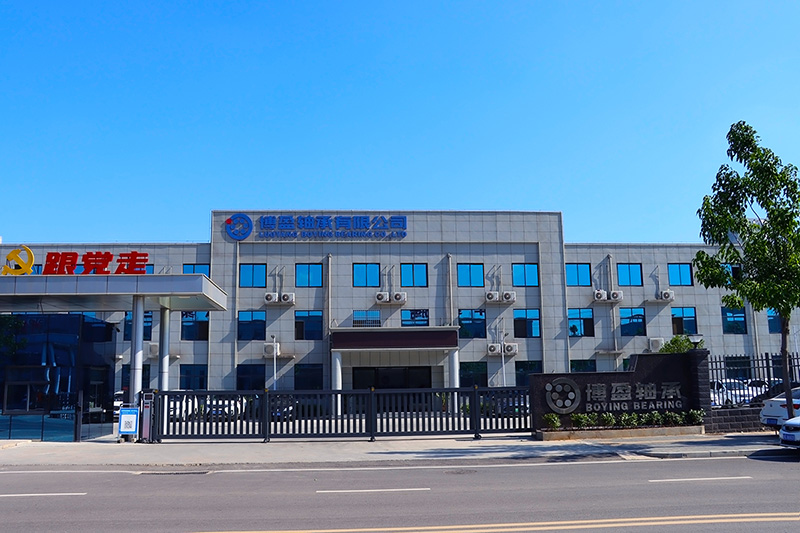
However, simply specifying the material is not enough. Verification is key. Each batch of raw material that enters our 13,500 m² intelligent factory undergoes spectrographic analysis to confirm its chemical composition is within specification. This prevents impurities that could become stress concentration points and lead to early failure.
After initial machining, the components undergo a precisely controlled heat treatment process. This is arguably the most critical stage in bearing manufacturing. Our automated heat treatment line ensures each component achieves:
Optimal Hardness: We target a raceway and roller hardness of HRC 60-64. This level is hard enough to resist plastic deformation under heavy loads but not so brittle that it becomes prone to fracture.
Stable Martensitic Microstructure: Post-treatment, we perform metallographic examinations to ensure a fine, uniform martensitic structure with well-distributed carbides. This microstructure is essential for high rolling contact fatigue strength and dimensional stability over the bearing's life.
A lower-cost quote may stem from a supplier skipping these verification steps or using a less-controlled heat treatment process. While the bearing may look identical, its internal structure will be weaker, leading to a drastically shorter service life under load.
Precision Tolerances and Runout Control: Where Accuracy is Defined
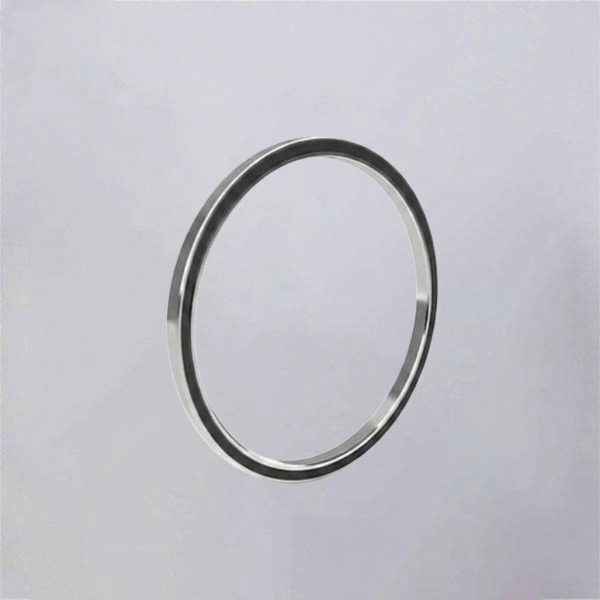
The "precision" of a bearing is not a subjective term; it is defined by international standards that dictate the permissible deviations in dimensions and running accuracy. Choosing the right precision grade is a balance between application requirements and budget. For a custom bearing, this choice directly impacts machining time and cost.
Our capabilities as a precision bearing OEM span all common accuracy grades, including P5, P4, and P2. Here’s how they differ and where they are typically used:
| Precision Grade | Typical Total Runout | Key Characteristics | Common Applications |
|---|---|---|---|
| P5 | Standard precision | Good running accuracy for general industrial machinery. Balances cost and performance. | Robotic joints, indexing tables, general automation equipment. |
| P4 | High precision | Tighter tolerances for dimensional and running accuracy. Reduced wobble and vibration. | Rotary Table Bearings for CNC machining centers, high-speed spindles. |
| P2 | Ultra-precision | The highest standard of accuracy. Minimal runout for the most demanding positioning tasks. | Gear grinding machines, turn-mill centers, semiconductor wafer handling equipment, medical imaging systems. |
A significant cost driver is runout—the total deviation of a rotating surface from its ideal axis. For applications like Bearings for Machine Tools, excessive runout leads to tool chatter, poor surface finish, and dimensional inaccuracies in the workpiece. We enforce a strict maximum runout control within 1.5 μm for our highest-precision bearings and perform 100% runout inspection before any product is shipped. This commitment to quality, backed by our ISO 9001 certified system, ensures that the bearing you receive performs exactly as specified.
Avoiding Common Pitfalls in Custom Bearing Sourcing
With over 15 years of experience in manufacturing high precision bearings, I've seen many projects delayed or compromised by avoidable sourcing mistakes. When evaluating suppliers, be vigilant for these common pitfalls.
Mistake 1: Focusing Solely on Unit Price. The cheapest bearing is rarely the least expensive. Consider the Total Cost of Ownership (TCO), which includes potential downtime, maintenance labor, and the cost of premature replacement. A slightly more expensive but reliable bearing from a reputable supplier almost always offers a lower TCO.
Mistake 2: Providing Vague or Incomplete Drawings. The success of a custom project hinges on clear communication. Ensure your RFQ includes detailed drawings with all critical dimensions, tolerances, material specifications, preload requirements, and any special features like mounting holes or seals. Ambiguity leads to incorrect quotes and faulty prototypes.
Mistake 3: Overlooking Supplier Quality Systems. Ask for proof of quality certifications. A supplier compliant with ISO 9001:2015, like BY Bearings, has demonstrated that they have a documented, repeatable process for ensuring quality from raw material intake to final inspection. Our strict Quality Control is your assurance of consistency.
Mistake 4: Accepting Quotes Without Interchangeability Data. If you are replacing a bearing from a major brand (e.g., THK, IKO, INA), your custom supplier should be able to guarantee full dimensional and functional interchangeability. This avoids costly modifications to your assembly. We provide this guarantee, often with a much shorter lead time of 3–6 weeks compared to the 4–8 months common with larger brands.
Mistake 5: Not Clarifying Inspection Documentation. Always confirm what a bearing inspection report will include. Will it provide actual measurement data for your specific batch? Does it include material certificates and heat treatment curves? A comprehensive report provides traceability and peace of mind.
Beyond the Bearing: Supplier Capabilities That Impact Your Project
The product is only part of the equation. The capabilities of your manufacturing partner are just as important for the success of your project, especially for custom designs.
A strong partner offers more than just production. They provide engineering support, helping to refine your design for manufacturability and optimal performance. They have the production capacity—like our 15,000 sets per month—to scale with you from prototype to full-scale production without bottlenecks. Their global experience, such as our work supplying P2 rotary table bearings to customers in Mexico for gear grinding or special crossed roller bearings to German semiconductor firms, demonstrates an ability to meet diverse international standards and logistical needs.
Ultimately, a custom bearing is a collaborative effort. Choosing a supplier who acts as a true partner, offering design expertise, flexible MOQs, and a transparent process, is the best way to mitigate risk and ensure your equipment performs reliably for years to come.
If you are evaluating suppliers for a custom bearing project, submit your drawings to our engineering team. We can provide a detailed quote that breaks down these cost drivers for your specific design. Get a quote today.
 +8618939019135
 sales@bybearings.com
 +8618939019135