Cut Automation Downtime Costs With Better Bearings
A bearing failure on your automated production line is never just a component problem. It's a full-blown production crisis. The initial savings from a low-cost, unverified bearing supplier evaporate the moment your line stops, and the hidden costs of downtime, emergency labor, and scrapped material begin to pile up. Before issuing your next RFQ, it is essential to consider what you might be overlooking in the total cost of ownership.
As a specialized Bearing Supplier for Automation Equipment, we see firsthand how sourcing decisions based solely on unit price lead to predictable and expensive failures. A bearing is not a commodity; it is a core component dictating the precision, reliability, and lifespan of your machinery. Our focus at BY Bearings is on delivering precision-engineered bearings that reduce your operational risks. Our entire manufacturing process is managed under a strict Quality Control system certified to ISO 9001:2015, ensuring every component meets demanding performance standards from day one.
The Five-Year Cost Model: Beyond the Initial Purchase Price
Experienced operations managers know that the sticker price of a bearing is a small fraction of its true lifetime cost. The real expense is tied to performance and reliability. To illustrate this, let's analyze the industrial bearing lifecycle cost over a five-year period. How much does bearing downtime cost? The answer depends on your production value, but even a conservative estimate reveals a stark difference between a low-cost part and a high-precision, reliable component.
Here is a simplified model to help you calculate the potential financial impact. The key is to separate confirmed costs from estimated operational costs, which you can adjust for your specific facility.
Total Cost of Ownership (TCO) Comparison: Standard vs. High-Precision Bearings
| Cost Factor | Example: Low-Cost Bearing | Example: BY Bearings High-Precision Bearing | Notes for Your Calculation |
|---|---|---|---|
| Initial Purchase Price | $150 (Confirmed Cost) | $250 (Confirmed Cost) | Your actual RFQ price. |
| Expected Lifespan | 18 Months | 60+ Months | Based on material quality, precision, and load ratings. |
| Replacements in 5 Years | 3 (at 18, 36, 54 months) | 0 | Calculated from expected lifespan. |
| Total Purchase Cost (5 Yrs) | $600 (4 units x $150) | $250 (1 unit x $250) | Initial unit + all replacements. |
| Bearing Replacement Cost (Labor) | $1,200 (3 replacements x 4 hrs x $100/hr) | $0 | Estimate your technician's hourly rate and time to replace. |
| Downtime Cost per Event | $20,000 (4 hours downtime x $5,000/hr revenue loss) | $0 | Estimate your production line's value per hour. |
| Total Downtime Cost (5 Yrs) | $60,000 (3 failures x $20,000) | $0 | The single largest hidden cost. |
| Total 5-Year Cost | $61,800 | $250 | A stark contrast in operational expense. |
This model makes the business case clear. The upfront savings on a cheaper bearing are quickly erased by a single downtime event. A higher-quality bearing from a reliable supplier is an investment in production continuity. It eliminates the variables of premature failure, emergency maintenance, and lost revenue.
Key Bearing Specifications That Prevent Failure in Automation
In high-speed, high-accuracy applications like robotics and CNC machinery, bearing failure is often traced back to specific technical deficiencies. Focusing on the right specifications during procurement is your best defense against unplanned stops. These are the technical details that matter most for automation equipment bearings.
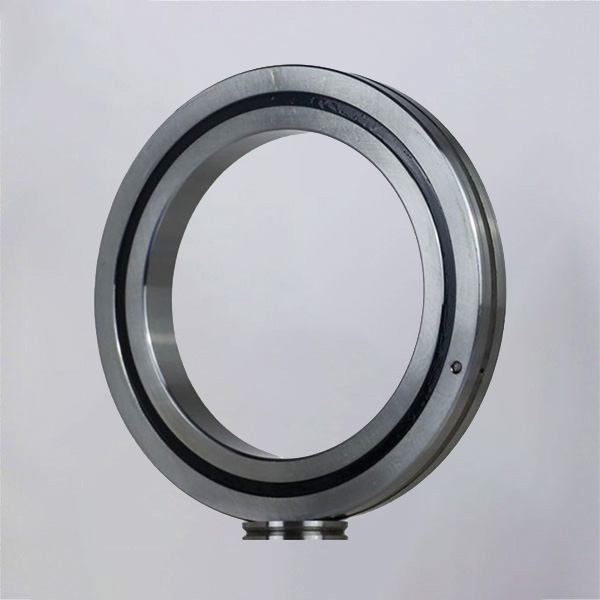
Runout Control: Runout is the measure of how much a bearing deviates from its intended plane of rotation. Excessive runout creates vibration, noise, and positioning errors. For sensitive applications like semiconductor wafer handlers or medical imaging devices, this is unacceptable. At BY Bearings, we enforce maximum runout control within 1.5 μm and perform 100% inspection before shipment to guarantee this tolerance. This was a critical factor for a German customer using our Precision Crossed Roller Bearings in their semiconductor equipment, where micro-vibrations are not tolerated.
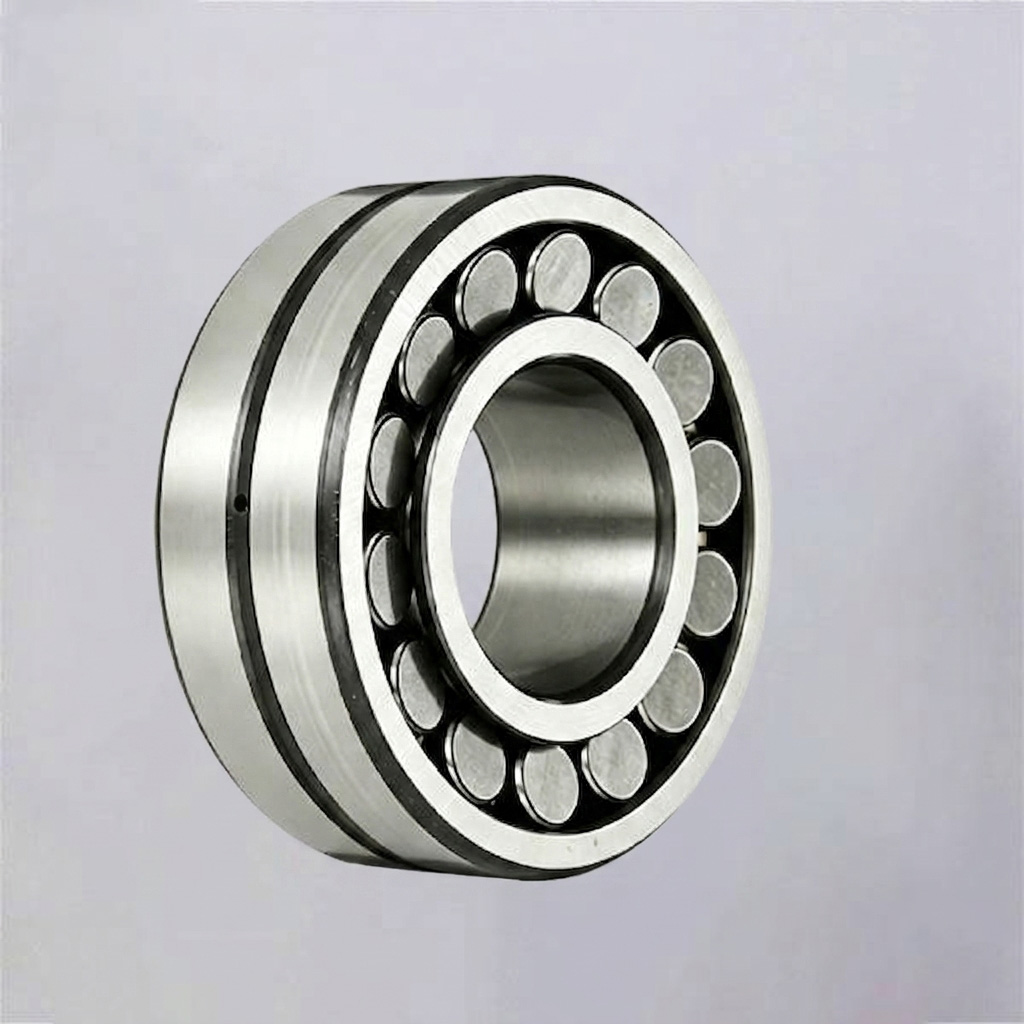
Material Purity and Heat Treatment: The fatigue life of a bearing depends entirely on its material and microstructure. We use only high-grade GCr15 (SAE 52100) bearing steel, which is verified for chemical composition. After processing on our automated heat treatment line, we conduct metallographic analysis to ensure a stable martensitic structure with a hardness of HRC 60-64. This prevents premature wear and brinelling under heavy loads.
Optimized Preload (Negative Clearance): In applications using robotic arm bearings, any "wobble" or backlash in the joints destroys repeat positioning accuracy. This is solved with a precisely calculated preload. Our crossed roller bearings and harmonic drive bearings are designed with an optimized negative clearance that eliminates internal play, delivering the high rigidity and micro-radian positioning accuracy required for modern robotics.
Common Sourcing Mistakes That Lead to Production Halts
Choosing a bearing supplier involves more than comparing spec sheets. The partner's capabilities, quality systems, and supply chain reliability are just as important as the component's technical data. Avoiding these common mistakes can protect your production schedule and budget.
Ignoring Supplier Certifications: A supplier's claim of "high quality" is meaningless without proof. A certified quality management system like ISO 9001:2015 demonstrates a commitment to repeatable processes, traceability, and continuous improvement. We also hold CE and RoHS certifications, ensuring our products meet international safety and environmental standards.
Overlooking Lead Time and MOQ Flexibility: Long lead times from major brands (often 4–8 months) can create significant supply chain bottlenecks. Relying on a single source with high minimum order quantities (MOQs) adds further risk. With a monthly capacity of 15,000 sets from our 13,500 m² intelligent factory, we offer a rapid 3-6 week turnaround and no MOQ, providing a reliable alternative for OEMs.
Accepting "Equivalent" without Functional Verification: A bearing may be dimensionally interchangeable but functionally inadequate. Factors like friction torque, stiffness, and runout accuracy can vary widely between manufacturers. We support OEMs by providing full dimensional and functional interchangeability with major brands, backed by our 100% pre-shipment inspection data.
Failing to Plan for Customization: Standard catalog parts do not fit every design. Your supplier should be capable of providing modifications like special dimensions, materials, or mounting holes without excessive cost or lead time. As an experienced OEM/ODM partner for customers in over 65 countries, we have the engineering capability to deliver tailored Precision Bearing Solutions.
Application-Specific Solutions for Robotics and CNC Machinery
Different automation challenges require different bearing solutions. A one-size-fits-all approach leads to over-engineering or, worse, premature failure. Our engineering team works with customers to select the ideal bearing for the specific load, speed, and precision requirements of their equipment.
For CNC Rotary Tables and Turn-Mill Centers: These machines subject bearings to heavy combined radial, axial, and overturning moment loads. This can cause spindle chatter and ruin surface finishes. Our BRT series Rotary Table Bearings and crossed tapered roller bearings are engineered with P4/P2 precision and high tilting stiffness to maintain accuracy under dynamic multi-axis loads. A gear grinding machine manufacturer in Mexico successfully uses our P2 grade YRT bearings to achieve superior gear profile accuracy.
For Multi-Axis Robotic Arms: The primary challenges are joint backlash, heavy deadweight, and thermal drift, all of which compromise positioning accuracy. Our ultra-thin, high-rigidity RA, RB, and RU series crossed roller bearings and harmonic drive bearings provide a compact solution. They deliver zero-backlash performance and stable operation, essential for pick-and-place, welding, and assembly robots.
For Direct Drive (DD) Motors: High friction torque and heat buildup can limit the dynamic response and efficiency of DD motors. We customize low-friction torque crossed roller bearings with precision-matched rollers and specialized lubricants to ensure smooth rotation and stable thermal performance, even during rapid acceleration and deceleration cycles.
Our experience across these demanding applications ensures we can provide not just a part, but a complete, reliable solution that improves the performance of your equipment.
If you are re-evaluating your bearing supply chain to reduce total ownership costs and improve machine reliability, our engineering team is ready to assist. Send us your technical requirements or drawings to get a quote and a detailed technical proposal.
 +8618939019135
 sales@bybearings.com
 +8618939019135