Find a Precision Bearing Supplier for Your Production Needs
Choosing a new supplier for precision bearings involves more than just matching technical specifications. One of the most significant risks purchasing managers and engineers face is a mismatch in production capabilities. Committing to a supplier only to discover restrictive Minimum Order Quantities (MOQs) or lead times that extend months beyond your project deadline can derail production, inflate costs, and damage your reputation. Before you issue a purchase order, it's essential to verify that your partner's sourcing model aligns with your reality—whether you need a single prototype, a small batch for a pilot run, or full-scale production.
As a global precision bearing supplier, we understand that supply chain agility is as important as rotational accuracy. Miscalculations in delivery schedules and order volumes are a common point of failure. This guide addresses the most frequent questions we receive about MOQ and lead times, providing clear boundaries to help you select a manufacturing partner who can meet your demands for precision, quality, and punctuality.
Stock, Small-Batch, or Custom Production: Which Sourcing Model Fits Your Needs?
Understanding the different sourcing models is the first step in aligning supplier capabilities with your project requirements. Each approach—stock supply, small-batch orders, and full custom production—serves a different purpose and comes with distinct trade-offs in terms of speed, cost, and flexibility. Choosing the wrong model can lead to unnecessary inventory costs or critical production delays.
At BY Bearings, our "no MOQ" policy provides significant flexibility, especially for clients in R&D or those requiring specialized, low-volume components. The following table breaks down when each sourcing model is most practical.
| Sourcing Model | Best For These Scenarios | Typical Lead Time | MOQ & Cost Profile |
|---|---|---|---|
| Stock / Standard Supply | Urgent MRO replacements, standard machine builds, and applications using common bearing series where immediate availability is the top priority. | 1-2 weeks (if in stock) to 45-60 days (for scheduled production runs). | MOQ: Often flexible. BY Bearings has no MOQ. Cost: Lowest per-unit cost due to economies of scale. |
| Small-Batch Orders | Prototyping, R&D, pilot production runs, and manufacturing specialized equipment like medical devices or semiconductor handling systems. | 45-60 days. The process is similar to standard production, just for a smaller quantity. | MOQ: Varies by supplier. We offer no MOQ, making this highly accessible. Cost: Higher per-unit cost than bulk orders but avoids large capital outlay. |
| Custom OEM / ODM Production | Unique applications requiring non-standard dimensions, special mounting holes, specific materials, integrated seals, or unique preload/clearance values. Ideal for creating functional replacements for Tier-1 brands with long lead times. | 6-8 weeks, including design confirmation, tooling (if needed), and production. This is significantly faster than the 4–8 month lead times of many major brands. | MOQ: Flexible. We support OEM/ODM with no MOQ. Cost: Highest initial cost due to engineering and setup, but optimized for performance and long-term value. |
Key Factors That Influence Bearing Lead Times
A supplier’s quoted lead time is not an arbitrary number; it is the sum of several meticulous manufacturing and quality assurance stages. Understanding these steps helps you plan your procurement timeline more accurately and appreciate why true precision cannot be rushed. Rushing production often means compromising on material verification or inspection, which can lead to premature failure in the field.
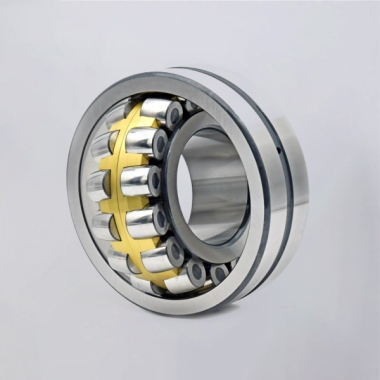
- Material Sourcing and Verification: The process begins with acquiring high-grade raw materials. We use premium GCr15 (SAE 52100) bearing steel. Every batch undergoes spectrographic analysis to verify its chemical purity before it ever enters our production line. Delays in the global steel supply chain can occasionally impact this initial step.
- CNC Machining and Heat Treatment: Raw steel is forged and then precision-machined into rings and rollers. Following this, components go through a critical heat treatment process in our automated line to achieve optimal hardness (HRC 60-64) and a stable martensitic microstructure. This stage is fundamental to the bearing's load capacity and fatigue life.
- Precision Grinding and Finishing: This is the most time-intensive phase. To achieve high precision levels like P5, P4, and even P2, components are ground with extreme care. Achieving runout control within 1.5 μm requires multiple passes and constant measurement, a process that defines the final accuracy of the bearing.
- Assembly and Quality Inspection: Finally, components are cleaned, assembled, and lubricated. Every single bearing we produce undergoes 100% inspection before shipment. This includes checks for runout, dimensions, and rotational torque. Our entire Quality Control system is fully compliant with ISO 9001:2015 standards, ensuring that the product you receive meets every specification.
Common Sourcing Mistakes and How to Avoid Them
Over my 15+ years in precision bearing manufacturing, I've seen recurring sourcing mistakes that lead to project delays and budget overruns. By being aware of these common pitfalls, your engineering and purchasing teams can make more informed decisions and build a more resilient supply chain.
Here are five frequent errors to avoid:
- Assuming "Standard Series" Means "Always In Stock": While a bearing may have a standard designation (e.g., an RU series crossed roller bearing), most high-precision manufacturers produce in scheduled batches rather than holding vast inventory. Always confirm stock levels and production schedules instead of assuming availability.
- Focusing Only on Per-Unit Price, Not Total Cost of Ownership: A cheaper bearing that fails prematurely results in costly downtime, repairs, and reputational damage. Sourcing from a certified manufacturer with transparent Precision Bearings Quality Control ensures reliability. For example, our bearings for medical imaging systems are chosen for their long-term stability, which minimizes service interruptions.
- Overlooking the Value of a Flexible MOQ: Many large suppliers enforce high MOQs, forcing you to buy hundreds of units for a project that only needs ten. This ties up capital in unnecessary inventory. A supplier with no MOQ bearings, like BY Bearings, allows you to order exactly what you need for prototypes, small production runs, or service parts.
- Not Providing Complete Technical Information for Custom Orders: For any OEM or custom bearing manufacturing, delays are most often caused by incomplete drawings or unclear requirements. Ensure your RFQ includes detailed drawings, load conditions, operating environment, rotational speed, and desired preload or clearance to get an accurate quote and timeline.
- Ignoring Supplier Production Capacity and Certifications: Before committing to a large order, verify the supplier's capacity. Our 13,500 square meter intelligent factory has a monthly capacity of 15,000 sets, ensuring we can scale with your needs. Furthermore, confirming certifications like ISO 9001, CE, and RoHS from the start prevents quality issues down the line.
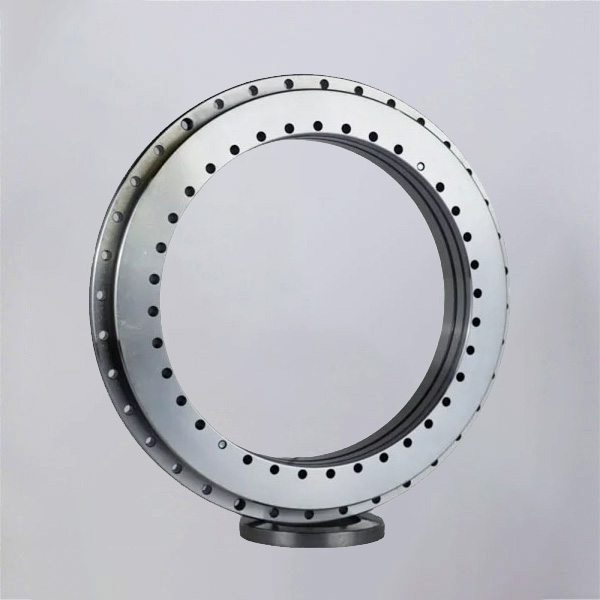
How We Balance Manufacturing Speed, Flexibility, and Precision
Achieving a short bearing lead time without compromising on quality requires a synthesis of modern infrastructure, deep expertise, and a customer-focused approach. At BY Bearings, we have structured our operations to address the common pain points of the B2B market, particularly the long waits and inflexibility associated with Tier-1 brands.
Our ability to deliver P4 and P2 grade Rotary Table Bearings to a gear grinding machine builder in Mexico or provide specialized crossed roller bearings for semiconductor equipment in Germany stems from our core strengths:
- Advanced Manufacturing Facility: Our 13,500 m² factory is equipped with dedicated CNC workshops and an automated heat treatment line. This vertical integration gives us direct control over every critical production stage, from raw material to final inspection, enabling us to manage timelines effectively.
- Responsive OEM and Interchange Solutions: We specialize in providing dimensionally and functionally interchangeable alternatives to major brands like THK, IKO, and INA. Where they may quote 4–8 months, our agile production system allows for a 3–6 week turnaround on many custom and standard orders. This is a direct solution for companies facing supply chain bottlenecks.
- Proven Global Track Record: With over 15 years of experience, we have exported to over 65 countries and earned the trust of more than 500 B2B customers. Our CE and RoHS certified products are used in demanding applications, including Bearings for Industrial Robotics, CNC rotary tables, and direct-drive motors. This extensive experience ensures we understand the quality and documentation requirements of international clients.
Ultimately, selecting the right crossed roller bearing supplier is a strategic decision. It requires a partner who not only manufactures a high-quality component but also functions as a reliable link in your global supply chain.
If you have specific requirements for lead time or order volume, we encourage you to send us your technical drawings. Our engineering team can provide a detailed quote and production schedule tailored to your project. Please get a quote to start the conversation.
 +8618939019135
 sales@bybearings.com
 +8618939019135