High Precision Crossed Roller Bearings: Thermal Error Limits
What thermal error limit should a rotary assembly accept?
Machine builders often ask the same question during rotary-axis validation: when does a small bearing temperature rise become large enough to affect positioning, torque, or part quality? With Precision Crossed Roller Bearings, the answer is not a single temperature value. The usable limit depends on the temperature difference between rings, the bearing mounting method, preload condition, housing and shaft materials, lubrication drag, duty cycle, and the positioning error permitted by the machine.
High Precision Crossed Roller Bearings carry radial, axial, and moment loads in one compact arrangement. That makes them suitable for robot joints, inspection tables, semiconductor equipment, direct-drive axes, and compact rotary assemblies. It also means thermal changes can influence several accuracy characteristics at once. A ring that expands differently from its mating structure can alter internal clearance or preload. The result may be higher torque, unstable repeat positioning, or rotary axis thermal drift.
The practical decision is simple: do not define the thermal limit only by bearing temperature. Define it by whether the rotary axis still meets its required torque, runout, repeatability, and positioning results after reaching stable operating temperature. A bearing may run without visible damage while the axis no longer meets its accuracy target.
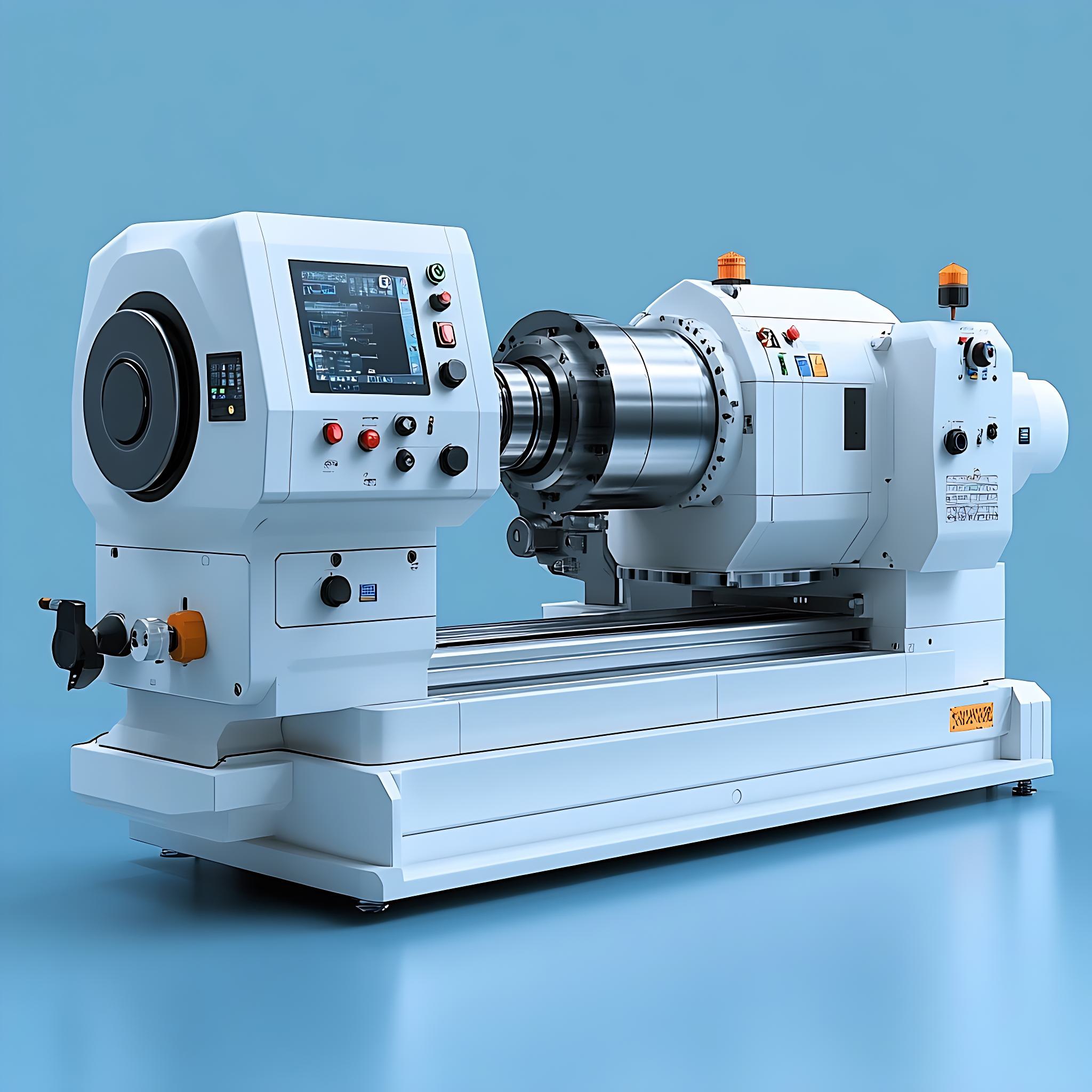
BY Bearings supplies crossed roller bearings, harmonic drive bearings, crossed tapered roller bearings, rotary table bearings, slew bearings, thin section bearings, spherical roller bearings, cylindrical roller bearings, and thrust bearings. For accuracy-sensitive projects, our ISO 9001 quality system includes 100% inspection before shipment, with runout controlled within 1.5 μm for applicable precision bearing requirements. This inspection supports incoming validation, but the final thermal performance must still be verified in the customer’s full assembly.
Boundary: answers when temperature rise, unequal ring expansion, and lubricant drag begin to compromise preload and positioning accuracy.
The boundary is reached when thermal effects cause a measurable loss of the machine’s approved positioning or torque margin. Heat itself is not automatically a failure condition. The concern begins when temperature creates a preload shift that changes axis behavior during the working cycle.
| Thermal condition | What changes in the bearing system | Likely machine symptom | Action before production release |
|---|---|---|---|
| Both rings warm at a similar rate | Overall growth may occur, while the internal fit and preload can remain relatively stable. | Axis zero position may move gradually, but torque may remain consistent. | Measure axial or radial position drift at stable temperature and compensate only if the machine control strategy permits it. |
| Inner and outer rings warm unequally | Unequal ring growth changes the working clearance or preload. | Torque changes during warm-up; repeat positioning may shift between cold and hot states. | Record ring and housing temperatures separately. Review shaft, housing, and mounting-ring fits rather than adjusting preload blindly. |
| Lubricant drag rises during operation | Starting and running torque increase; the heat source may become self-reinforcing. | Slow-speed stick-slip, servo following error, higher motor current, or unstable low-speed motion. | Review lubricant type, quantity, distribution, seal drag, and duty cycle. Test at the actual lowest operating speed. |
| Local hot spot near motor or seal | One side of the bearing or housing expands faster than the opposite side. | Angular error, cyclic runout change, or uneven torque through one revolution. | Check thermal paths, motor isolation, seal contact, and housing symmetry. Use multiple temperature measurement points. |
How does heat affect bearing preload?
Heat affects preload by changing the dimensions of the rings, shaft, housing, and adjacent mounting parts. If the inner ring, outer ring, or supporting structure expands at a different rate, the original assembly relationship changes. In a preloaded crossed roller bearing, that change can either reduce preload or increase it.
Increased preload generally raises friction torque and can produce more heat. This condition fits assemblies where the shaft-side structure becomes thermally larger relative to the housing-side structure. It does not automatically mean the bearing is incorrectly manufactured; it may indicate that the thermal relationship of the complete axis was not validated.
Reduced preload can reduce stiffness and allow small changes in angular or radial position under changing load. This is more visible in a rotary axis carrying an offset workpiece, cutting force, camera arm, or robot end effector. Reduced preload is not always harmful in a low-load indexing application, but it is unsuitable where high tilting stiffness and repeatable positioning are required.
The useful engineering approach is to document the cold assembly condition, then compare torque and position after thermal stabilization. Do not rely only on a short no-load spin test. A rotary axis may behave acceptably without process load and show drift when motor heat, payload, seal drag, and external cutting loads occur together.
Which measurements show that thermal drift has become an accuracy problem?
Use a repeatable cold-to-hot test that measures position, torque, and temperature together. A single temperature reading cannot identify whether the source is preload change, lubricant drag, motor heating, or structural distortion. The following procedure is suitable for troubleshooting before production release.
Set a cold reference. Record the initial axis position, rotational torque, runout result, ambient conditions, and bearing mounting condition before the operating cycle begins.
Install temperature measurement points. Measure as close as practical to the inner-ring support, outer-ring support, motor-side structure, and seal region. One sensor on the housing can miss an unequal expansion problem.
Run the actual duty cycle. Include acceleration, dwell, direction changes, payload, process loads, and low-speed movement. A constant-speed no-load test is only a screening test.
Measure torque during warm-up. Compare starting torque and running torque at selected stages. A persistent torque rise points toward preload change, lubricant drag, seal friction, or a combination of these factors.
Check repeat positioning at cold, transitional, and stable temperatures. Use the same approach direction and the same measurement method each time. Direction reversal can hide or exaggerate backlash-related effects.
Check runout and angular behavior under load. If the axis carries an overturning moment, test with the real load direction. A bearing can appear stable unloaded but shift under moment load after warm-up.
Separate cause from correction. Before changing preload, confirm whether the heat source is the bearing, motor, seal, lubrication, or nearby process heat.
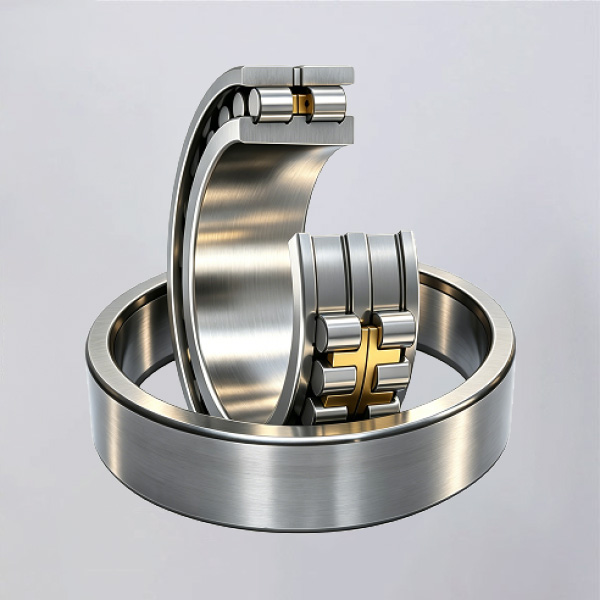
This procedure is especially relevant to CNC turn-mill axes and rotary tables. For applications with combined axial, radial, and overturning loads, Rotary Table Bearings should be selected and validated as part of the complete structural loop, including the table, drive, housing, and clamping arrangement.
What symptoms point to crossed roller bearing thermal expansion rather than a control problem?
A repeatable error that develops with operating time and changes after cool-down usually deserves a thermal investigation. Control tuning can influence following error, but it cannot remove dimensional growth or lubricant-related friction. The table below helps maintenance teams separate common symptoms before replacing parts or changing servo settings.
| Observed symptom | More likely thermal mechanism | First check | When this diagnosis may not apply |
|---|---|---|---|
| Position is accurate when cold but shifts after repeated cycles | Ring, shaft, housing, or table growth changes the reference position. | Compare position error with temperature at several structural points. | Also check encoder mounting and coupling slip. |
| Torque rises during warm-up and remains high | Increasing preload, excess lubricant drag, or seal friction. | Measure motor current and torque with seals and load condition documented. | Drive faults or mechanical interference can produce similar signs. |
| Low-speed movement becomes uneven when warm | Lubricant drag and higher friction torque disturb fine motion. | Test at the lowest commanded speed after the axis stabilizes. | Servo tuning, motor cogging, and transmission effects also require review. |
| Runout changes at one angular location | Local heat source or asymmetric structure distorts the support. | Map runout through one full revolution at cold and hot conditions. | Check mounting-face flatness and contamination as well. |
| Accuracy worsens only with an offset load | Preload reduction or structure growth lowers effective tilting stiffness. | Repeat the test with the actual load arm and direction. | Loose fasteners or insufficient housing stiffness may be the main cause. |
A frequent mistake is to increase preload immediately after detecting rotary axis thermal drift. That can make cold-state torque higher and create more heat during the next test. Another mistake is applying grease without defining the quantity or distribution method. More lubricant is not automatically better for high-accuracy, low-speed motion.
Which mounting and lubrication choices reduce thermal sensitivity?
Choose the mounting arrangement that keeps ring support, heat flow, and preload behavior predictable over the machine’s real duty cycle. The bearing alone cannot compensate for a housing that heats unevenly or a shaft fit that changes excessively in service.
Use rigid, clean mounting faces. Uneven support can create local stress and misleading runout results. This recommendation applies to all precision axes; it does not replace checking housing stiffness under working load.
Control the fit and clamping sequence. Ring distortion introduced during assembly may look like a thermal problem once the axis warms up. Follow the bearing drawing and tighten fasteners progressively in a balanced pattern.
Keep major heat sources in view. Motors, seals, brakes, nearby gearboxes, and process heat can create uneven ring temperatures. Thermal shielding or a revised heat path may be more effective than changing bearing preload.
Specify lubricant by speed, torque, environment, and service interval. Lubricant drag matters most in low-speed indexing, direct-drive tables, medical equipment, and precision inspection axes. The correct choice must be confirmed against the application, not selected by viscosity alone.
Validate the actual orientation. A horizontal table, vertical robot joint, and inclined indexing axis can experience different lubricant distribution and load behavior. A bench test in another orientation is not enough for final approval.
For compact axes where the bearing must carry combined loading in limited space, BY Bearings can support OEM and ODM customization, including special dimensions and mounting-hole requirements. Our production inspection includes P5, P4, and P2 precision options, and grinding accuracy can reach P2 class. These features help establish a controlled starting point, but the machine builder remains responsible for validating system-level thermal performance.
When should a builder choose a crossed roller design, a rotary table bearing, or another arrangement?
Select the bearing family according to load direction, available envelope, required stiffness, and thermal test results—not only catalog dimensions. A crossed roller design is often suitable where compactness and combined-load capability are needed. Rotary table bearing arrangements are commonly considered where the table must resist higher axial loads and overturning moments while maintaining rotational accuracy.
| Application condition | Suitable direction to investigate | Why it fits | Limit to verify |
|---|---|---|---|
| Robot joint or compact automation wrist | Crossed roller bearing or harmonic drive bearing | Compact layout with radial, axial, and moment load support. | Check preload shift during repeated acceleration and motor heating. |
| High-accuracy rotary table or turn-mill axis | BRTM Series Rotary Table Bearings | Designed for rotary-axis use where stiffness and accuracy require close attention. | Validate table, clamp, drive heat, and real cutting or process loads. |
| Heavy combined loads with strong overturning moment | Crossed Tapered Roller Bearings | Worth evaluating where load capacity and tilting resistance drive the selection. | Confirm the available space, mounting arrangement, and rotational accuracy target. |
| Space-limited rotating frame with lighter load demand | Thin Section Bearings | Can help reduce radial envelope in suitable applications. | Do not assume the same stiffness or thermal response as a crossed roller arrangement. |
A real application example is BY Bearings’ supply of P2 rotary table bearings for gear grinding in Mexico. This case is relevant because gear grinding places strict demands on rotary accuracy. It does not establish a universal thermal limit for every machine. A different drive layout, lubricant, table mass, or grinding cycle can produce a different warm-up response.
What should be included in a thermal-validation request to the bearing supplier?
Provide the operating information that changes preload and heat generation. A bearing part number and load rating alone are not enough to assess a thermal-risk question. Before requesting selection advice, prepare the following checklist:
Bearing envelope, mounting drawing, shaft and housing details, and bolt pattern.
Required radial, axial, and overturning loads, including load direction and duty-cycle variation.
Rotational speed range, acceleration profile, dwell time, and direction reversals.
Cold-state and hot-state positioning requirements, runout target, and permitted torque variation.
Motor, seal, brake, gearbox, and nearby process heat sources.
Lubricant type, initial fill method, relubrication plan, and operating orientation.
Measured temperatures and torque data if a prototype already exists.
Required precision class and any special dimensions, mounting holes, or assembly constraints.
BY Bearings supports flexible customization with no MOQ for applicable projects, and provides a 12-month warranty from the shipment date. For an accuracy-critical axis, send the mounting drawing and your cold-to-hot test conditions so the bearing selection can be reviewed against the actual preload and thermal-drift risk.
Get a quote or submit your rotary-axis drawing for selection advice and thermal validation support.
 +8618939019135
 sales@bybearings.com
 +8618939019135