How Bearings for Welding Robots Survive Intense Arc Heat
Engineers designing robotic welding cells face a persistent challenge: ensuring the long-term reliability of articulated joints. The primary concern is not just mechanical load, but thermal stress. The intense radiant heat, conductive heat, and spatter from a welding arc can degrade a standard robot joint bearing, leading to positioning errors, joint seizure, and unplanned downtime. Understanding how this heat transfer occurs and what bearing components are most vulnerable is the first step in specifying a durable solution for your application.
The core question is, how does arc heat affect robot bearings? Heat compromises three critical elements: the lubricant, the seals, and the steel's dimensional stability. At BY Bearings, we specialize in manufacturing precision bearings for demanding automation, including the high-stress environment of robotic welding. Our solutions, such as Bearings for Industrial Robotics, are designed with these specific failure modes in mind, drawing on over 15 years of precision manufacturing experience.
Understanding Heat Transfer in Robotic Welding Cells
Heat from the welding process reaches the bearings in a robot's wrist and arm joints through three primary pathways. Each pathway presents a different type of thermal load that must be managed through bearing design, material selection, and system integration.
Radiant Heat: The welding arc emits intense infrared radiation. This energy travels in a direct line-of-sight and is absorbed by the robot arm's surfaces, including the bearing housing. Over time, this constant thermal radiation elevates the joint's ambient operating temperature, slowly "baking" the bearing.
Conductive Heat: Heat conducts from the workpiece, through the fixture, and into the robot's end-of-arm tooling (EOAT). This is particularly significant in applications with long weld times or high-current processes. The heat travels up the structure and directly into the bearing's inner or outer ring, creating a significant thermal gradient across the component.
Spatter and Slag: Molten metal droplets, or spatter, can be ejected hundreds of millimeters from the weld. If these hot particles adhere to the bearing seals or housing, they create intense, localized hot spots. This can cause immediate, focused damage to seal materials long before the overall bearing temperature becomes critical.
Failing to account for all three sources is a common oversight. While a system might have adequate shielding against radiant heat, direct contact with hot spatter can still cause a premature seal failure, leading to lubricant contamination and rapid bearing degradation.

Critical Failure Thresholds: Seals, Lubricants, and Steel
Every component within a bearing has a maximum operating temperature. Exceeding these limits, even briefly, can cause irreversible damage. For welding robot bearings, the seals and lubricant are typically the first components to fail. The table below outlines the operational boundaries for common materials used in these applications.
| Component / Material | Typical Temperature Limit | Consequence of Exceeding Limit |
|---|---|---|
| Nitrile (NBR) Seals | ~100°C (212°F) | Becomes hard and brittle. Loses elasticity, cracks, and fails to prevent contaminant ingress or grease leakage. |
| Viton (FKM) Seals | ~200°C (392°F) | Offers significantly higher heat resistance. Recommended for joints closest to the welding arc. Above this limit, it will also harden and fail. |
| Standard Lithium Grease | ~120°C (248°F) | The oil separates from the thickener ("bleeding"). The oil can leak out, while the remaining base hardens, providing no lubrication. |
| High-Temperature Synthetic Grease (e.g., Polyurea) | 160°C to 220°C+ (320°F to 428°F+) | Maintains stable viscosity and lubricating properties at elevated temperatures. Essential for preventing premature wear and friction increase. |
| GCr15 Bearing Steel | ~150°C (302°F) | Prolonged exposure above this temperature can begin to affect the steel's tempered martensitic structure, potentially reducing hardness and dimensional stability. |
The key takeaway is that bearing failure in a high-heat environment is often not a sudden event but a process of degradation. A seal that becomes brittle may not fail immediately, but it will allow microscopic weld dust and humidity to enter the bearing, contaminating the high-temperature bearing grease and accelerating abrasive wear on the raceways. This is why material specification is not a suggestion; it is a requirement for reliable operation.
Bearing Design and Material Selection for Thermal Stability
Mitigating heat damage involves a multi-faceted approach, combining the right bearing type with appropriate materials and precision manufacturing. For the complex loads in robotic joints—which include radial, axial, and moment forces—certain designs provide inherent advantages.
Choosing the Right Bearing Structure
Precision Crossed Roller Bearings are an excellent choice for robotic joints due to their high rigidity and compact cross-section. A single crossed roller bearing can handle loads from all directions simultaneously, replacing the need for a pair of angular contact bearings. This simplifies the joint design, reduces weight, and provides the stiffness needed for precise weld path tracking. Similarly, high-rigidity Thin Section Bearings offer a space-saving solution for smaller joints further up the robot arm.
Material Integrity and Heat Treatment
The foundation of a durable bearing is high-purity steel. We utilize premium GCr15 (SAE 52100) bearing steel, which undergoes rigorous heat treatment processes in our facility. Post-treatment, we conduct metallographic analysis to confirm a stable martensitic structure and optimal hardness (HRC 60-64). This ensures the bearing's raceways can withstand high contact stress without deformation, even as operating temperatures fluctuate. This entire process is managed under our certified Quality Control system, compliant with ISO 9001:2015 standards.
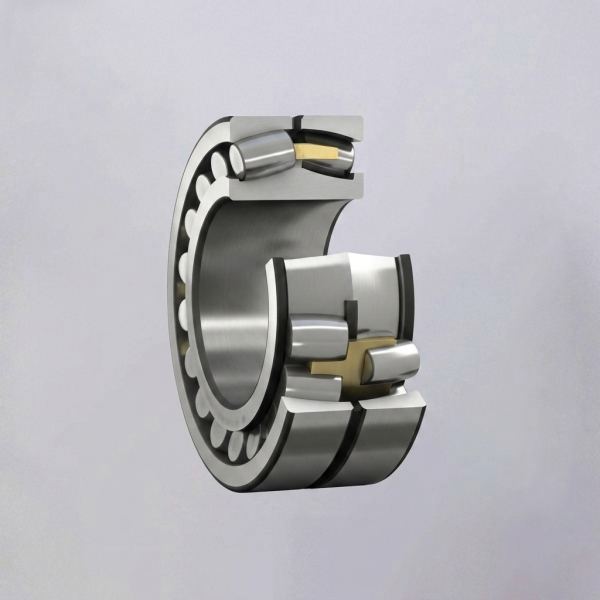
A Practical Checklist for Specifying Welding Robot Bearings
When selecting bearings for welding robots, moving beyond standard catalog specifications is essential. Use this checklist to guide your technical discussions with bearing suppliers and ensure you receive a component fit for the harsh environment.
1. Quantify the Thermal Load: What is the maximum sustained temperature at the bearing mounting location? Is the primary risk from radiant heat or direct spatter? This dictates the required seal material (e.g., NBR for cooler base joints, FKM/Viton for wrist joints).
2. Verify Lubricant Specification: Request the specifications for the factory-fill grease. Confirm its dropping point and continuous operating temperature range. Ensure it exceeds your application's maximum expected temperature with a safe margin.
3. Define Precision and Stiffness Requirements: What level of positioning accuracy does the weld path require? For high-precision tasks, a P4 or P2 grade bearing may be necessary. At BY Bearings, we can achieve P2 precision with runout controlled within an exceptional 1.5 μm, ensuring minimal tool point deviation.
4. Analyze the Combined Loads: Robotic arms exert significant moment (tilting) loads on their joints, in addition to radial and axial forces. Ensure the selected bearing has sufficient static and dynamic moment capacity to prevent excessive deflection under load, which can lead to edge loading and premature failure.
5. Discuss Sealing and Shielding Options: Does the bearing require double seals (e.g., 2RS)? Are external shields or heat deflectors part of the system design? A layered approach to protection is often the most effective.
6. Inquire about Customization: Standard bearings may not fit your exact housing or mounting requirements. We offer full OEM and ODM support, allowing for customized dimensions, mounting holes, and pre-load settings to optimize performance and simplify assembly.
By systematically addressing these points, you can avoid the common pitfall of specifying a bearing based solely on its dimensional size and basic load ratings, which are insufficient for a thermally challenging welding application.
The reliability of a bearing in a high-heat environment is a direct result of the manufacturer's control over materials, geometry, and lubrication. By selecting a partner who understands the specific failure modes of welding applications and has the manufacturing capability to address them, you can significantly extend the service life of your robotic automation systems.
If you are designing a robotic welding system and need to ensure maximum joint reliability, our engineering team can help. Contact us to discuss your specific load, speed, and thermal requirements to get a quote for a tailored bearing solution.
 +8618939019135
 sales@bybearings.com
 +8618939019135