How to Qualify a Precision Bearing Supplier
Before issuing an RFQ, procurement teams should confirm more than part numbers and unit prices. A bearing that fits the drawing but has inconsistent runout, uncertain steel origin, or incomplete inspection records can affect machine accuracy, assembly time, and future replacement planning. The right Precision Bearing Supplier should provide technical evidence that supports the application, not only a catalogue description.
This matters most for OEM buyers sourcing crossed roller bearings, rotary table bearings, harmonic drive bearings, slew bearings, and thin section bearings for robotics, CNC equipment, semiconductor systems, medical equipment, and direct drive assemblies. These applications often combine radial load, axial load, moment load, rotational accuracy, and low friction requirements in one compact bearing position.
BY Bearings is a precision bearing manufacturer with more than 15 years of manufacturing experience. Our product range includes Precision Crossed Roller Bearings, YRT rotary table bearings, harmonic drive bearings, crossed tapered roller bearings, slew bearings, and thin section bearings. For buyers building a supplier shortlist, the following process helps separate documented manufacturing capability from unverified claims.
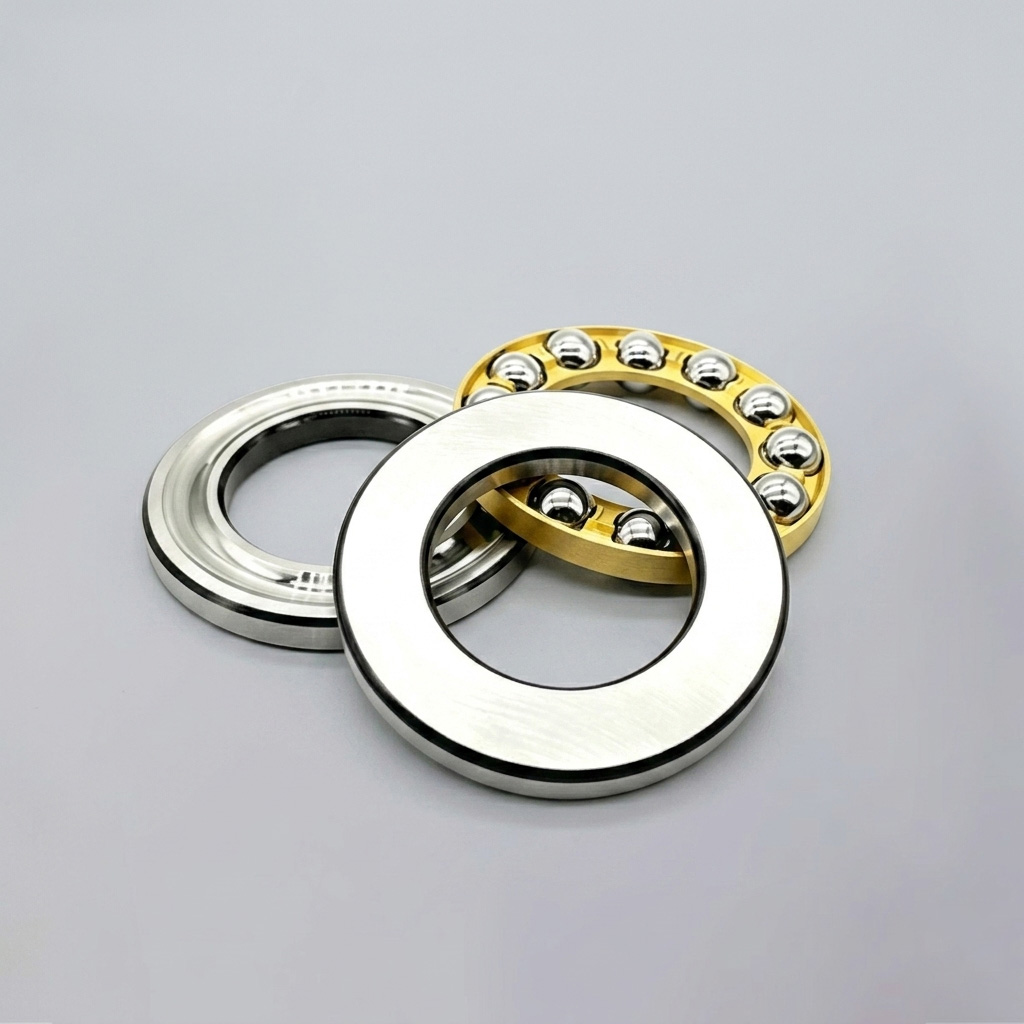
Start with the Application Requirement Instead of the Catalogue Number
Conclusion: qualify the bearing source against the actual machine duty before comparing standard bearing codes. The same nominal size can require different precision classes, preload conditions, lubrication, mounting features, and inspection methods depending on the equipment.
The reasoning is straightforward. A robotic joint may need high rigidity and controlled internal clearance to reduce wobble. A CNC rotary table may need high tilting stiffness and restricted runout during multi axis machining. A medical imaging platform may place greater emphasis on low vibration and stable torque. A catalogue match alone does not show whether the supplier understands these differences.
For an RFQ, provide the supplier with the information below. This makes the quotation technically comparable and reduces clarification cycles after a purchase order is released.
- Equipment function: State whether the bearing is used in a robot joint, rotary table, harmonic reducer, turntable, inspection device, or another assembly.
- Load direction: Identify radial, axial, and overturning moment loads. Specify whether these loads occur at the same time.
- Accuracy target: State required runout, rotational positioning needs, vibration limits, and allowable torque variation where applicable.
- Mounting interface: Submit drawings for bore, outer diameter, bolt holes, spacer rings, housing fit, shaft fit, and installation orientation.
- Operating conditions: Include speed, duty cycle, ambient environment, lubrication preference, and contamination exposure.
- Order profile: Share prototype quantity, annual demand forecast, packaging requirements, destination country, and target approval timing.
This approach fits new OEM programs, replacement projects, and machine upgrades. It is less necessary when a buyer is simply replenishing an already approved part with unchanged specifications, although document checks should still continue for every production lot.
Match the bearing family to the motion and load condition
| Bearing option | Best sourcing question | Application fit | When another option may fit better |
|---|---|---|---|
| Crossed roller bearings | Can the supplier control runout, preload, and rigidity for combined loads? | Robotics, semiconductor equipment, measuring systems, and compact rotary axes | Choose a rotary table design when the assembly requires an integrated axial radial arrangement. |
| Rotary table bearings | Can the supplier support radial, axial, and moment load requirements together? | CNC rotary tables, turn mill centers, indexing equipment, and gear grinding machines | Choose a thinner bearing configuration when radial space is the main constraint. |
| Harmonic drive bearings | Can the bearing interface match the reducer mounting and required rigidity? | Robot joints, compact automation axes, and reducer assemblies | Choose a standard crossed roller arrangement when the reducer interface is not required. |
| Thin section bearings | Can the source maintain required accuracy within a space limited design? | Compact instruments, medical assemblies, and lightweight mechanisms | Choose a higher rigidity bearing family when moment load is dominant. |
For machine tool programs, buyers can compare application requirements with BY Bearings’ Bearings for Machine Tools. For compact rotating assemblies, review available Thin Section Bearings before asking for a drawing review.
Checklist of Qualification Evidence Including Inspection Reports Material Certificates Lot Traceability and Quality System Records
Conclusion: do not approve a new source until its documentation package can link the delivered bearing to its material, production lot, inspection result, and quality process. This is the practical evidence procurement teams need when a bearing is installed in an accuracy sensitive machine.
A supplier may provide a favourable quotation, but documentation determines whether your engineering and quality teams can verify what will be delivered. The table below explains what to request, why it matters, and the sourcing risk it addresses.
| Qualification evidence | What to verify | Why it matters | Risk if not reviewed |
|---|---|---|---|
| Bearing inspection reports | Confirm the report identifies part number, lot reference, measured characteristics, inspection date, and acceptance status. | Reports show whether the supplier checks the characteristics that affect assembly accuracy and rotation. | A buyer may receive parts without proof that required runout or torque checks were completed. |
| Material certificates | Request evidence for bearing steel used in rings and rolling elements when material control is required by the project. | Material consistency supports predictable heat treatment and bearing performance. | Engineering teams may be unable to verify steel origin during incoming quality review. |
| Lot traceability | Ask how the supplier connects packaging labels, production records, inspection data, and shipment documents to each lot. | Traceability supports targeted investigation if a production issue is identified. | Mixed or unidentified stock can make corrective action slow and expensive. |
| Quality system records | Review quality procedures, calibration controls, inspection flow, and corrective action handling relevant to the part. | These records show how quality is managed before shipment rather than only after an issue is reported. | Approval may rely on samples without confirming repeatable production control. |
At BY Bearings, quality control operates under an ISO 9001 quality system, and every bearing receives inspection before shipment. Our factory uses premium GCr15 bearing steel verified through spectrographic analysis, followed by metallographic examination after heat treatment. Hardness is controlled at HRC 60 to 64, and 100 percent pre shipment inspection includes runout control within 1.5 μm for applicable high precision products.
These records are especially relevant when buying P5, P4, or P2 precision grades. They are less relevant only for low consequence, non precision applications where the machine builder has no incoming documentation requirement. Even then, lot identification remains a sensible purchasing control.
Procurement teams can also review BY Bearings’ published Quality Control information when preparing a supplier approval file.
Assess Manufacturing Capability Beyond a Factory Photograph
Conclusion: ask for evidence that the supplier can manufacture, inspect, and repeat the required bearing, rather than relying on a factory introduction alone. Capacity is useful, but production control and precision capability should be assessed together.
For a new source, request a structured capability review. A good response should connect equipment, process controls, inspection resources, and the bearing family under consideration. For example, a supplier quoting crossed roller bearings should be able to discuss ring processing, rolling element matching, internal clearance or preload, raceway grinding, cleaning, assembly, and final inspection.
- Production route: Ask which key processes are controlled internally and which processes, if any, are externally managed.
- Precision range: Confirm the attainable grade for the proposed product, rather than accepting a general statement about high precision capability.
- Inspection method: Ask how runout, dimensional accuracy, rotational torque, and appearance are checked for your bearing type.
- Capacity planning: Request monthly capacity and the planned allocation for samples, pilot orders, and serial production.
- Customization method: Confirm whether special mounting holes, dimensions, packaging, marking, or lubrication can be evaluated from drawings.
BY Bearings operates a 13,500 m² intelligent factory with a CNC workshop and automated heat treatment line. The company has monthly capacity of 15,000 sets and supports OEM and ODM customization, including flexible order quantities. Grinding capability reaches P2 class for applicable products. These are meaningful indicators for buyers sourcing precision components, but engineering approval should still be based on the specific drawing and application conditions.
A useful factory review question is: “Which inspection characteristics will be included in the final release record for this exact part?” It requires an actionable answer. General statements about quality are not enough for a precision rotation assembly.
Use Samples and First Article Review to Test the Approval Process
Conclusion: treat samples as a test of the supplier’s communication, documentation, packaging, and technical control, not only as a test of physical fit. A sample that fits the housing but arrives without supporting records does not fully qualify a production source.
Use the following step by step procedure before releasing a larger purchase order.
- Send the application package. Provide the drawing, load description, required precision grade, operating conditions, planned quantity, and document requirements.
- Review the technical proposal. Confirm part designation, bearing structure, material approach, accuracy class, lubrication, mounting requirements, and exclusions.
- Approve the sample scope. Specify sample quantity, inspection documents, packing label information, marking requirements, and delivery destination.
- Perform incoming inspection. Check identification, appearance, dimensions, mounting interface, rotation feel, and requested inspection documentation.
- Run an assembly trial. Record installation observations, torque behaviour, positioning stability, vibration, and any fit issues.
- Issue a first article decision. Approve, conditionally approve with agreed changes, or request revised samples before serial release.
- Define serial controls. Confirm inspection reports, lot labels, packaging, order communication, and change notification requirements.
This procedure is well suited to a new machine platform or a second source qualification. It may be shortened for an established part with complete historical data, but a document review should still be included when the manufacturing location, material source, or design changes.
For rotary axis projects, buyers can review Rotary Table Bearings and then submit the table drawing, load information, and required runout criteria. For robotics programs, Bearings for Industrial Robotics provide a useful starting point for defining joint stiffness and compact integration requirements.
Compare Quotes on Total Approval Cost Rather Than Unit Price Alone
Conclusion: compare the full sourcing cost, including approval effort and quality evidence, before selecting a supplier. The lowest quoted unit price may not represent the lowest cost if it creates extra engineering review, incoming inspection, sorting, or machine adjustment work.
| Quote comparison factor | What to compare | Decision use |
|---|---|---|
| Part price | Quoted unit price by quantity range and tooling or customization items where applicable | Use it as one cost input, not the only approval criterion. |
| Inspection package | Included reports, lot labels, material evidence, and final release documentation | Shows whether incoming quality work can be planned accurately. |
| Technical response | Clarity of bearing selection, mounting guidance, and drawing feedback | Helps determine whether the source can support future design changes. |
| Production capability | Precision grade capability, factory resources, capacity, and customization support | Supports supply planning after prototype approval. |
| Commercial terms | Order quantity flexibility, warranty terms, packaging, export documents, and delivery planning | Prevents assumptions from becoming later purchasing disputes. |
BY Bearings offers a 12 month warranty from the shipment date and supports flexible order quantities without a stated minimum order quantity. The company is CE, RoHS, and TUV certified, exports to more than 65 countries, and serves more than 500 B2B customers. These facts can support supplier screening, but they do not replace application specific engineering review.
Real project relevance also matters. BY Bearings has supplied P2 rotary table bearings for gear grinding in Mexico and crossed roller bearings for semiconductor equipment in Germany. A separate Germany export project involved BBH crossed roller bearings in bulk. These cases demonstrate experience with precision bearing supply for demanding equipment, while each new project should still be qualified against its own drawing, load profile, and inspection requirements.
Avoid Approval Gaps That Create Delays After the RFQ
Conclusion: prevent approval gaps by making technical, quality, and commercial requirements visible in the RFQ. Most sourcing delays occur when one of these areas is assumed rather than documented.
- Do not quote from a photo only. A photo cannot confirm fits, tolerance needs, mounting holes, preload, or load direction. Use a drawing or a clear dimensional specification instead.
- Do not assume equivalent precision. Ask for the proposed accuracy class and applicable inspection data. A bearing family name does not define its finished accuracy.
- Do not separate engineering from procurement. Procurement should compare commercial terms while engineering verifies suitability for the operating condition.
- Do not leave documents until shipment. Define required reports, certificates, labels, and packing details during quotation review.
- Do not approve serial supply from fit alone. Include a controlled assembly trial when the bearing affects positioning accuracy, noise, vibration, or surface finish.
- Do not overlook change control. Ask how drawing changes, material changes, or process changes will be communicated after approval.
The final shortlist should identify which source can supply the specified bearing, provide qualification evidence, respond to engineering questions, and support planned volume. That is a stronger basis for an RFQ than price comparison alone.
Send your bearing drawing and application requirements to get a quote from BY Bearings.
 +8618939019135
 sales@bybearings.com
 +8618939019135