Prevent Corrosion in Bulk Crossed Roller Bearing Storage
What a Rust-Free Stock Room Looks Like Before You Start
How long can a pallet of crossed roller bearings sit in your warehouse before the raceways start to corrode, and what actually triggers it? The answer depends less on time and more on three things: moisture reaching the steel, a packaging layer that has stopped working, and temperature swings that create condensation inside sealed bags. This guide walks warehouse managers and production planners through a practical routine for holding Bulk Crossed Roller Bearings from the day they arrive until the day they go onto a machine.
The starting state is simple. You have received cartons or crates of bearings, the factory anti-rust oil and wrapping are intact, and assembly is weeks or months away. The finished state is just as clear. Every bearing leaves storage with a clean raceway, a continuous oil film, and no moisture trace, so the precision ground into it still reaches your product.
That precision is worth protecting. At BY Bearings we have spent more than 15 years grinding precision bearings, with runout controlled within 1.5 μm and 100% inspection before shipment. A few rust spots on a raceway can cancel that work in a stockroom.
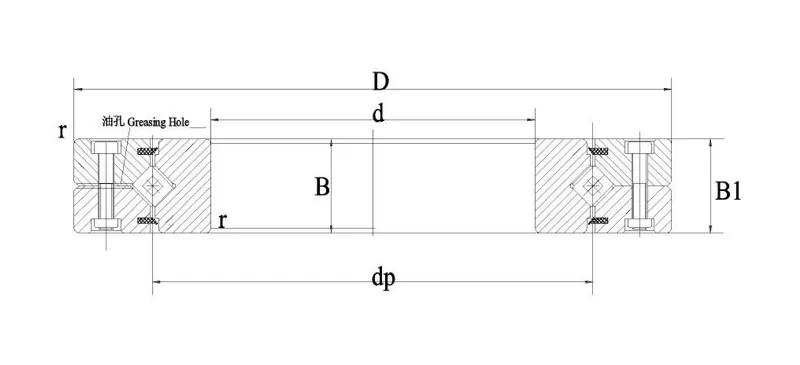
What to Prepare Before the First Pallet Is Shelved
Gather these items first. Most of them cost little, and a missing one is the usual reason storage rules get skipped.
| Item | Why it matters | Can it wait? |
|---|---|---|
| Hygrometer or data logger | Shows the real humidity and temperature at shelf level, not the office reading | No. Without it you cannot prove the room is within limits |
| Racks or pallets that keep cartons off the floor | Concrete floors wick moisture and cool the bottom cartons | No |
| Spare VCI film or VCI paper and clean lint-free gloves | Needed to reseal any pack you open for inspection | Only if you never plan to open cartons |
| Receiving log with lot numbers and arrival photos | Gives you evidence if a problem appears later | No |
| Humidity indicator cards | Gives a quick visual check inside sealed packs | Yes, but add them for long holds |
| Manufacturer's storage guidance for your series | Sets the limits for your specific bearings | No. Ask your supplier for it with the order |
One caution: the humidity and temperature targets in this article are common warehouse practice, not a certified specification for any product. For a binding limit, use the drawing, the spec sheet, or the written advice from your bearing supplier.
How to Store Crossed Roller Bearings: A Step-by-Step Routine
This sequence works for BBH series crossed roller bearings and for most other precision types. Follow it in order, because later steps depend on the earlier ones.
- Inspect the outer carton on arrival. Look for crushed corners, water stains, and torn straps. If you see any, photograph them before moving anything. Checkpoint: the log entry exists before the pallet leaves the dock.
- Let cold cartons warm up before opening. If the load came through a cold dock or a winter truck, leave the sealed packs in the receiving area until they reach room temperature. Opening a cold pack in warm air pulls moisture onto the steel straight away. This is the most common cause of surface spotting we hear about.
- Open only what you must. Sample-check one carton per lot rather than unwrapping everything. Original factory packaging is your best protection, so leave it alone.
- Check the individual bearing wrap. The VCI paper or film should be intact, with no punctures, and the oil film on the bearing should be visible and even. Checkpoint: no dry patches, no beads of water, no discoloured paper.
- Shelve flat, in the original box. Store ring bearings horizontally, not on edge, and do not stack cartons so high that the lower boxes deform. Keep them away from doors, heaters, direct sunlight, and wash areas.
- Separate from chemicals. Keep bearings away from acids, cleaning solvents, cutting fluids, and battery charging areas. Fumes can attack both the packaging and the steel.
- Set the monitoring rhythm. Log humidity and temperature at least daily during seasonal changes, and schedule a sample inspection for each long-held lot. Many stockrooms start with every three months and tighten it if readings drift.
A common target for this type of stockroom is relative humidity below about 60% and a stable temperature with as little daily swing as practical. Stable matters more than cool.
When Standard Warehouse Storage Fails
A general-purpose warehouse is built for cartons of ordinary goods, not for precision-ground steel with a thin protective oil film. Standard storage works until one of the conditions below appears. After that, the protection in the box stops being enough.
| Failure condition | What happens to the bearing | What you can observe | Action |
|---|---|---|---|
| Sustained high humidity | Moisture passes through cartons and reaches any gap in the wrap; oil film is displaced | Humidity logger above target, cards changing colour, damp cartons | Move stock to a drier room or add a dehumidifier; inspect the sample lot |
| Temperature cycling (day/night, seasonal, dock-door exposure) | Warm air cools inside the bag and condenses on steel, even if the bag is sealed | Fine droplets inside film, fogging, spotted raceways | Move away from exterior walls and doors; allow cold packs to warm before opening |
| Damaged VCI packaging | VCI protection depends on an enclosed space; a torn or open pack loses it | Torn film, loose lids, opened corners, discoloured paper | Reseal with fresh VCI film right away, or repack; log the lot |
| Long holding period | Oil dries or migrates, wrap ages, and small defects have time to develop | Sticky or dry oil, brittle film, light brown staining | Schedule sample inspections; re-oil and repack when the film shows wear |
| Repeated opening of packs | Each opening admits humid air and removes some protective vapor | Several partly open cartons on the same shelf | Open one pack at a time; reseal immediately |
The limit is easy to state: storage in the original, undamaged package, in a stable dry room, is the baseline. Once two of the conditions above overlap, such as a humid season plus a long hold, do not rely on the factory pack alone. Inspect more often and consider repacking.
Bearing Rust Protection Packaging: Keep, Reseal, or Repack
Good bearing rust protection packaging is layered: an oil film on the steel, VCI paper or film around the bearing, an inner bag or wrap, and an outer carton. Each layer covers a different failure.
- Keep as is when the film is intact, the oil is even, and the carton has not been exposed to water. This is the right answer for most short holds.
- Reseal when you opened a pack for a check and the bearing is clean. Wipe nothing off. Wrap it in fresh VCI film, close the bag, and note the date.
- Repack when the film is torn, the oil looks dry, or the lot has been held much longer than planned. Use clean gloves, apply a suitable rust-preventive oil, and wrap again in VCI material.
- Do not remove the factory oil film until the bearing is about to be mounted, unless your assembly process says otherwise.
VCI protection has limits. It works in an enclosed space and does not replace a dry room. It also does not rescue a bearing that was already wet when it was wrapped.
Common Mistakes That Cause Avoidable Rust
- Storing on the floor. Cold concrete attracts moisture. Use racks or pallets.
- Opening every carton to "see what we have." Each opening weakens the protective atmosphere. Open a sample only.
- Handling with bare hands. Sweat is acidic enough to leave fingerprints on a raceway. Wear clean gloves.
- Washing the oil off early. A clean, bare bearing in a warehouse corrodes faster than an oiled one.
- Ignoring the dock. Cartons left near a loading door in winter or monsoon season pick up moisture before they ever reach a shelf.
- Trusting a single reading. A humidity reading taken at noon says nothing about midnight. Use a logger.
Completion Check and Recovery
You have finished when the following checklist passes for every lot in storage:
- The receiving log has photos and lot numbers for each delivery.
- Logged humidity stays within your target, and temperature swings are small.
- Sample bearings show a continuous oil film and no spots on raceways, rollers, or mounting faces.
- VCI film and cartons are intact, with no moisture inside.
- Rotating a sampled bearing by hand feels smooth, with no catching or grit.
If a check fails, go back to the step that failed. Wet cartons point to step 1 or 2, a spotted pack to step 3 or 4, and drift in the logger to step 5 or 7. For light staining on a non-working surface, isolate the lot, record it, and ask your supplier for advice. Do not polish a raceway with abrasive pads, because that changes the geometry the precision grade depends on. If a raceway shows pitting or spots, do not install the bearing in a precision axis without supplier confirmation.
These checks matter more when the end use is demanding. We have supplied crossed roller bearings for semiconductor equipment in Germany and P2 rotary table bearings for gear grinding in Mexico, and in both uses the bearing arrives as a precision part, not a commodity. Bulk export orders, such as BBH series shipments to Germany, also cross several climates before they reach a stockroom, so the receiving check is the first line of defense. Our 12-month period runs from the date of shipment, which is another reason to record the condition of a lot when it arrives.
Variations That Change the Routine
Most of the procedure stays the same across product types. A few cases do change it:
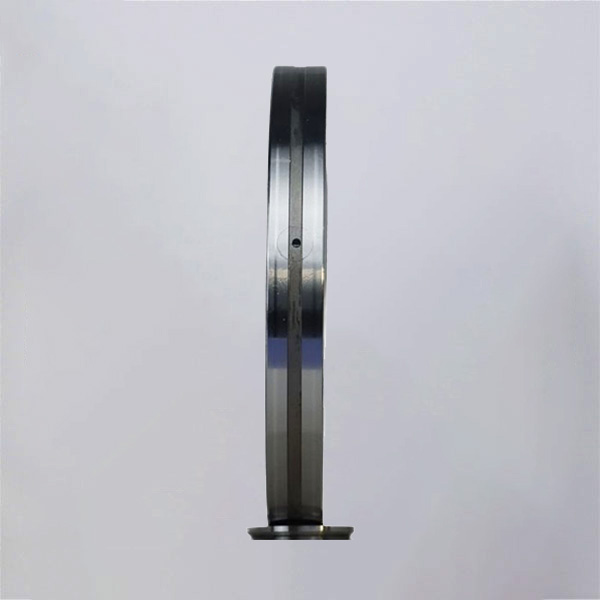
- Large-diameter rotary table bearings. Heavy rings such as BRTM series rotary table bearings should sit flat on a pallet or support that spreads the weight. They should not lean on an edge or be stacked beyond the carton rating. Use mechanical lifting for any repacking.
- Thin-section designs. Slender cross-sections deform under uneven loads. Keep them flat and unstacked when possible, and do not clamp them to check them.
- Long holds beyond a season. Move to a tighter inspection interval, and consider repacking the lot with fresh VCI film instead of waiting for visible signs.
- Humid or coastal sites. Add a dehumidifier or a dedicated dry cabinet for precision stock, and keep the dock door closed during unloading whenever possible.
If you are planning an order and know it will sit in storage for months, tell us the expected holding time and the climate at your site. We can advise on packing and oil selection from the start, which is easier than fixing a problem later. To discuss your storage conditions or request a quote on your next batch of crossed roller bearings, get a quote from our team, and include your drawings or series numbers so we can respond accurately.
 +8618939019135
 sales@bybearings.com
 +8618939019135