Rotary Table Bearings for Gear Grinding and Gear Cutting Machines: Applications and Selection Guide
In the world of high-precision manufacturing, the production of gears demands absolute mechanical perfection. Whether for automotive transmissions, aerospace gearboxes, or heavy industrial machinery, a gear's efficiency, noise level, and lifespan depend heavily on the accuracy of its teeth profile, lead, and pitch. Achieving this level of sub-micron precision requires machine tools that can execute complex multi-axis movements under severe mechanical stress and microscopic tolerances. At the heart of these advanced gear grinding and gear cutting machines lies a critical component: the rotary table bearing.
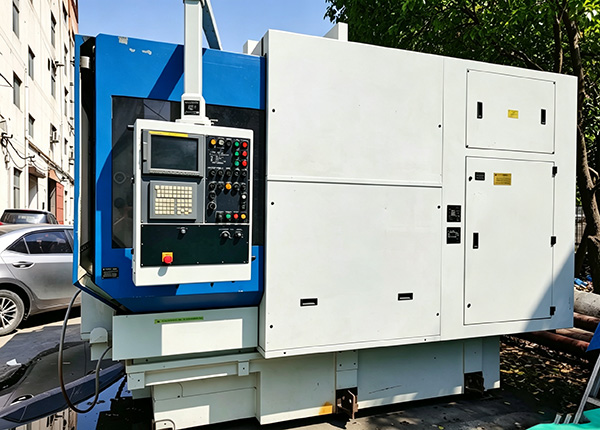
What Are Rotary Table Bearings?
Rotary table bearings are specialized, high-precision rolling bearings engineered specifically to support heavy combined loads while maintaining extreme rotational accuracy under continuous indexing or high-speed continuous motion. Unlike standard industrial bearings designed primarily for simple rotational shafts or electric motors, rotary table bearings are built to withstand complex multi-directional forces simultaneously. They work in tandem with precision crossed roller bearings—which feature cylindrical rollers arranged in a perpendicular 90° V-groove pattern separated by low-friction spacers—to provide supreme structural rigidity and minimal radial or axial runout.
Why Are Rotary Table Bearings Vital for Modern Gear Machining?
During gear cutting (such as high-speed hobbing or power shaping) and gear grinding, the workpiece table must rotate smoothly under massive cutting forces while carrying heavy workpieces, face plates, and hydraulic clamping fixtures. Any microscopic deflection, axial runout, or harmonic vibration during this rotation translates directly into pitch errors, surface waviness, or tooth profile distortion on the finished gear. Rotary table bearings provide the supreme torsional rigidity and minimal runout needed to keep the table steady, ensuring that every gear tooth is machined to exact engineering specifications.
Furthermore, as modern industries push toward higher power density, stricter emission standards, and quieter gearboxes, the demands placed on machine tools have multiplied. Traditional bearing arrangements often fall short when subjected to simultaneous heavy axial weights, radial forces, and overturning moments. Rotary table bearings bridge this gap by delivering exceptional load-bearing capacities and high tilting stiffness within a compact footprint. Without these high-performance bearings, achieving the tight tolerances required for modern high-speed gears would be practically impossible, making them an indispensable element in contemporary gear manufacturing technology.
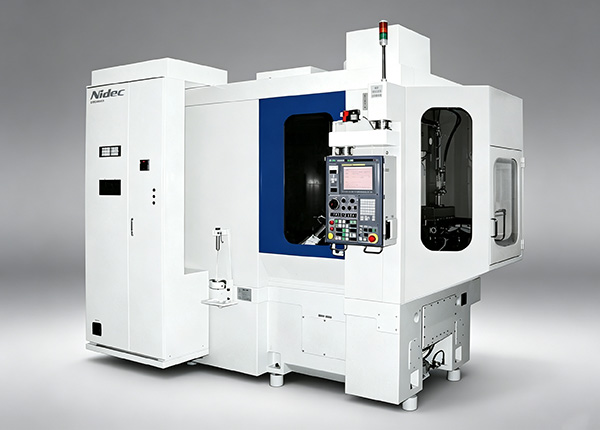
How Do Rotary Table Bearings Perform in Gear Grinding Machines?
Gear grinding is typically the final, most critical finishing operation in gear manufacturing. It is deployed to eliminate thermal distortions caused by heat-treatment hardening, achieve ultra-smooth surface finishes, and secure high gear accuracy classes (such as DIN 4 or better). However, gear grinding is also an operating environment characterized by heavy thermal loads, continuous high-pressure coolant exposure, and fluctuating cutting forces as the multi-rib or profile grinding wheel engages and disengages the hardened gear teeth.
In vertical gear grinding machines, the worktable rotates the heavy gear blank while the grinding wheel profiles the tooth flanks at high velocities. The rotary table bearing supporting this critical table must perform under rigorous mechanical and thermal conditions:
Combating Massive Overturning Moments: When the grinding wheel exerts high pressure on the periphery of a large gear blank, it creates a massive overturning or tilting moment on the worktable. Rotary table and crossed-roller configurations excel here because their wide contact base and optimized geometric distribution provide exceptional tilting rigidity, preventing the table from sagging, dipping, or misaligning under asymmetric loads.
Maintaining Sub-Micron Rotational Accuracy: Even minor axial or radial runout in the bearing will cause eccentric grinding trajectories, resulting in uneven tooth thickness, lead errors, or pitch inaccuracies around the circumference of the gear. High-precision rotary table bearings achieve micron-level or sub-micron running accuracy, ensuring uniform material removal across every single tooth flank.
Thermal Stability and Preload Management: Continuous grinding generates significant localized frictional and thermal heat. High-quality rotary table bearings are engineered with controlled internal clearances or specialized factory preloads that compensate for thermal expansion, ensuring that the bearing neither binds nor becomes loose as the machine warms up during multi-hour production runs.
By providing unwavering stability under fluctuating loads, rotary table bearings enable gear grinding machines to achieve the mirror-like surface finishes and precise involute profiles required for high-speed, low-noise aerospace and automotive gear applications.
Why Are Rotary Table Bearings Essential for High-Precision Gear Cutting?
While gear grinding handles the final precision finishing, gear cutting processes—such as high-speed hobbing, gear milling, and power skimming—are responsible for the heavy material removal phase. These upstream processes subject the machine's rotary axis to high intermittent shock loads, structural vibrations, and rapid, high-speed indexing movements.
During gear hobbing, the hob cutter and the gear blank rotate in a tightly synchronized, continuous kinematic motion. The rotary table bearing must support the table smoothly during rapid indexing or continuous rotation while instantly absorbing the severe impact forces generated when the cutter teeth repeatedly strike the raw metal blank. If the bearing lacks sufficient structural damping or torsional rigidity, machine chatter can occur. Chatter not only damages expensive cutting tools and degrades surface quality but can also cause premature fatigue wear on the machine tool bed and drive components.
Furthermore, modern gear cutting machines increasingly utilize direct-drive torque motors integrated directly with high-precision rotary table bearings or crossed roller bearings. This advanced layout eliminates mechanical transmission elements like worm gears, gearboxes, and timing belts, thereby drastically reducing backlash and significantly improving dynamic response and acceleration. For direct-drive setups, the bearing must feature a large hollow inner diameter to accommodate power cables, hydraulic lines for automatic workpiece clamping, and coolant channels to pass directly through the center of the axis, all while maintaining a low profile and immense torsional stiffness. Rotary table bearings fulfill these complex spatial and mechanical requirements, allowing gear cutting machines to operate at higher feed rates and achieve superior productivity without sacrificing machining accuracy.
How to Choose the Right Rotary Table Bearings for Your Equipment?
Selecting the appropriate bearing for a gear grinding or cutting machine requires translating complex operational demands into specific hardware configurations. To make a definitive selection for your specific machinery, engineers can follow this practical step-by-step decision guide:
Step 1: Match the Bearing Type to Your Machine Layout and Load Direction
Choose Rotary Table Bearings (e.g., YRT Axial-Radial designs) if your gear grinding or heavy hobbing equipment involves a heavy vertical worktable subject to massive axial weights from workpieces and high overturning moments from heavy-duty cutting. Their integrated mounting holes and robust axial-radial structure make them ideal for heavy-duty machine tool tables.
Choose Crossed Roller Bearings if your gear cutting design requires an ultra-compact, low-profile footprint where space is severely restricted, or if you are engineering a direct-drive rotary axis that demands high rigidity in both radial and axial directions simultaneously within a lightweight assembly.
Step 2: Determine the Required Accuracy Grade (P5, P4, or P2)
Opt for P5 grade for general gear cutting machines (like standard hobbing or milling machines) where cost-efficiency and steady industrial productivity are the primary goals.
Opt for P4 or P2 ultra-precision grades exclusively for high-end gear grinding machines where sub-micron runout is mandatory to eliminate pitch errors and achieve ultra-smooth tooth flanks.
Step 3: Calculate Load Ratings and Select the Proper Preload
Always calculate the maximum combined dynamic and static loads, factoring in a safety factor of at least 2 to 3 for intermittent shock loads during gear cutting.
Select a factory preloaded bearing if your application demands zero backlash and absolute rigidity under heavy cutting forces. If your machine operates at exceptionally high continuous speeds where thermal expansion is a major concern, consult with manufacturers like BY Bearings to select a lighter preload or a clearance-adjusted variant to prevent overheating.
Step 4: Finalize Sealing and Lubrication Based on the Operating Environment
Because gear machining environments involve corrosive coolants and abrasive metal swarf, always select bearings with integrated heavy-duty lip seals (such as RS or UU seals) to protect the raceways.
Choose grease lubrication for standard, maintenance-friendly setups, or specify oil-air/circulating lubrication ports if your machine runs at high speeds under heavy thermal stress.
Why Partner with BY Bearings as Your Go-To Rotary Table Bearings Manufacturer?
When engineering high-performance gear machinery, the reliability of your mechanical components is only as strong as the manufacturer behind them. BY Bearings has established itself as a reliable rotary table bearings manufacturer, delivering precision-engineered bearing solutions tailored to the demanding standards of the modern machine tool industry. Specializing in a comprehensive range of products—including high-accuracy crossed roller bearings, robust slewing bearings, and specialized rotary table bearings—we provide versatile solutions designed for complex industrial applications.
At BY Bearings, we combine advanced metallurgical science, state-of-the-art CNC grinding technology, and rigorous quality control to produce reliable rotary table bearings that meet strict international benchmarks. Our product portfolio is engineered to deliver dependable load-carrying capacity, high tilting rigidity, and superior rotational accuracy.
Choosing BY Bearings as your manufacturing partner offers distinct engineering and commercial advantages:
• Custom Engineering Support: We recognize that every machine design has unique spatial and load constraints. Our technical team works closely with machine builders to provide customized bearing designs, optimized preloads, and specialized mounting configurations.
• Uncompromising Quality Assurance: Every bearing undergoes strict dimensional, metallurgical, and running-accuracy inspections before leaving our facility, ensuring long-term reliability on the factory floor.
• Global Reliability and Cost Efficiency: By combining solid manufacturing precision with optimized supply chain efficiency, BY Bearings provides high-value solutions that lower your total cost of ownership without compromising on performance.
Ready to upgrade your gear production lines? Partner with BY Bearings today to maximize the precision, rigidity, and reliability of your gear grinding and cutting machines—and secure your competitive edge. Contact our engineering team now for a customized bearing solution!
FAQs: Frequently Asked Questions About Rotary Table Bearings
1. What is the difference between rotary table bearings and crossed roller bearings?
While both are engineered for high-precision, heavy-load applications, they represent distinct structural and product lines. Rotary table bearings are specifically optimized for the heavy axial/radial/moment loads of machine tool tables (often featuring YRT-style axial-radial designs), whereas crossed roller bearings utilize cylindrical rollers arranged at 90° angles in a V-shaped raceway to achieve an ultra-compact profile, making them ideal for both rotary tables and precision robot joints.
2. How does bearing preload affect the performance of a gear grinding machine?
Preload eliminates internal clearance within the bearing, placing the rolling elements under a permanent, controlled initial load. This significantly increases the bearing's radial and axial rigidity, reduces elastic deformation under cutting forces, and minimizes runout. However, excessive preload can generate higher friction, increased operating temperatures, and accelerated wear. Finding the optimal preload balance is crucial for high-speed, high-precision grinding.
3. Why are rotary table bearings and crossed roller bearings preferred in direct-drive rotary axes?
Direct-drive tables utilize a high-torque motor coupled directly to the table, eliminating gearboxes, worms, and belts. This removes mechanical backlash and improves positioning speed. Bearings with large hollow inner diameters are ideal for this setup because they allow power cables, hydraulic lines for workpiece clamping, and coolant channels to pass directly through the center of the axis while providing the requisite high stiffness and low profile.
4. What maintenance practices are required to ensure a long lifespan for these bearings?
Proper lubrication and contamination control are paramount. Operators should use the recommended grade of grease or oil and follow a regular replenishment schedule to prevent dry friction. Additionally, checking the condition of integral seals regularly ensures that aggressive coolants and fine metallic swarf do not infiltrate the raceway, which is a leading cause of premature bearing pitting and failure.
5. How does BY Bearings ensure the quality and precision of its rotary table and crossed roller bearings?
BY Bearings employs strict manufacturing protocols, utilizing high-grade alloy steels, advanced heat-treatment processes for optimal hardness and toughness, and precision CNC machining and grinding centers. Each bearing is tested for dimensional accuracy, running runout, and rotational smoothness under simulated operating conditions to guarantee field reliability.
 +8618939019135
 sales@bybearings.com
 +8618939019135