Selecting Bearings for Industrial Automation Axes
Choosing the correct bearings for industrial automation is not a one-size-fits-all process. A bearing that performs perfectly in a high-speed packaging line may cause catastrophic failure in the high-stiffness joint of a six-axis robot. The load, speed, precision, and space constraints of each axis demand a specific type of bearing solution. Misunderstanding these requirements can lead to positioning errors, vibration, and costly premature wear. This guide breaks down how to select bearings for automation axes based on their unique functional demands.
The goal is to match the bearing’s design characteristics—such as its ability to handle radial, axial, and moment loads—with the specific job of each automated axis. From robotic arms to CNC rotary tables, the right component is fundamental to machine performance and reliability. As a manufacturer of Bearings for Automation Industry applications for over 15 years, we have seen firsthand how a proper bearing selection at the design stage prevents problems down the line.
Matching Bearing Types to Axis Loads: A Selection Matrix
The first step in selecting a bearing is to analyze the forces it will encounter. Different axes subject bearings to a unique combination of radial loads (perpendicular to the axis of rotation), axial loads (parallel to the axis of rotation), and overturning moment loads. The following matrix provides a starting point for matching common automation axes with suitable bearing types.
| Automation Axis Type | Primary Loads & Conditions | Key Performance Requirement | Recommended Bearing Solution |
|---|---|---|---|
| Robotic Arm Base (Waist/Slew) | High axial load, high overturning moment, moderate radial load. Slow, oscillating motion. | High tilting stiffness to prevent arm droop and vibration. | Slew Bearings or large-diameter Rotary Table Bearings (BRT Series). |
| Robotic Arm Joints (Shoulder, Elbow, Wrist) | Combined radial, axial, and moment loads in a compact space. | High rigidity, low cross-section, zero backlash (preload). | Precision Crossed Roller Bearings (RB/RA/RU series) and harmonic drive bearings. |
| CNC Rotary Indexing Tables | Heavy axial loads from workpieces, high overturning moments during cutting. | Exceptional rotational accuracy (P4/P2 grade) and very high moment stiffness to resist tool chatter. | YRT Rotary Table Bearings and Crossed Tapered Roller Bearings for maximum rigidity. |
| Direct Drive (DD) Motors & Turntables | Moderate radial and axial loads. Requires smooth, low-speed rotation and low friction. | Low and stable friction torque to prevent cogging and ensure smooth motion control. | Customized low-torque crossed roller bearings. |
| High-Speed Linear Actuators | Primarily high radial loads, high linear speed, and continuous motion. | Low friction, high speed rating (DN value), and good heat dissipation. | Deep groove ball bearings or cylindrical roller bearings. |
| Packaging Machine Turntables | Moderate, consistent radial and axial loads. Continuous rotation. | Compact design, reliability, and cost-effectiveness. | Thin Section Bearings for space-saving or four-point contact ball bearings. |
Key Performance Metrics Beyond Load Capacity
While load ratings are important, they don't tell the whole story for precision automation. Four other metrics often have a greater impact on system performance: rotational accuracy, stiffness, friction torque, and physical size.
Rotational Accuracy and Runout
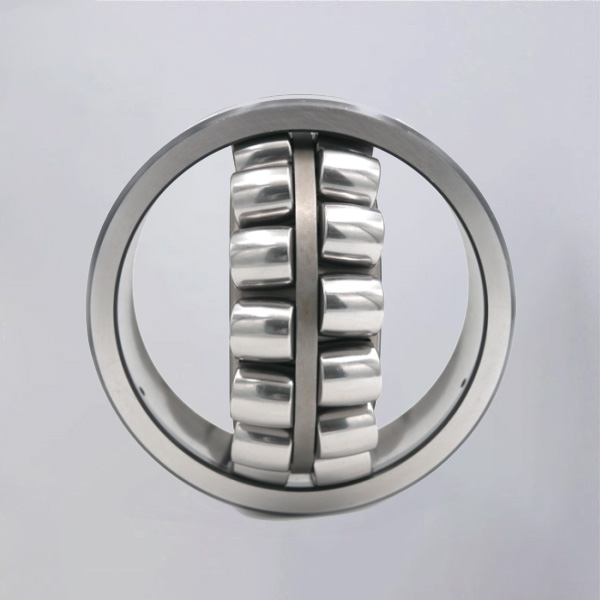
Rotational accuracy defines how true a bearing rotates. It is measured by runout—the total variation in position of a rotating surface relative to a fixed point. For applications like semiconductor wafer handling or medical imaging, minimal runout is essential for repeatability. A bearing with poor runout will introduce positioning errors and micro-vibrations into the system. As an ISO 9001 certified manufacturer, we enforce strict quality control, with 100% pre-shipment inspection to control maximum runout within 1.5 μm for our P4 and P2 precision grade bearings. This level of precision is critical for customers like our German client, who uses our crossed roller bearings for sensitive semiconductor equipment.
Stiffness (Rigidity)
Stiffness, or rigidity, is a bearing's ability to resist deformation under load. In automation, tilting moment stiffness is particularly important. For a robot arm, low stiffness results in "droop" at the end of the arm when carrying a payload, reducing positioning accuracy. In a CNC machine tool, it can lead to spindle chatter and poor surface finish. Crossed roller bearings offer excellent rigidity because their rollers are arranged at 90° angles, allowing a single bearing to handle loads from all directions. Applying a specific preload (negative clearance) further increases this stiffness, eliminating the "wobble" that can affect robot joint bearings.
Friction Torque
Friction torque is the resistance to rotation within a bearing. It is comprised of starting torque (the torque needed to initiate motion) and running torque (the torque needed to maintain motion). In applications like DD motors, high or inconsistent friction torque can cause cogging, limit dynamic response, and reduce energy efficiency. The solution lies in precision-matched rolling elements, optimized raceway geometry, and the use of specialized low-viscosity lubricants. We customize low-friction torque crossed roller bearings specifically for these applications, ensuring smooth rotation and stable thermal performance.
Size and Weight (Compactness)
In modern automation, especially robotics, space and weight are at a premium. Bulky components increase the overall mass and inertia of a system, requiring larger motors and more energy to operate. Bearing designs like thin section bearings and crossed roller bearings provide a solution. For example, a single crossed roller bearing can do the work of two angular contact ball bearings, saving significant space and simplifying the surrounding machine structure. This compact integration is essential for designing multi-axis robot joint bearings.
Common Selection Mistakes for Automation Bearings
Even experienced engineers can fall into common traps when specifying industrial automation bearings. Avoiding these mistakes during the design phase can save significant time and resources.
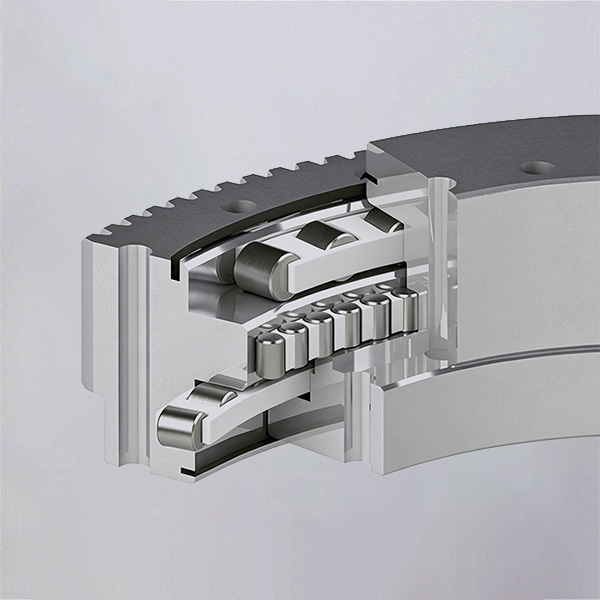
Mistake 1: Focusing Only on Dynamic Load Rating (C). The dynamic load rating is based on material fatigue life over millions of revolutions. Many automation applications involve slow, oscillating movements where the bearing never completes a full rotation. In these cases, static load capacity (C0), stiffness, and rotational accuracy are far more important than the fatigue life calculation.
Mistake 2: Ignoring Mounting Surface Requirements. Specifying a P2 grade bearing with 1.5 μm runout is pointless if it's mounted into a housing with 10 μm of flatness error. High-precision bearings require equally precise mounting surfaces (shafts and housings) to perform as specified. Always follow the manufacturer’s guidelines for surface finish, roundness, and geometric tolerances.
Mistake 3: Overlooking Thermal Effects. High speeds or heavy preloads generate heat. This heat causes the bearing and surrounding components to expand, which can dangerously increase the preload, leading to high friction, torque spikes, and rapid failure. Consider the operating temperature and ensure the lubrication and clearance/preload settings are appropriate. Our material selection process, which includes using high-purity GCr15 (SAE 52100) bearing steel, helps ensure thermal stability.
Mistake 4: Accepting Long Lead Times as Unavoidable. System integrators and OEMs often face supply chain bottlenecks with 4–8 month lead times from major international brands. This delays projects and inflates costs. However, alternatives exist. At BY Bearings, we offer full dimensional and functional interchangeability with major brands, plus OEM customization for special mounting holes or dimensions, with a much faster 3–6 week turnaround.
Verifying Bearing Quality and Supplier Capability
When sourcing precision bearings, especially for demanding applications, it's vital to verify the supplier's quality claims. Here is a short checklist on what to ask for:
A Buyer's Decision Checklist:
Material Certification: Can the supplier provide a material certificate for the bearing steel? Ask for confirmation that they use high-grade steel like GCr15 and conduct spectrographic analysis to verify its chemical composition.
Heat Treatment Process: How is hardness and microstructure controlled? A capable manufacturer will perform metallographic examinations after heat treatment to ensure optimal hardness (HRC 60-64) and a stable martensitic structure for durability.
Quality Management System: Is the facility ISO 9001:2015 certified? This certification is an external validation of a company's ability to consistently produce parts that meet customer and regulatory requirements. You can review our Quality Control processes for more detail.
Inspection Reports: Can the supplier provide individual inspection reports for P4 and P2 grade bearings? These reports should show the measured values for key parameters like axial runout, radial runout, and critical dimensions, proving the parts meet the specified precision class. Our successful delivery of P2 rotary table bearings to a gear grinding machine builder in Mexico was based on this verifiable precision.
By asking these questions, you can better assess a supplier's technical capabilities and commitment to quality, ensuring the bearings you receive will perform reliably in your automation system.
If you are designing an automation system and need help selecting the right bearing, submit your technical requirements and our engineers can provide a detailed proposal and a get a quote.
 +8618939019135
 sales@bybearings.com
 +8618939019135