Bearing Supplier for Automation Equipment Guide
Before sending an RFQ, automation OEMs and system integrators should check far more than unit price and catalog dimensions. A poor supplier choice can lead to mounting mismatches, unstable repeat positioning, inconsistent preload, delayed builds, and difficult warranty discussions after equipment reaches the field.
A qualified Bearing Supplier for Automation Equipment should be able to support the full buying decision: bearing selection, drawing review, production consistency, inspection evidence, packaging control, and repeat-order reliability. This matters when a bearing is installed in a robotic joint, direct drive table, semiconductor handling system, harmonic reducer, or CNC rotary axis.
For recurring production needs, procurement teams should compare suppliers against the actual risks of their application. A low cost bearing is not a low cost choice if it introduces vibration, assembly rework, or unplanned qualification cycles later.
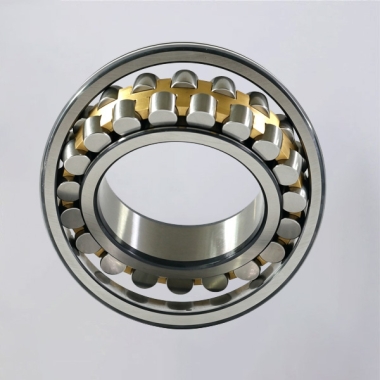
Start With the Bearing Function Rather Than the Catalog Price
The first decision is not which supplier has the lowest quoted price. It is which bearing design matches the load path, mounting space, accuracy requirement, and operating motion. Industrial automation bearings often carry combined radial, axial, and overturning moment loads in a compact housing. A supplier should explain which product type fits those conditions and why.
| Application situation | Suitable bearing direction | Why it fits | When it may not fit |
|---|---|---|---|
| Robot wrist or compact rotary joint | Precision Crossed Roller Bearings | Crossed rollers can support radial, axial, and moment loads in one compact arrangement. | Not the first choice when the application needs a very large diameter rotating structure. |
| Harmonic reducer output | Harmonic drive bearings | These bearings suit compact reducer arrangements where rigidity and positioning stability are important. | They require correct fit, preload, and mounting surface control from the equipment designer. |
| CNC rotary table or turn mill axis | Rotary Table Bearings | Rotary table designs are intended for combined loads and high tilting stiffness. | They are not a substitute for correcting poor table structure or inadequate mounting surfaces. |
| Large rotating automation platform | Slew Bearings | Suitable for larger diameters where the rotating structure carries meaningful overturning load. | May be oversized for compact precision joints with limited installation space. |
| Lightweight compact mechanism | Thin Section Bearings | Helps reduce radial space and system mass. | Selection still depends on load, rigidity, and motion requirements. |
Recommendation: provide the supplier with the application drawing, mounting arrangement, load direction, operating motion, and accuracy expectation before asking for a final part number. This approach fits new designs, replacement projects, and second-source qualification. It does not replace the OEM’s own machine design validation, because the bearing supplier cannot correct insufficient housing stiffness or a distorted shaft shoulder after assembly.
A robotic arm bearing supplier should also ask where the joint is installed. Shoulder, elbow, wrist, and reducer output positions can impose very different moment loads. If a supplier offers a part number without asking about the installation, treat that as a warning sign.
Use an Application Based Technical Qualification Process
Automation mechanisms fail for different reasons. A fast pick and place axis may be limited by friction torque and thermal behavior. A precision wafer handling mechanism may be limited by vibration and acoustic noise. A rotary machining axis may be limited by runout and tilting stiffness. These needs should lead the technical discussion.
Ask for evidence related to the required accuracy
When repeat positioning and smooth rotation are important, request the supplier’s declared precision grade, inspection method, and final inspection records. BY Bearings can supply P5, P4, and P2 precision bearings, with runout controlled within 1.5 μm under its stated inspection process. This is relevant for buyers evaluating precision rotary motion, but it should not be read as a machine-level accuracy guarantee. Final equipment accuracy also depends on the shaft, housing, assembly process, drive system, encoder, and structural rigidity.
For rotary table projects, review the specifications of BRT Rotary Table Bearings against the table layout and mounting bolt pattern. For applications with high dynamic multi-axis loads, crossed tapered roller arrangements may also be worth discussing. The appropriate choice depends on the actual load case rather than the bearing name alone.
Confirm material and heat treatment controls
A bearing supplier should state how material and heat treatment are controlled. BY Bearings uses GCr15 bearing steel, also known as SAE 52100, and verifies chemical purity through spectrographic analysis. After heat treatment, its process includes metallographic examination and hardness checks within HRC 60 to 64. These controls matter because material quality and heat treatment affect wear resistance, rolling contact performance, and dimensional stability.
The practical limitation is clear: material information alone does not prove that every finished bearing is suitable for a buyer’s application. Ask for finished-product inspection evidence as well, especially for precision assemblies and repeat orders.
Match the supplier to the equipment category
Robotics: focus on rigidity, preload approach, compact size, backlash control, and installation guidance. Review Bearings for Industrial Robotics when comparing joint bearing arrangements.
Direct drive tables: focus on low friction torque, rotational smoothness, thermal behavior, and mounting accuracy.
Machine tools: focus on radial, axial, and overturning loads, plus runout requirements under operating conditions.
Semiconductor equipment: focus on low vibration, quiet operation, clean handling requirements, and stable positioning.
Large rotating modules: focus on load distribution, mounting interface, gear requirements where applicable, and rotational torque.
BY Bearings has supplied crossed roller bearings for semiconductor equipment in Germany and P2 rotary table bearings for gear grinding in Mexico. These are specific application references, not a promise that every automation project will have the same operating conditions or result. Buyers should still qualify the part for their own equipment.
Supplier Evaluation Checklist for Traceability Engineering Support Stock Availability and Lead Time Reliability
A supplier comparison should go beyond price, sample availability, and a product catalog. The checklist below focuses on risks that commonly affect recurring production programs. This is also a practical answer to the procurement question, “how to vet a bearing supplier.”
| Evaluation item | What to request | Why it matters | Risk if skipped |
|---|---|---|---|
| Traceability | Part number control, lot identification, inspection records, and material documentation where applicable. | Traceability helps isolate an issue to a production lot and supports controlled repeat purchasing. | A field issue may become difficult to investigate, contain, or compare against previous deliveries. |
| Engineering support | Drawing review, load discussion, mounting guidance, clearance or preload discussion, and technical response process. | Technical review reduces the chance of selecting a bearing that fits dimensionally but performs poorly in service. | The buyer may receive a catalog match that has unsuitable stiffness, installation requirements, or operating behavior. |
| Stock availability | Current stock statement for standard parts, available quantities, and confirmation of whether stock is finished goods or material. | Stock can protect urgent prototype or service demand, but only if the available item matches the required precision and configuration. | A buyer may assume immediate shipment, then discover that finishing, inspection, or customization is still required. |
| Lead time reliability | Written production schedule, production stage visibility, shipping plan, and communication process for schedule changes. | Reliable timing helps the buyer plan assembly labor, incoming inspection, and customer delivery commitments. | A late bearing can hold up an entire automation cell even if all other components are ready. |
| Quality system | Quality process description, final inspection scope, and bearing supplier quality certification evidence. | A documented system provides a basis for repeatable inspection and corrective action. | Quality may depend on individual operators rather than a controlled production process. |
| Commercial terms | MOQ policy, warranty terms, customization scope, packaging method, and quotation validity. | Commercial details influence total purchasing risk, particularly for pilot builds and spare parts. | Hidden minimums or unclear warranty terms can raise cost after the design is approved. |
Recommendation: score each supplier using the same evidence request. Do not give full marks because a supplier says it has stock or engineering support. Require records, drawings, sample responses, or written schedules. This method is especially useful for an automation bearing supplier considered for repeated purchase orders. It is less useful for a one-time, noncritical maintenance part where qualification cost exceeds the risk of a simple replacement.
BY Bearings operates under an ISO 9001 quality system and performs 100% inspection before shipment. Its facility covers 13,500 m² and includes a CNC workshop and automated heat treatment line. For buyers, the useful next step is to ask how these stated capabilities apply to the exact bearing series, precision grade, and order quantity under review.
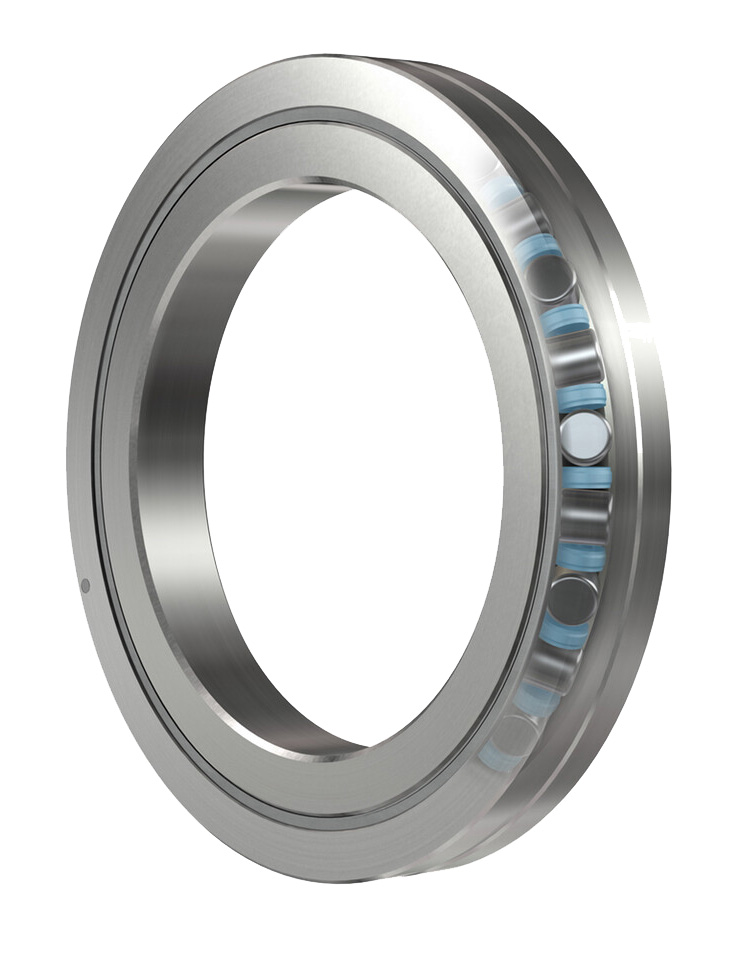
Compare Total Sourcing Risk Instead of Piece Price Alone
Price remains important, but the purchase order price is only one part of the cost. Procurement teams should compare the cost of qualification, incoming inspection, assembly rework, delivery risk, and service exposure. A lower initial quote may not be favorable if it creates extra engineering work or inconsistent production lots.
| Cost area | Questions for the supplier | Buyer action |
|---|---|---|
| Part price | Does the quotation specify precision grade, configuration, and included accessories? | Compare like for like rather than comparing part numbers alone. |
| Qualification effort | Can the supplier provide drawings, technical replies, and inspection data during evaluation? | Estimate engineering hours needed before approval. |
| Incoming inspection | What inspection is completed before shipment? | Set receiving checks based on application risk and supplier evidence. |
| Assembly rework | Are mounting fits, preload, lubrication, and handling instructions available? | Include trial assembly costs when comparing a new source. |
| Delivery exposure | What is the confirmed schedule for the ordered configuration? | Align purchase timing with production and customer delivery dates. |
| Warranty exposure | What warranty period and claim process apply? | Document responsibilities before releasing the order. |
BY Bearings states a 12 month warranty from the shipment date, supports OEM and ODM customization, and has no MOQ requirement. These points can be useful for prototype builds, lower-volume programs, and special mounting requirements. They do not remove the need to confirm the exact configuration, delivery schedule, and inspection requirements on each quotation.
For production planning, capacity also matters. BY Bearings reports monthly production capacity of 15,000 sets and exports to more than 65 countries while serving over 500 B2B customers. A buyer should treat capacity as a qualification indicator, then ask whether the required bearing type and precision class can be scheduled within the needed production window.
Avoid These Common Supplier Qualification Mistakes
Approving from a catalog image: A catalog confirms product availability, not suitability. Request dimensional drawings and discuss the actual load case before approval.
Comparing only outer dimensions: Similar dimensions do not guarantee matching precision, preload condition, mounting holes, lubrication, or friction behavior.
Ignoring mounting requirements: Even a precision bearing can perform poorly when installed on distorted surfaces or incorrect fits. Ask for mounting guidance before production assembly.
Accepting vague lead time statements: Ask whether the stated timing covers production, inspection, packaging, and shipment preparation.
Skipping lot control questions: This can complicate corrective action if a problem appears after field installation.
Assuming a sample proves recurring quality: A sample should be followed by a repeat-order verification plan, especially for precision applications.
Choosing unnecessary precision: P2 class may be appropriate for demanding rotary applications, but it may not be necessary for every automation mechanism. Select the grade based on system requirements and cost limits.
Follow a Practical RFQ Process Before Releasing Production Orders
Define the application: identify the machine function, load directions, operating motion, installation space, target accuracy, and environmental conditions.
Prepare technical documents: provide drawings, mounting dimensions, bolt patterns, preferred bearing arrangement, and any interchangeability requirement.
Request a technical proposal: ask the supplier to identify the recommended bearing type, precision grade, inspection scope, and installation considerations.
Check quality evidence: request details of the quality system, inspection records, traceability method, and pre-shipment inspection process.
Confirm commercial details: verify quoted price, MOQ, customization, packaging, warranty, production timing, and shipping terms.
Qualify samples or pilot quantities: evaluate fit, rotation, noise, torque behavior where relevant, positioning performance, and assembly repeatability.
Approve a repeat-order control plan: define the approved drawing revision, part number, inspection requirements, packaging standard, and process for engineering changes.
This process suits OEMs building repeatable automation products and integrators managing project schedules. For emergency maintenance replacements, the process may need to be shortened, but the buyer should still verify dimensional compatibility and installation requirements before placing the order.
When comparing a Bearing Supplier for Automation Equipment, choose the partner that can support the full path from technical selection to repeatable supply, not simply the first supplier that returns a price. Submit your drawings and operating requirements to get a quote or request bearing selection advice from BY Bearings.
 +8618939019135
 sales@bybearings.com
 +8618939019135