Crossed Roller Bearing Manufacturer Qualification Risk Guide
A low quote is easy to accept. The checks you skipped to get it are what you regret later. A first order of crossed roller bearings that fails on your assembly line costs more than the price gap you were chasing: re-inspection, a stopped line, a second shipment. A qualified Crossed Roller Bearing Manufacturer can show evidence before you pay, and this guide lists that evidence. I wrote it for buyers at the cost-validation stage, comparing low-price offers with qualified production sources before an initial order.
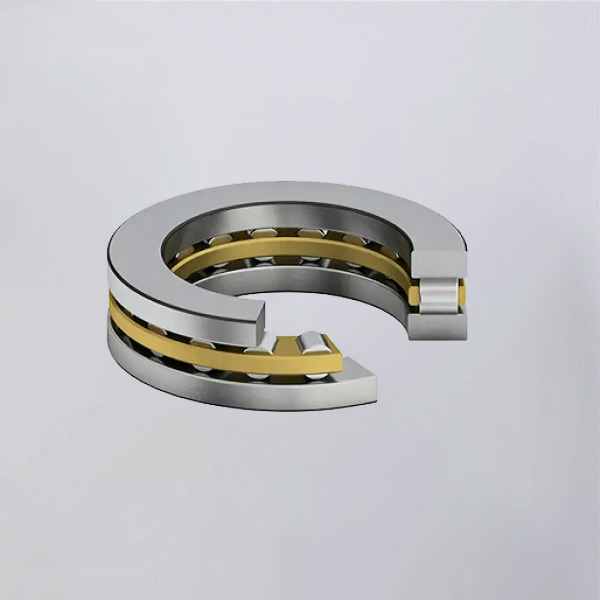
What a Qualified Production Source Can Show You Before the First Order
Price tells you little about process control. Documents, test data and sample behavior tell you much more. At BY Bearings, we ask buyers to request the items below from any supplier, including us.
| Evidence to request | What it proves | Limit of the evidence |
|---|---|---|
| Material verification (we use GCr15 / SAE 52100 steel, checked by spectrographic analysis) | The chemistry matches the grade on the drawing | Says nothing about heat treatment or grinding quality |
| Metallographic examination after heat treatment (target hardness HRC 60 to 64, stable martensitic structure) | Rings and rollers were hardened consistently | Applies to the lot tested, so ask for lot-level records |
| Runout control within 1.5 μm with 100% inspection before shipment | Rotational accuracy was measured on every set, not sampled | Confirm which size range and precision class the figure covers |
| ISO 9001:2015 quality system, plus CE / RoHS / TUV certification | Documented processes and recognized compliance | A certificate does not replace your own sample test |
| Production capacity (15,000 sets per month) and a 13,500 m² intelligent factory | The supplier can repeat a sample result in volume | Capacity is not your delivery date, so confirm lead time per drawing |
Our process is described on the Quality Control page. Grinding accuracy reaches P2 class, and the factory runs a CNC workshop and an automated heat treatment line. These facts matter because they explain where a repeatable result comes from. A sample that performs well once, from a source with no process records, may not repeat in the second lot.
Match the Series to the Application Before You Compare Prices
Many qualification failures start with the wrong series, not the wrong supplier. A bearing that is "equivalent" on dimensions can still behave differently under your load case. Decide the series first, then compare quotes for that series only.
- Robotics and harmonic drive joints: The concerns are joint backlash, weight and thermal drift. Ultra-thin, high-rigidity precision crossed roller bearings and harmonic drive bearings with controlled negative clearance (preload) suit this case. See also Bearings for Industrial Robotics.
- CNC rotary tables and turn-mill centers: Combined radial, axial and overturning moment loads call for BRT Rotary Table Bearings or crossed tapered roller bearings at P4 or P2 precision.
- DD motors and direct drive turntables: Friction torque and heat buildup dominate. Specify low-friction torque requirements with the quote request.
- Medical imaging and semiconductor equipment: Micro-vibration and noise matter most, so ask for runout and torque inspection records with the shipment.
Two real examples show how this works in practice. A German customer uses our crossed roller bearings in semiconductor equipment. Another German customer buys BBH Series Crossed Roller Bearings in bulk export orders. A customer in Mexico uses P2 rotary table bearings for gear grinding. The three applications call for different series and tolerances. Your own load case decides the series, so share it with the supplier before asking for a price.
When this advice does not apply: If you are replacing a bearing with an identical part number from the same drawing, you can skip the series selection and go straight to the sample test.
How Sample Validation, Batch Inspection and Failure Risk Change the True Landed Cost
The unit price on a quote is one line in the landed cost. Sample validation, batch inspection requirements and the cost of a failure sit beside it, and they decide whether a cheap offer is cheap. Keep three categories separate, because mixing them turns guesses into facts.
| Category | Cost item | How to treat it |
|---|---|---|
| Confirmed (written on a quote or invoice) | Unit price, sample price, sample freight, any customization fee, stated lead time (we list 45 to 60 days), warranty term (12 months from shipment date) | Use as fact, but only after it appears in writing |
| Estimated (you calculate from your own data) | Bulk freight and duty before a forwarder quote, your incoming inspection hours, test fixture time, safety stock holding cost, line-stop cost per hour | Label as estimate and update when the real quote arrives |
| Unknown until tested | Failure rate in your application, rejected-lot rate, requalification cost after a rejection, damage to downstream parts | Do not assign a number until sample and first-batch data exist |
A simple test keeps this honest. Suppose an offer is 5% cheaper per unit. That saving is real only if the expected failure cost per unit stays below 5% of the price. Expected failure cost equals the probability of failure times the cost of one failure event. The probability is unknown until you test, which is why sample validation comes before the purchase order. The 5% figure is a hypothetical to show the logic, not a market number.
Batch inspection requirements follow from this. If a supplier inspects 100% of sets for runout before shipment, your incoming check can be lighter, and you can budget fewer inspection hours. If the supplier gives only sampling data, plan more incoming inspection and record that as an estimated cost. Either approach works. What matters is knowing which one you are paying for.
Limit: For non-critical applications with easy replacement, the failure cost is small and a lighter validation plan may be reasonable. For gear grinding, semiconductor or medical equipment, one failure can stop a machine, so full validation pays off.
A Step by Step Qualification Plan for the Initial Order
- Send the drawing and load case. Include dimensions, precision class (P5, P4 or P2), preload requirement, speed, and the equipment type.
- Request the evidence pack. Ask for material verification, heat treatment records, and the runout inspection format used before shipment.
- Order samples. We work with no MOQ, so a sample or trial quantity is possible. Pay for samples, because paid samples are treated as production parts.
- Test in your own conditions. Measure runout, check friction torque by hand and with a fixture, and run the bearing on a real or simulated axis.
- Agree the inspection report. Define which measurements travel with each shipment so the first batch can be compared against the sample.
- Release a small first batch. Confirm the lead time in writing. Our listed range is 45 to 60 days, and the exact date depends on drawing and quantity.
- Compare batch to sample. If the data matches, scale up. If it does not, you have caught the problem at low cost.
For harmonic drive and slim-profile designs, also check Thin Section Bearings and the BRE Series Crossed Roller Bearings against your installation space before locking the drawing.
Common Qualification Mistakes to Avoid
- Comparing quotes across different precision classes. A P5 price next to a P2 price is not a comparison. State the class on every RFQ.
- Testing only dimensions. A bearing can match the drawing and still show poor rotation. Test runout and torque as well.
- Skipping written lead time. A verbal promise cannot be audited. Get the date on the quote.
- Treating a certificate as a test result. ISO 9001 shows a system exists. Your sample shows whether the part works in your machine.
- Ordering the full volume first. A small first batch costs more per unit, but it limits the unknown failure cost.
- Not agreeing on warranty terms. Our warranty runs 12 months from the shipment date. Whatever supplier you choose, get the start date and the scope in writing.
Buyer Checklist Before You Release the Purchase Order
- Precision class and series stated on the RFQ and matched to the application
- Material and heat treatment records received
- Runout and torque inspection format agreed, with the 1.5 μm control level confirmed for your size
- Sample tested under real conditions, with results recorded
- Confirmed, estimated and unknown costs listed separately
- Lead time, packaging and warranty written in the quote
- Drawing revision locked for the first batch
Qualified sourcing does not require a long process. It requires the right records in the right order. A Crossed Roller Bearing Manufacturer that is confident in its process will welcome the sample test. If you want to compare our samples against your current offer, send your drawing and load case and get a quote. Our team can also suggest a series and precision class from our Precision Bearing Solutions range.
 +8618939019135
 sales@bybearings.com
 +8618939019135