Diagnose BRT Rotary Table Bearing Heat in Service
Why Is My Rotary Table Bearing Hot? Start by Separating Symptom From Cause
An indexing table runs warm. The housing is hotter than last month, or the drive is pulling more current. The question is whether the heat comes from the bearing itself, from how it was filled with grease, or from how it was mounted. Heat is a symptom. Four different causes can produce it, and each needs a different fix.
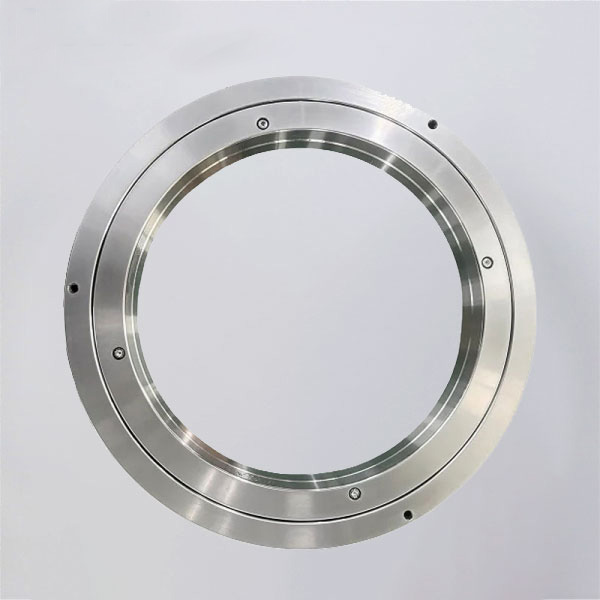
BRT Rotary Table Bearings carry axial, radial and tilting loads in one compact unit. That makes them sensitive to mounting flatness, grease quantity and seal contact. A rise in temperature alone does not tell you which of these is responsible. Diagnosis means collecting two kinds of evidence, temperature behavior and torque behavior, and reading them together.
Daniel Wei, our Precision Bearing Product & Application Manager at BY Bearings, uses the same order every time a customer reports BRT rotary table bearing overheating: record first, adjust second, replace last.
Stop conditions
Stop the table and do not keep running it "to see what happens" if you observe any of these:
Temperature keeps climbing with no sign of leveling off during a steady cycle.
Grinding, rumbling or intermittent knocking that was not present before.
Burnt-grease smell, smoking, or grease running out of the seal area.
Discolored (blued or brown) metal near the ring or housing.
These point beyond routine grease or mounting issues. Go to the escalation section at the end of this article.
Preliminary Checks You Can Do Without Disassembly
Before any intervention, establish what the table is doing now and what changed. Most heat cases are explained by this stage.
Pull the records. Note the date of installation, last regreasing, grease type and quantity, and any maintenance on the table since then (bolt re-torque, fixture swap, seal replacement).
Check for load or program changes. A heavier fixture, a new workpiece or a faster indexing profile changes heat generation with no fault in the bearing.
Set a measurement point. Use the same spot every time, on the housing or ring face as close to the bearing as you can reach. A contact probe is more repeatable than an infrared gun on bare, shiny metal.
Log the trend, not one reading. Record from cold start at fixed intervals (for example every 10 minutes) until the temperature levels off or you reach your stop condition. Note ambient temperature.
Do a drive-disengaged hand-turn. With the motor or drive decoupled and the table safe, turn it by hand. Note whether the drag is smooth and constant, or whether it changes with angular position.
Inspect the seal area. Look for dry, dusty lip contact, grease purge, or a seal that looks dragged or displaced.
The temperature that matters is relative: compared with the same table at the same duty in its earlier healthy state. Without a baseline, use the machine builder's allowable temperature for the table. We cannot give a universal limit, because it depends on the grease, the duty cycle and the machine design.
Separating Grease, Seal Drag, Mounting Distortion and Speed Heat
This is the core of BRT bearing friction diagnosis. Compare your logged temperature curve and your torque observations against the patterns below. Treat the table as a ranking of likely causes, not a verdict. Two causes can overlap, and the discriminating test is what separates them.
| Suspected cause | Temperature pattern | Torque pattern | Discriminating test | Does not fit if |
|---|---|---|---|---|
| Excess grease (churning) | Highest soon after regreasing, then slowly eases as grease redistributes or purges | Rises with speed; hand-turn at standstill feels only moderately stiff | Compare the temperature curve before and after regreasing; check the fill against the specified amount | Heat started long after the last regreasing and keeps rising |
| Seal drag | Quick rise at start, then a steady plateau; warmest near the seal side | Constant drag all around, present even at very low speed and by hand | Feel drag at standstill; inspect lip contact and look for dry seal surfaces | Hand-turn is free and uniform |
| Mounting distortion | Uneven: one sector or one side of the housing warmer than the rest | Torque varies by angular position; tight and loose spots | Slacken the mounting bolts slightly, then re-tighten in a cross pattern and repeat the hand-turn | Drag is identical in every position and does not change when bolts are relaxed |
| Operating-speed and duty heat | Scales with speed and indexing frequency; falls when you reduce them | Hand-turn at standstill feels normal | Run the same cycle at a lower speed and compare the plateau temperature | The table is hot even when idling or turned slowly |
One practical shortcut: if the table is hot at low speed and stiff by hand, look at seal drag or mounting first. If it is normal by hand but hot at speed, look at grease quantity and duty. Mounting distortion is the one cause that leaves a position-dependent signature.
Reading the Result: What to Check Next
Branch A: Heat peaked after regreasing and is slowly settling
This points to bearing lubrication heat from excess fill rather than damage. Let the table run through several cycles at moderate speed and keep logging. If the plateau falls and torque eases, you have your answer. Do not remove grease aggressively on the first reading, because a bearing that is run too dry causes its own problems. This branch does not apply when the table was last greased long ago.
Branch B: Constant drag, hot at low speed
Check the seal first. A dry seal lip, contamination at the lip or a seal pushed out of position raises friction without any fault in the rolling elements. Correct the seal condition and re-test hand-turn torque. If the drag stays after the seal is relieved or replaced, move to Branch C.
Branch C: Torque varies by angle, or one side runs hot
Suspect mounting distortion. Typical sources are an uneven or dirty mounting face, a fixture that is not flat, bolts tightened in sequence rather than in a cross pattern, or a mating part that sits out of true. Relax and re-tighten the bolts, then re-check hand-turn and the temperature distribution. If torque evens out, the mounting was the cause. If one area remains tight, measure flatness and squareness of the mounting surfaces against the drawing.
Branch D: Normal by hand, hot only at speed
Review the actual duty. Reduce speed or indexing frequency in steps and note where the plateau temperature drops. If it falls proportionally and stays inside the machine builder's limit, the bearing may simply be working near the thermal limit of the duty cycle. Consider whether the lubricant grade and fill suit that duty.
When nothing fits
If the evidence stays mixed, do not assume a single cause. Record what you have and escalate.
Corrective Actions and How to Verify Them
| Confirmed or likely cause | Action | Result check |
|---|---|---|
| Excess grease | Run through a settling period; correct the fill to the specified quantity at the next service | Plateau temperature falls versus the post-greasing curve; speed-dependent torque eases |
| Seal drag | Clean, re-seat or replace the seal; confirm correct lip contact | Hand-turn drag drops and is even; low-speed heat reduces |
| Mounting distortion | Check flatness of the seating faces and re-tighten bolts in a cross pattern to the specified torque | Torque variation by angle disappears; temperature distribution evens out |
| Speed and duty heat | Reduce speed or indexing frequency; review lubricant selection with the machine builder | Plateau stays within the allowable limit at the real production cycle |
Common mistakes
Replacing the bearing before checking the mounting faces and grease record.
Adding more grease because "it feels dry" when the real issue is seal drag.
Comparing a cold-start reading with a hot-running one.
Tightening all bolts in one pass around the ring instead of in a cross pattern.
Applying one remedy to every hot table.
Prevention and When to Escalate
Most recurrence is prevented by a few records: the grease type and quantity used, the bolt torque and sequence, a baseline temperature curve taken when the table was healthy, and the hand-turn torque at commissioning. Recheck the baseline after any fixture change or major service. For machine-tool tables, our bearings for machine tools page covers the load types these units see.
Escalate when:
Temperature does not level off after the relevant correction.
Hand-turn torque stays uneven after you relax and re-tighten the mounting.
You hear or feel roughness, or find debris or discoloration.
What to send us
Bearing designation and a photo of the nameplate or marking.
The logged temperature curve and ambient temperature.
Hand-turn observations (smooth, constant, or position-dependent).
Grease type and last regreasing date; seal condition photos.
Speed, load and indexing duty, plus the mounting-face flatness data if you have it.
Bearings leave our plant after 100% inspection, with runout controlled within 1.5 μm, and the quality control records help us trace any case. Our warranty runs 12 months from the date of shipment. With the data above we can tell whether the evidence points to mounting, lubrication or the bearing itself, without assuming any of them in advance. In precision work such as the P2 rotary table bearings we supplied for gear grinding in Mexico, the same data set applies. For other mounting formats, you can also compare BRTM series rotary table bearings.
If you are seeing unexplained heat on an installed table, send us your temperature log and bearing details and we will review them with you. You can get a quote or ask for selection advice for your next BRT Rotary Table Bearings order.
 +8618939019135
 sales@bybearings.com
 +8618939019135