Prevent Wafer-Tool Contamination With Clean Bearings
Is Your Bearing the Source of Wafer-Tool Contamination?
As a reliability engineer, you know that an unplanned particle event in a wafer processing or handling tool can lead to scrapped wafers and costly downtime. When you've ruled out process-related sources, the investigation often turns to mechanical motion systems. Any moving component is a potential generator of contaminants, and the high-precision bearings at the heart of these systems are a primary suspect. The challenge is pinpointing whether the bearing is the true cause and, if so, what failure mechanism is responsible.
This article provides a diagnostic framework for investigating particle generation from bearings in semiconductor equipment. We'll move from non-invasive checks to specific failure analysis, helping you identify the root cause and implement effective corrective and preventative measures. With over 15 years of experience in manufacturing Precision Crossed Roller Bearings for sensitive applications, I've seen firsthand how subtle bearing issues can impact system cleanliness.
Identifying Particle Sources: 4 Common Bearing Contamination Mechanisms
Particle generation in a bearing is not a single-source problem. It can originate from the lubricant, the seals, internal components, or even from external factors during installation. Understanding these distinct sources is the key to an accurate diagnosis. Below is a breakdown of the four most common culprits, what to look for, and the engineering controls that prevent them.
| Contamination Source | Description & Particle Type | Primary Cause | Preventive Controls |
|---|---|---|---|
| Lubricant Migration & Outgassing | Minute droplets of oil (grease bleed) or solid lubricant particles (PTFE, MoS2) escape the bearing. In vacuum, lubricant components can vaporize (outgas) and redeposit on surfaces. | - Incorrect grease specification (high bleed rate, wrong base oil). - High operating temperatures causing grease degradation. - Use of non-vacuum-rated lubricants. | - Specify low-outgassing, vacuum-rated grease (e.g., perfluoropolyether - PFPE). - Ensure lubricant has low particle generation characteristics. - Maintain stable thermal management. |
| Seal Wear | Microscopic elastomeric or plastic particles (e.g., NBR, FKM) are shed as the seal lip rubs against the rotating or stationary bearing ring. | - Abrasive contact between the seal lip and a rough mating surface. - High rotational speeds causing excessive friction and heat. - Chemical incompatibility with cleaning agents or process gases. | - Use non-contact labyrinth seals where possible. - Ensure smooth, polished surfaces for contacting seals. - Select seal materials with high wear resistance and chemical inertness. |
| Cage/Retainer Debris | Particles of metal (steel, brass) or polymer (phenolic, PEEK) are generated from friction between the cage, rolling elements, and raceways. | - High acceleration/deceleration causing roller skidding and cage pocket wear. - Insufficient or degraded lubrication film. - Vibrations or shock loads causing impact damage. | - Select cage materials with low friction and high wear resistance. - Ensure proper preload to prevent roller skidding. - Implement a lubrication schedule appropriate for the application. |
| Installation & Handling | External particles (dust, fibers, metal chips) are introduced into the bearing during mounting. Improper tools can create burrs or nicks that generate debris during operation. | - Handling bearings outside of a cleanroom environment. - Using contaminated tools or hands. - Applying excessive force or impact during installation, causing brinelling of raceways. | - Mandate Class 100/1000 cleanroom protocols for bearing installation. - Use lint-free gloves and appropriate, clean mounting tools. - Follow manufacturer's recommended mounting procedures precisely. |
A Step-by-Step Diagnostic Checklist for Bearing Inspection
Before removing a suspect bearing from your equipment, a systematic, non-invasive check can provide valuable clues. Rushing to disassembly can destroy evidence and introduce new variables. Follow these steps to build a clear picture of the problem.

1. Review Operational & Maintenance History
Start with the data you already have. Look for correlations between the onset of particle events and any recent changes.
Maintenance Logs: Was any recent work performed on or near the motion system? A component change, lubrication event, or even a simple adjustment could be related.
Operational Parameters: Have cycle times, loads, or operating temperatures changed? Increased demands can accelerate wear and push a borderline component past its failure point.
System Alarms: Check for any recorded increases in motor current or drive torque. Higher friction in a bearing will often manifest as increased power consumption.
2. Conduct In-Situ Sensory Checks
Use your senses to detect changes in the bearing's performance while it's still in the machine.
Audible Noise: With the machine operating in a quiet state, listen for any new or unusual sounds from the bearing area. Grinding, clicking, or rumbling can indicate raceway damage or contamination.
Vibration Analysis: If the equipment has integrated vibration sensors, analyze the frequency spectrum. Bearing defects create characteristic vibration signatures that can be identified by a trained analyst.
Thermal Imaging: Use an infrared camera to check the bearing's operating temperature. A localized hot spot can signify excessive friction from lubricant failure or mechanical damage.
3. Perform a Visual Inspection
Carefully inspect the area around the bearing assembly for external signs of trouble.
Leaked Lubricant: Look for any evidence of grease or oil that has escaped the bearing seals. This is a clear sign of seal failure or over-lubrication. Collect a sample of the escaped lubricant if possible; its color (e.g., dark or metallic) can indicate internal wear.
Visible Debris: Use a high-intensity light and magnification to search for particles around the bearing's exterior. Note their location, color, and texture.
If these initial checks point strongly to the bearing, the next step is a carefully planned removal and analysis. Documenting each of these findings is essential, especially if you need to consult with your bearing supplier.
Specifying Bearings to Ensure Cleanroom Compatibility
Preventing contamination starts with selecting the right bearing. While standard precision bearings are suitable for many industrial uses, the demands of semiconductor manufacturing require specific material and design considerations. Partnering with a bearing manufacturer who understands these requirements is critical. For example, our work with German clients on Bearings for Industrial Robotics in semiconductor fabs has refined our approach to cleanroom-specific designs.
Our entire manufacturing process is governed by an ISO 9001 certified quality system. This ensures that from raw material verification to final inspection, every step is controlled to produce a clean and reliable component.
Key Specification Criteria
Materials: We start with high-purity GCr15 (SAE 52100) bearing steel, validating its chemical composition with spectrographic analysis. Internal components like cages can be specified from low-outgassing polymers like PEEK or stainless steel instead of standard phenolic resins.
Precision & Runout: Micro-vibrations can contribute to particle generation. Specifying a high-precision bearing (P4 or P2 class) minimizes this risk. We perform 100% pre-shipment inspection to ensure runout control is maintained within 1.5 μm, providing the smooth, stable rotation needed in wafer handling systems.
Lubrication: This is a frequent point of failure. We can supply bearings with customer-specified vacuum-rated, low-particle-generation greases. The type and amount of grease fill are precisely controlled to prevent over-lubrication and subsequent leakage.
Sealing: For applications where cleanliness is paramount, non-contact seals or shields are often preferred to eliminate the particle generation associated with rubbing seals.
Customization: Often, an off-the-shelf bearing is not the optimal solution. We support OEM and ODM projects, allowing for the design of bearings with special dimensions, mounting features, and integrated components that can improve system rigidity and cleanliness. This was the case for a YRT Rotary Table Bearings project for a gear grinding machine in Mexico, where a P2-grade bearing was customized for maximum accuracy.
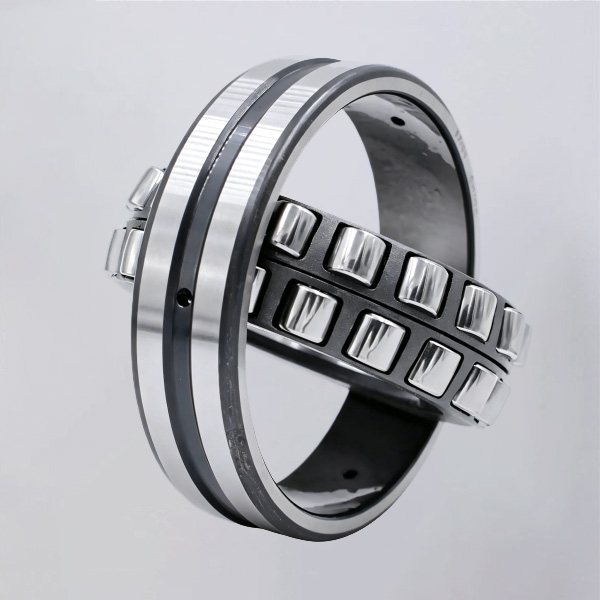
By addressing these factors during the design and procurement phase, you can significantly reduce the risk of bearing-induced contamination. It transforms the bearing from a potential liability into a reliable, clean-running component.
If you are facing challenges with bearing-related contamination or need to specify a bearing for a new cleanroom application, our engineering team can help. Share your application details with us to get a quote and a design recommendation.
 +8618939019135
 sales@bybearings.com
 +8618939019135