When Do High-Precision Crossed Roller Bearings Lose Accuracy?
Why a P4 Bearing Doesn't Guarantee P4 System Performance
Engineers often specify a P4 or P2 grade bearing, assuming that its catalog accuracy will translate directly to the final assembly. However, the datasheets for Precision Crossed Roller Bearings define their performance under specific, controlled measurement conditions. Once that bearing is installed into a housing and subjected to real-world operating forces, its effective accuracy can change significantly. The most common question we receive is not about the bearing's inherent precision, but why the system's runout is higher than expected after assembly.
A bearing's catalog accuracy is its baseline potential. Achieving that potential depends entirely on controlling the external factors that influence it during and after installation. These factors—including temperature changes, mounting interference, housing geometry, and applied loads—collectively form an "accuracy budget." If these variables are not managed, they can easily consume the micro-level tolerances that you paid for in a high-grade bearing, leading to positional errors, vibration, and reduced equipment life.
The Accuracy Budget: How External Factors Degrade Precision
A bearing's final operating accuracy is a balance of its manufactured precision and the stresses imposed by its environment. Understanding these factors is key to preventing crossed roller bearing accuracy loss. The three primary contributors that "steal" from your accuracy budget are thermal expansion, interference fits, and preload variations.
Our manufacturing process, which is fully compliant with ISO 9001:2015, focuses on creating a stable foundation. We use high-grade GCr15 (SAE 52100) bearing steel and perform metallographic analysis after heat treatment to ensure a stable martensitic structure. This minimizes material-related variations, but it cannot negate the laws of physics once the bearing is in your machine.
Here’s a breakdown of how these external factors affect performance:
| Factor | Physical Effect | Impact on Bearing Accuracy |
|---|---|---|
| Thermal Expansion | As the machine operates, heat from motors, cutting processes, or friction causes the bearing rings, shaft, and housing to expand at different rates. This is a primary driver of precision bearing temperature effects. | Changes the bearing's internal clearance or preload. A temperature gradient across the bearing can cause distortion (out-of-roundness), leading to increased rotational runout and higher friction torque. |
| Interference Fits | Press-fitting a bearing's outer ring into a housing or inner ring onto a shaft compresses and expands the rings, respectively. The amount of interference directly alters the raceway geometry. | Excessive interference can deform the thin-walled rings of a crossed roller bearing, creating ovality or waviness in the raceways. This immediately increases runout and can cause premature wear due to uneven load distribution on the rollers. |
| Preload Changes | Preload is the internal compressive force applied to eliminate clearance and increase rigidity. It is affected by both thermal expansion (which can increase it) and the initial mounting procedure. | Too little preload results in roller skidding and vibration under load, appearing as poor runout. Too much preload, often caused by thermal expansion or excessive interference, dramatically increases friction, heat generation, and wear, ultimately leading to failure. |
Common Mounting and Installation Mistakes That Increase Runout
Even with a perfectly specified bearing, poor installation practices are the fastest way to degrade accuracy. At BY Bearings, we perform 100% pre-shipment inspection to ensure parameters like runout are controlled within 1.5 μm before the product leaves our factory. If you observe a significant increase in runout after mounting, the cause is almost certainly in the assembly process.
Here are the most frequent installation errors we help customers troubleshoot:
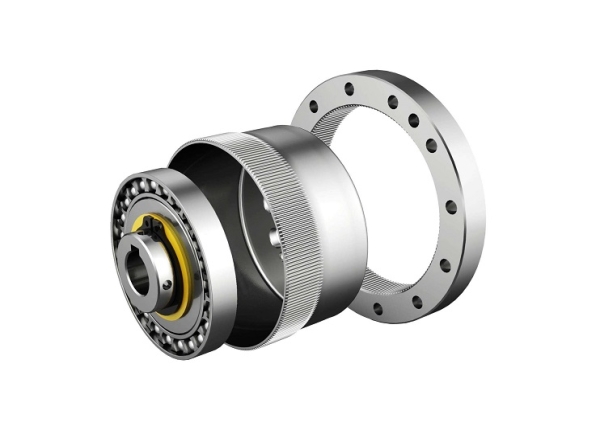
- Non-Uniform Bolt Tightening: Crossed roller bearings, especially thin-section types, have flexible rings. Failing to tighten mounting bolts in the correct crisscross pattern and with a calibrated torque wrench will distort the bearing ring, directly translating into axial and radial runout.
- Contaminated Mounting Surfaces: Any dirt, burrs, or debris on the shaft, housing shoulder, or bearing mounting faces will prevent the bearing from seating flat. This introduces a tilt, which manifests as significant face runout (wobble) during rotation.
- Out-of-Tolerance Housings and Shafts: If the housing bore is not perfectly round or the shaft has a taper, they will squeeze the bearing out of shape when installed. The bearing ring is not rigid enough to correct for poor geometry in its mating components.
- Lack of Support During Installation: When pressing a bearing into a housing or onto a shaft, force should only be applied to the ring being fitted (e.g., press on the outer ring to fit it into a housing). Applying force across the rollers can cause brinelling—permanent indentations in the raceways—that leads to noise, vibration, and accuracy loss.
- Ignoring Component Temperatures: Installing a cold bearing into a warm housing (or vice versa) can lead to problems. As the components reach thermal equilibrium, the fit can become too loose or too tight, altering the preload and compromising the entire system's accuracy.
Verifying the flatness and roundness of mating components before installation is not an optional step; it is essential for maintaining the precision you specified.
Load Conditions and Their Impact on Rotational Accuracy
Crossed roller bearings are designed to handle complex loads, but the magnitude and direction of those loads still influence their performance. The inherent rigidity of a crossed roller bearing comes from its V-groove raceways and alternating roller orientation, allowing a single bearing to manage radial, axial, and moment loads simultaneously. However, under heavy or dynamic loads, micro-deflections still occur.
These deflections, while small, can contribute to overall system error. This is particularly relevant in applications like CNC machining centers and robotics.
Case Study: CNC Rotary Tables
A common challenge for designers of CNC rotary tables and turn-mill centers is spindle chatter and surface finish defects during heavy cutting operations. These issues are often caused by the bearing deflecting under combined cutting forces and heavy overturning moments. The result is a loss of dynamic accuracy.
To solve this, we provide solutions like our BRT Rotary Table Bearings. These bearings feature high rigidity and are manufactured to P4/P2 precision. For a customer in Mexico manufacturing gear grinding machines, we supplied P2 grade rotary table bearings that successfully managed heavy, intermittent loads while maintaining the micro-radian positioning accuracy required for high-quality gear finishing.
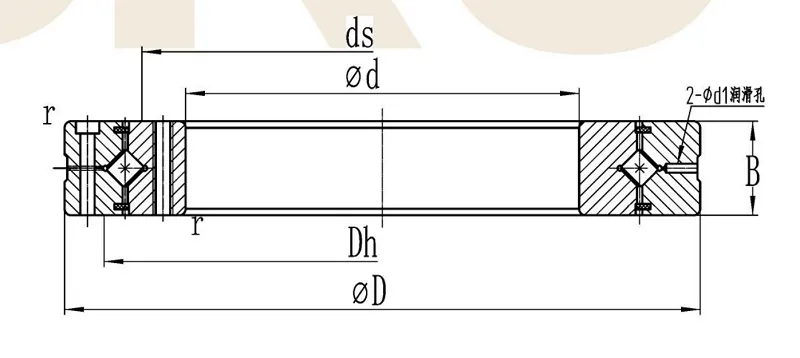
Key Load-Related Considerations:
- Stiffness vs. Load: A bearing's stiffness is not linear. As the load increases, the deflection per unit of load decreases. This means a lightly loaded bearing may seem less accurate than a properly loaded one. Choosing a bearing with the appropriate preload for your specific load spectrum is essential.
- Moment Loads: Heavy overturning moments, common in robotics and large turntables, can cause the bearing to tilt slightly. This tilting motion translates directly to positioning error at the point of interest. For these applications, a larger diameter bearing or a more rigid design like a Crossed Tapered Roller Bearings may be necessary to increase moment stiffness.
- Dynamic Loads: Rapid acceleration and deceleration, as seen in direct-drive motors and automation, can cause roller cages to shift or rollers to skid if the bearing is not properly preloaded. This leads to inconsistent friction torque and non-repeatable positioning errors.
As a manufacturer with over 15 years of experience, we support our clients with OEM and ODM services to customize bearings for unique load conditions. This can involve adjusting internal geometry, roller conformity, or preload to deliver optimal stiffness and maintain accuracy under your specific operating forces.
If your application struggles with accuracy under load, the issue may not be the bearing's grade but its suitability for the dynamic environment. A review of the complete load cycle is the first step toward a solution.
For a detailed analysis of your application's requirements or to discuss a custom design, please submit your technical drawings and get a quote from our engineering team.
 +8618939019135
 sales@bybearings.com
 +8618939019135