Rotary Table Bearings for Vertical Machining Centers: Applications and Selection Guide
What Are Vertical Machining Centers?
Vertical Machining Centers (VMCs) are among the most widely used CNC machine tools in modern manufacturing. Their defining characteristic is a vertically oriented spindle that moves along the Z-axis, pressing the cutting tool downward into the workpiece. This configuration provides excellent accessibility to the work zone, making VMCs particularly suitable for machining flat surfaces, pockets, slots, and complex three-dimensional geometries.
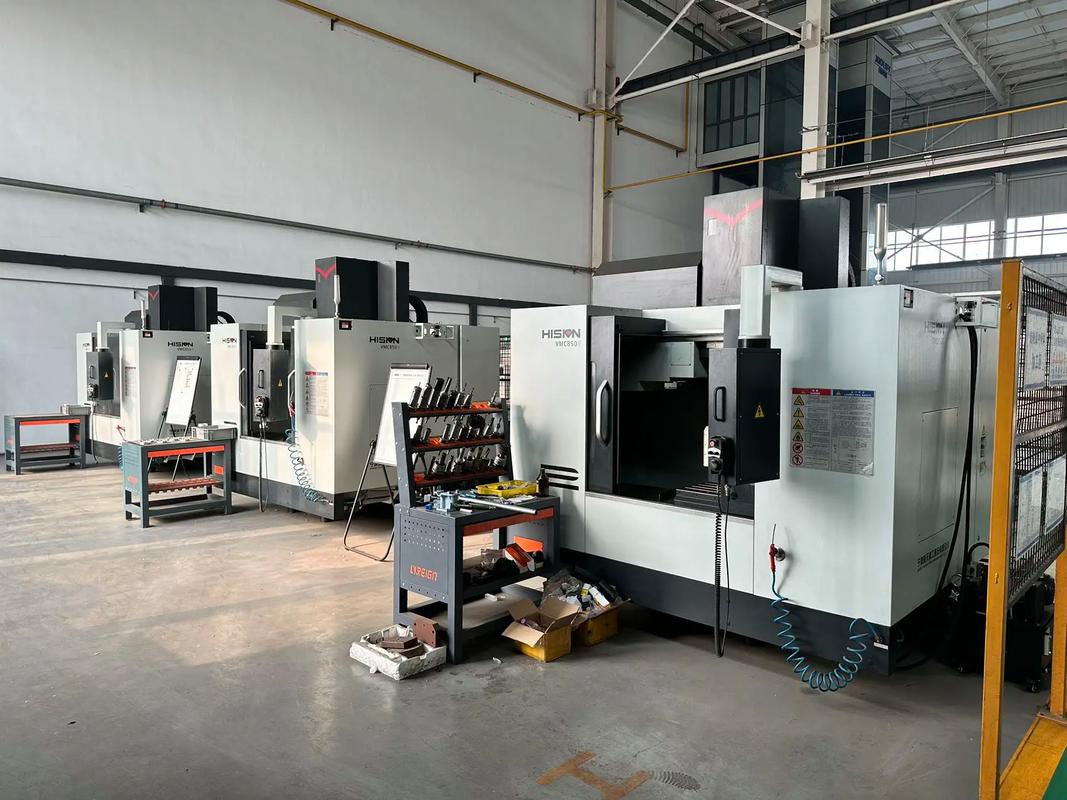
A standard VMC operates with three linear axes: X, Y, and Z. The workpiece is mounted on a table that moves in the X and Y directions, while the spindle moves vertically along the Z-axis. This three-axis configuration covers a wide range of machining tasks, but it has a fundamental limitation: the workpiece can only be approached from one direction. Features on the side or bottom of a part require either multiple setups or specialized tooling.
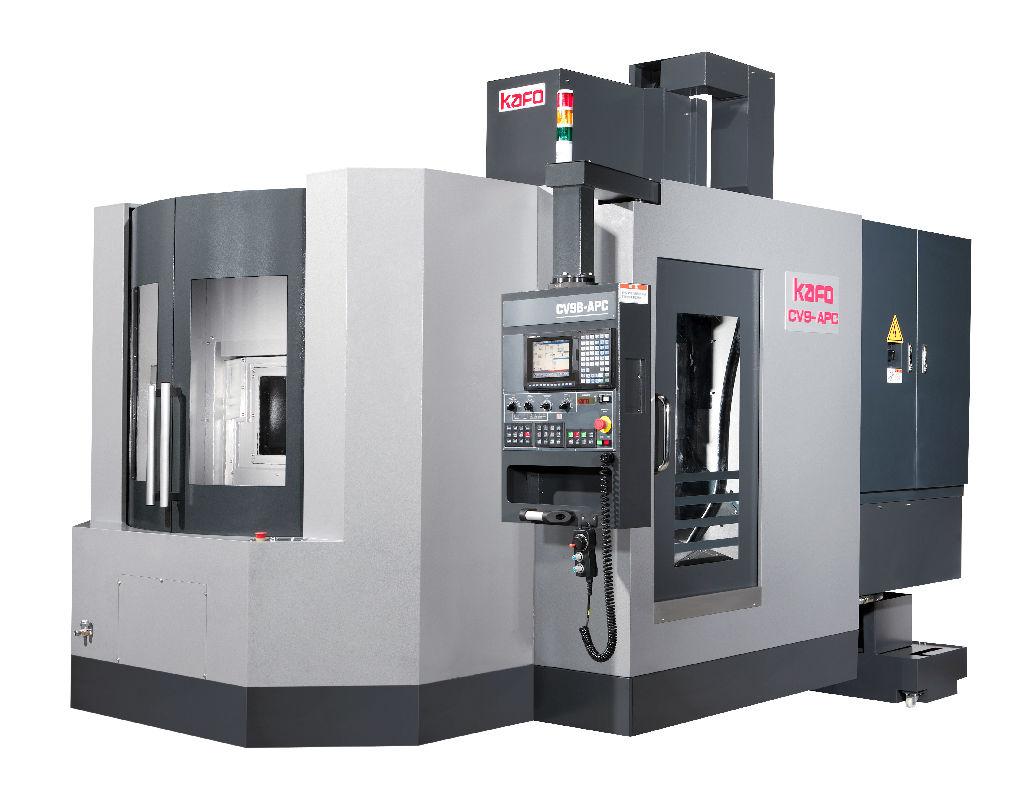
To overcome this limitation, manufacturers equip VMCs with rotary tables. A rotary table adds one or more rotational axes to the machine, enabling the workpiece to be indexed or rotated continuously during machining. The most common configuration is a fourth axis (A-axis) that rotates around the X-axis, allowing the workpiece to be machined on multiple faces without repositioning. More advanced configurations add a fifth axis (C-axis), enabling simultaneous multi-axis machining of complex contoured surfaces.
It is important to distinguish the rotary table used as an attachment on a VMC from the main worktable of a vertical turning center (VTC), where the bearing plays a different role in the machine's primary spindle system. In a VMC, the rotary table is an additional axis that expands the machine's capability. In a VTC, the worktable itself is the primary spindle, and its bearing system is designed for different load and speed requirements.
The addition of a rotary table transforms a standard VMC into a versatile machining platform capable of producing complex parts in a single setup. This capability is essential for industries such as aerospace, medical devices, and automotive tooling, where parts often require features on multiple faces with tight tolerances.
The Role of Rotary Table Bearings in Vertical Machining Centers
At the heart of every rotary table is a precision bearing system. The rotary table bearing performs several critical functions that directly determine the table's performance and, by extension, the machine's overall capability.
Supporting the Workpiece Load: The bearing must support the weight of the rotary table itself, the fixture, and the workpiece. In large VMCs, this combined load can reach several hundred kilograms or more. The bearing must support this load without deflection that would compromise machining accuracy.
Resisting Cutting Forces: During machining, the cutting tool exerts forces on the workpiece in multiple directions. These forces are transmitted through the workpiece and fixture to the rotary table and its bearing. The bearing must resist these forces without allowing the table to move or deflect, which would cause dimensional errors and poor surface finish.
Maintaining Angular Positioning: The rotary table must position the workpiece at precise angles for each machining operation. The bearing's rotational accuracy directly affects the angular positioning accuracy of the table. Any runout or wobble in the bearing translates directly to positioning errors that affect the machined part.
Enabling Smooth Rotation: Whether the rotary table is used for indexing (intermittent rotation) or continuous machining (simultaneous rotation and cutting), the bearing must provide smooth, consistent rotation. Irregular motion causes chatter, poor surface finish, and accelerated tool wear.
Maintaining Accuracy Over Time: The bearing must maintain its precision over millions of operating cycles. Wear or degradation in the bearing directly reduces the machine's accuracy and requires costly maintenance or replacement.
Why Rotary Table Bearings Are Often Preferred for VMC Rotary Tables
Several bearing types can theoretically be used in VMC rotary tables, but rotary table bearings are often the preferred choice due to their specific design advantages.
High Load Capacity in a Compact Design: Rotary table bearings feature a multi-row roller configuration that distributes loads across multiple contact points. This design allows them to support heavy axial loads, radial loads, and tilting moments within a relatively compact cross-section. For VMC applications where space is limited but load requirements are high, this combination is essential.
Factory Preload for Zero Backlash: Rotary table bearings are typically preloaded during manufacturing to eliminate internal clearance. This zero-backlash characteristic is critical for VMC rotary tables, where any lost motion during indexing or rotation directly translates to positioning errors. The preload also enhances rigidity, reducing deflection under cutting forces.
Integrated Mounting Holes: Most rotary table bearings feature mounting holes on both inner and outer rings, allowing direct bolting to the table structure and machine frame. This integrated design simplifies assembly and reduces the number of components required, lowering both cost and assembly complexity.
High Rigidity for Demanding Machining: The multi-row roller arrangement provides exceptional rigidity, which is essential for resisting cutting forces without deflection. This rigidity is particularly important in heavy machining operations where traditional bearing arrangements might flex or deform.
Availability in Multiple Precision Grades: Rotary table bearings are available in P5, P4, and P2 precision grades, allowing machine designers to match the bearing's accuracy to the application's requirements. For general machining, P5 grade may be sufficient. For high-precision applications, P4 or P2 grade bearings provide the necessary accuracy.
Proven Reliability in Machine Tool Applications: Rotary table bearings have been used in machine tools for decades. Their design has been refined through years of field experience, resulting in a product that machine builders trust for demanding applications.
Key Requirements for Rotary Table Bearings in VMCs
The specific demands of VMC rotary tables impose several key requirements on the bearing system.
Load Capacity: The bearing must handle the combined axial, radial, and moment loads encountered during machining. The maximum axial load includes the weight of the table, fixture, and workpiece. The radial load comes from cutting forces acting perpendicular to the spindle axis. The moment load results from off-center workpiece positions or asymmetric cutting forces.
Rigidity: The bearing must provide sufficient rigidity to prevent deflection under load. Deflection in any direction causes the cutting tool to deviate from its programmed path, resulting in dimensional errors and poor surface finish. The bearing's preload and internal geometry directly determine its rigidity.
Rotational Accuracy: The bearing's runout and rotational accuracy directly affect the table's indexing accuracy. For precision machining, the bearing must maintain angular positioning within tight tolerances, often measured in arc-seconds.
Speed Capability: The bearing must be capable of the required rotation speed. For indexing applications, speed requirements are modest. For continuous machining with simultaneous rotation, the bearing must handle higher speeds without excessive heat generation or wear.
Thermal Stability: As the machine operates, heat generated by the cutting process and the bearing itself causes thermal expansion. The bearing must maintain its preload and accuracy across the expected temperature range.
Lubrication and Sealing: The bearing must be properly lubricated to minimize friction and wear. Effective sealing is essential to prevent contamination from cutting chips, coolant, and dust, which can accelerate wear and reduce bearing life.
Installation and Maintenance: The bearing should be designed for straightforward installation and, where necessary, maintenance. Integrated mounting holes and standardized dimensions simplify assembly and replacement.
Typical Rotary Table Bearing Configurations in VMCs
Rotary table bearings are available in several configurations, each suited to different VMC rotary table designs.
Standard Configurations for Indexing Tables
For rotary tables used primarily for indexing (positioning the workpiece at specific angles), standard rotary table bearings such as the BRT series from BY Bearings provide an excellent combination of accuracy, rigidity, and cost-effectiveness. These bearings feature a thrust-radial combined structure with two rows of axial rollers and one row of radial rollers. They are preloaded during manufacturing to eliminate clearance and provide zero backlash.
High-Speed Configurations for Direct-Drive Tables
For rotary tables driven directly by torque motors, high-speed rotary table bearings such as BY Bearings' BRTS series are often specified. These bearings feature optimized internal geometry for lower friction and higher speed capability. The cage-guided roller design reduces heat generation, allowing continuous operation at higher speeds than standard bearings.
Integrated Measurement Configurations
For applications requiring the highest level of positioning accuracy, rotary table bearings with integrated angular measurement systems—such as the BRTM series—are available. These bearings incorporate an inductive measuring system directly into the bearing assembly, providing real-time position feedback with accuracy measured in arc-seconds. This configuration is particularly valuable for precision machining where closed-loop control is essential.
Configurations for Heavy-Duty Applications
For large VMCs with heavy workpieces, rotary table bearings with higher load capacity and larger diameters are required. These bearings may feature additional roller rows or larger rollers to handle the increased loads. The BLDF series, with its double-row ball design and high load capacity, is suitable for applications requiring high rigidity and load capacity.
| Configuration | Recommended Series | Typical Application |
|---|---|---|
| Standard indexing | BRT | General-purpose VMC rotary tables |
| High-speed direct drive | BRTS | Torque motor-driven tables |
| Integrated measurement | BRTM | High-precision closed-loop applications |
| Heavy-duty | BLDF | Large VMCs with heavy workpieces |
Selection Criteria for VMC Rotary Table Bearings
Selecting the appropriate rotary table bearing for a VMC application requires careful evaluation of several factors.
Load Analysis: Calculate the maximum axial, radial, and moment loads the bearing will encounter during operation. Consider both static loads (weight of the table, fixture, and workpiece) and dynamic loads (cutting forces during machining). Use these values to determine the required bearing size and load rating.
Precision Grade Selection: Match the bearing's precision grade to the application's accuracy requirements. P5 grade is suitable for general machining where moderate accuracy is acceptable. P4 grade is recommended for high-precision machining where consistent accuracy is required. P2 grade is reserved for the most demanding applications, such as precision mold making and aerospace component machining.
Speed Requirements: Determine the maximum rotation speed required for the application. For indexing applications, standard bearings are typically sufficient. For continuous machining or high-speed positioning, high-speed bearings such as the BRTS series from BY Bearings may be required.
Installation Space: Evaluate the available space for the bearing in the rotary table assembly. Consider the bearing's outer diameter, inner diameter, and axial height. Rotary table bearings offer compact designs, but the specific dimensions must match the available envelope.
Lubrication and Sealing: Select a lubrication method appropriate for the application. Grease lubrication is common for most VMC applications, but oil lubrication may be required for high-speed or high-temperature applications. Effective sealing is essential to prevent contamination from cutting chips and coolant.
Environmental Conditions: Consider the operating environment. VMCs are typically used in workshops with moderate temperatures and some airborne contamination. For cleanroom or high-temperature applications, specialized bearings and lubrication may be required.
BY Bearings: Precision Rotary Table Bearing Solutions for VMCs
BY Bearings (Luoyang Boying Bearing Co., Ltd.) specializes in the manufacturing of high-precision crossed roller bearings and rotary table bearings for CNC machine tools, robotics, and industrial automation systems. With over 16 years of industry experience, the company has established itself as a reliable partner for precision motion control applications.
BY Bearings offers a comprehensive portfolio of rotary table bearings for VMC applications, including the BRT, BRTS, BRTM, and BLDF series. These bearings are available in precision grades up to P2, with every unit undergoing 100% inspection on runout, dimensional accuracy, and rotational torque consistency before shipment.
For VMC manufacturers and machine tool builders, BY Bearings provides customization services including precision grade selection, preload optimization, sealing configurations, and lubrication solutions tailored to specific application requirements. The company's engineering team offers load calculation, model selection, and installation guidance to ensure that bearings are properly matched to each rotary table design.
With exports to over 100 countries, BY Bearings delivers reliable solutions for CNC machining, robotics, and precision instrumentation worldwide.
Need precision rotary table bearings for your VMC application? Contact BY Bearings today for technical consultation and find the optimal bearing solution for your specific requirements.
Frequently Asked Questions About VMC Rotary Table Bearings
Q1: What is the difference between a rotary table bearing and a standard bearing?
Rotary table bearings are specifically designed to handle combined axial, radial, and moment loads in a single unit. They are typically preloaded to eliminate backlash and feature integrated mounting holes for simplified installation. Standard bearings generally handle only one or two load directions and require additional components for combined load applications.
Q2: What precision grade is required for VMC rotary table bearings?
The precision grade depends on the application's accuracy requirements. P5 is suitable for general machining. P4 is recommended for high-precision work. P2 offers the highest level of accuracy for the most demanding applications, such as precision mold making and aerospace components.
Q3: How do I choose between a standard and high-speed rotary table bearing?
The choice depends on the required rotation speed and duty cycle. For indexing applications with intermittent rotation, standard bearings such as the BRT series from BY Bearings are typically sufficient. For continuous rotation or high-speed positioning, high-speed bearings such as the BRTS series are recommended to minimize heat generation and wear.
Q4: What maintenance do VMC rotary table bearings require?
Maintenance requirements depend on the operating conditions and lubrication type. Grease-lubricated bearings typically require periodic relubrication based on operating hours. Sealed, pre-lubricated bearings may operate for extended periods without maintenance. Regular inspection of temperature, noise, and positioning accuracy helps detect developing issues.
Q5: Can BY Bearings provide customized rotary table bearings for specific VMC designs?
Yes. BY Bearings offers custom dimension tailoring, preload optimization, sealing configurations, and lubrication solutions based on equipment structure, load requirements, and installation space. The engineering team works directly with customers to develop bearing solutions that match specific VMC rotary table designs.
 +8618939019135
 sales@bybearings.com
 +8618939019135