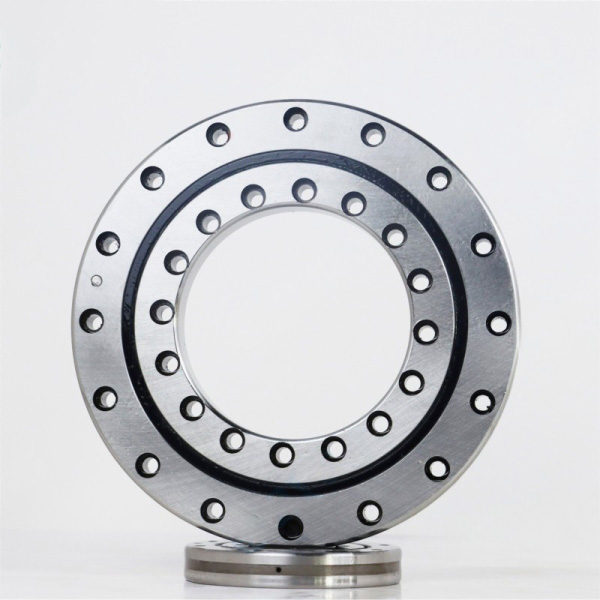
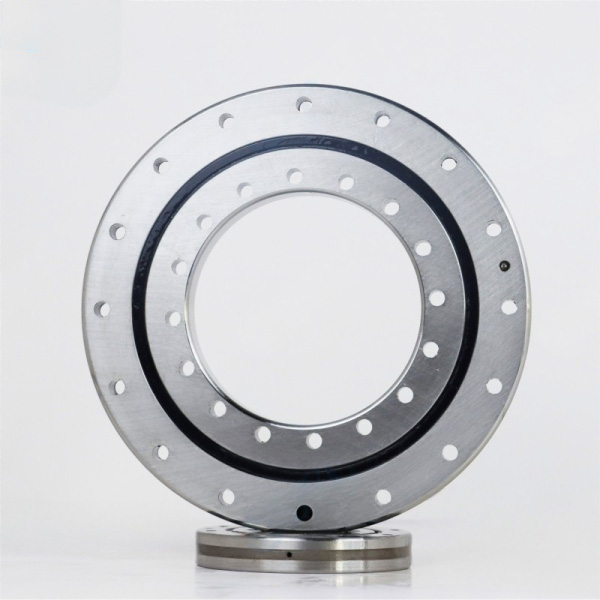
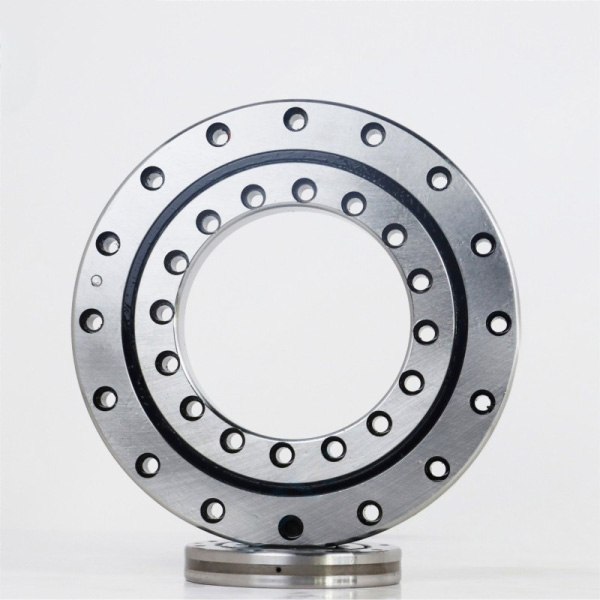
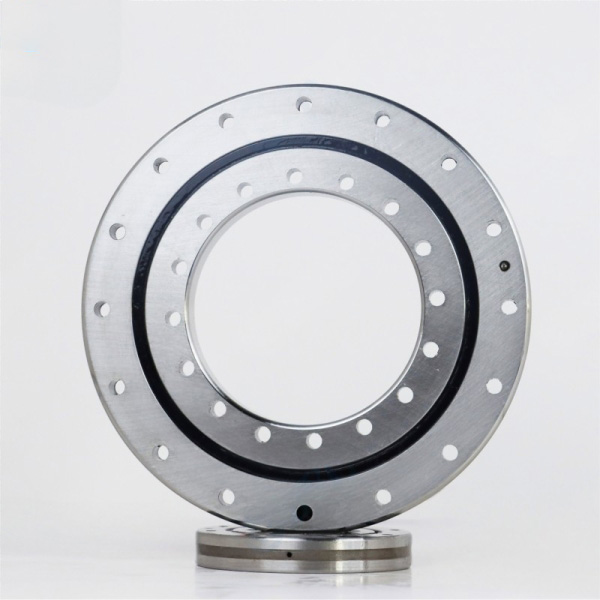

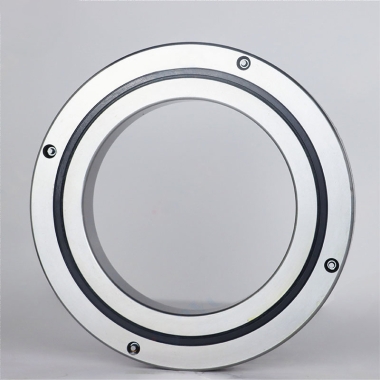
The BXU series is a high-precision crossed roller bearing featuring integrated inner and outer rings with pre-drilled mounting holes. This one-piece design utilizes cylindrical rollers arranged crosswise at 90° to handle radial, axial, and moment loads simultaneously. By eliminating the need for external housing flanges, the BXU series offers a compact, high-rigidity solution that ensures stable torque and micron-level accuracy (up to P2 grade), making it ideal for precision robotics and CNC applications. Interchangeable with mainstream XU type crossed roller bearings for industrial robots, rotary tables and precision automation systems.
Equivalent: Compatible with XU Series Crossed Roller Bearings
Inner Ring Diameter:40mm——112mm
Precision Class: P5/P4/P2
Basic Load Rating(axial): 22.4kN——720kN
Basic Load Rating(radial):14.3 kN——455 kN
Delivery time: In Stock
What is BXU Series Crossed Roller Bearing?
The BXU Series is a high-precision crossed roller bearing featuring integrated inner and outer rings. Unlike the separable designs, the BXU series (equivalent to the RU series in some standards) is characterized by its compact, one-piece construction with pre-drilled mounting holes. This design is specifically engineered for applications that require both high rotational accuracy and a simplified installation process without the need for specialized pressure plates.
Features of BXU Series Crossed Roller Bearings
High Rigidity & Integrated Structure: The integrated inner and outer ring design provides superior rigidity and minimizes the impact of housing or shaft fit on bearing performance.
Ease of Mounting: Equipped with mounting holes on both the inner and outer rings, the BXU series eliminates the need for a press-fit or external housing flanges, significantly reducing assembly time.
Stable Rotation Accuracy: Because the rings are integrated, the bearing maintains high precision (P5, P4, or P2) with minimal runout, even during high-speed rotation.
Multi-Load Handling: The 90° V-groove arrangement of cylindrical rollers allows the bearing to handle axial, radial, and moment loads simultaneously within a very small footprint.
Applications of BXU Series Crossed Roller Bearings
Robotics: Joint units and swiveling bases for industrial and collaborative robots (Cobots).
Machine Tools: CNC precision rotary tables, indexing heads, and tool changers.
Precision Turntables: Any equipment requiring high-precision rotation with compact mounting constraints.
Aerospace & Defense: Precision gimbals, satellite communication antennas, and radar mounts.
Medical Technology: Precision rotary joints for medical imaging and diagnostic equipment.
Techspecs of BXU Series Crossed Roller Bearings
Material: High-grade GCr15 Bearing Steel (Chrome Steel) for optimal hardness and wear resistance.
Precision Grades: P2, P4, and P5.
Structure: Integrated inner ring and integrated outer ring with mounting holes.
Lubrication: Pre-filled with high-performance grease; features grease nipples for easy maintenance.
Mounting Type: Through-holes or tapped holes for direct bolt-on installation.
How does BXU Series Crossed Roller Bearings work?
The BXU Series utilizes cylindrical rollers arranged crosswise at 90° angles. This "line contact" structure provides a much larger contact surface than ball bearings, resulting in higher load capacity and stiffness. Since the inner and outer rings are one-piece units, the internal clearance (or preload) is factory-set and remains unaffected by the installation process, ensuring consistent torque and ultra-high rotational precision.
How to Install BXU Series Crossed Roller Bearings?
1. Pre-installation Preparation
Surface Cleaning: Clean the mounting surface of the equipment where the BXU bearing will be bolted. Ensure there are no burrs or particles that could affect the flatness of the mount.
Alignment Check: Verify that the mounting holes on the bearing align perfectly with the holes on the machine's shaft or housing.
Grease Inspection: Ensure the bearing is clean. BXU bearings come pre-greased, so do not wash them or introduce contaminants during handling.
Bolt Inspection: Prepare high-strength mounting bolts (grade 10.9 or 12.8 recommended) and ensure they are clean and free of damage.
2. During Installation
Positioning: Place the BXU bearing onto the mounting surface. The integrated design makes it easier to position since it doesn't require a tight press-fit in many cases.
Bolt Insertion: Insert the mounting bolts through the holes in the inner or outer ring.
Symmetrical Tightening: Tighten the bolts in a cross-pattern or star sequence to ensure the bearing is pulled down evenly. Use a torque wrench to tighten the bolts to the specific torque values provided in the BXU technical manual. This prevents any localized stress that could distort the raceway.
3. Post-installation Testing
Smoothness Check: Rotate the bearing manually to ensure there is no binding or uneven resistance. The movement should be smooth and quiet.
Preload Verification: Check the starting torque if your application is sensitive to rotational friction, ensuring it matches the design specifications.
Accuracy Testing: Use a dial gauge to measure the radial and axial runout of the integrated rings to confirm the assembly meets your precision requirements.
Clearance Measurement Methods for BXU Series Crossed Roller Bearings
1. Radial Clearance Measurement Methods
Manual Inspection (Feel Method):
Assess the bearing's operation by rotating it manually. Under normal conditions, the bearing should run smoothly and steadily without any hitch or "catch" sensation. Even with a minimal radial clearance of 0.01mm, a single point on the bearing may exhibit a radial displacement of approximately 0.10-0.15mm when the outer ring is shaken.
Measurement Method (Dial Indicator):
Use precision tools such as a dial indicator for inspection. Ensure the dial indicator is zeroed before starting. Position the probe against the outer ring of the crossed roller bearing and gently lift the bearing; the specific radial clearance value will be displayed on the dial.
2. Axial Clearance Measurement Methods
Manual Inspection (Feel Method):
When the shaft end of the bearing is exposed, you can check the axial clearance directly with your fingers. This method is primarily used to verify if the bearing rotation is normal and flexible.
Measurement Method (Dial Indicator):
Measure the axial clearance using a dial indicator. Prior to measurement, use a pry bar to shift the shaft to its two extreme end positions. The difference between the readings at these two limits represents the axial clearance of the bearing.
Note: When using a pry bar for assistance, do not apply excessive force, as this may compromise the measurement accuracy.
Price of BXU Series Crossed Roller Bearings
The price is determined by the specific model dimensions, the required precision grade, and the order volume. BYBearings offers competitive factory-direct pricing for both standard and customized specifications, ensuring high-value solutions for your precision needs.
Supplier of BXU Series Crossed Roller Bearings
As a professional manufacturer specializing in high-precision crossed roller bearings, BYBearings provides comprehensive technical support, reliable quality control, and global shipping services for all BXU series products to meet the rigorous demands of international industrial standards.
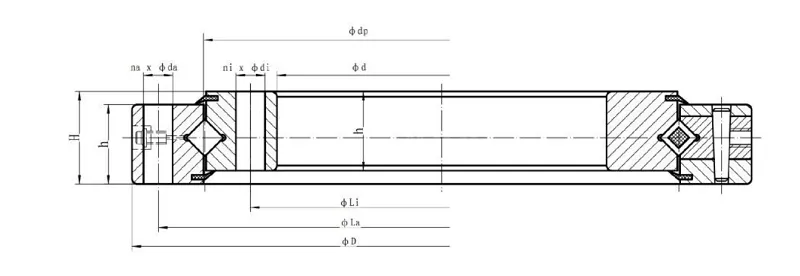
| Model Number | Dimensions (mm) | Outer Ring Holes | Inner Ring Holes | Basic Dynamic Load (kN) | Basic Static Load (kN) | Weight (kg) | |||||||
|---|---|---|---|---|---|---|---|---|---|---|---|---|---|
| d | D | dp | Width | La | na | Li | ni | Ca | Coa | Cr | Cor | ||
| BXU050077 | 40 | 112 | 77 | 22 | 97 | 6-φ6.6 | 56 | 6-M8 | 22.4 | 29 | 14.3 | 14.2 | 1.4 |
| BXU060094 | 57 | 140 | 94 | 26 | 120 | 6-φ9 | 70 | 6-M8 | 32.5 | 37.5 | 20.7 | 18.4 | 2.4 |
| BXU060111 | 76.2 | 145.79 | 111 | 15.87 | 133.1 | 8-φ6.9 | 88.9 | 8-φ6.9 | 36 | 44.5 | 22.8 | 21.5 | 1.2 |
| BXU080120 | 69 | 170 | 120 | 30 | 148 | 6-φ9 | 90 | 6-M8 | 56 | 53 | 35.5 | 26 | 4 |
| BXU080149 | 101.6 | 196.85 | 147 | 22.22 | 177.8 | 16-φ6.9 | 115.8 | 16-φ6.9 | 63 | 66 | 40 | 32.5 | 3.6 |
| BXU120179 | 124.5 | 234 | 179 | 35 | 214 | 12-φ11 | 144.5 | 12-φ11 | 105 | 194 | 75 | 95 | 7 |
| BXU120222 | 140 | 300 | 222 | 36 | 270 | 12-M16 | 170 | 12-φ18 | 133 | 275 | 85 | 131 | 12 |
| BXU160260 | 191 | 329 | 260 | 46 | 305 | 20-φ14 | 215 | 20-φ14 | 212 | 350 | 135 | 173 | 16 |
| BXU080264 | 215.9 | 311 | 264 | 25.4 | 295.3 | 12-φ8.7 | 231.8 | 12-φ8.7 | 85 | 117 | 54 | 57 | 6.9 |
| BXU160405 | 336 | 474 | 405 | 46 | 450 | 30-φ14 | 360 | 30-φ14 | 270 | 550 | 172 | 270 | 25 |
| BXU080430 | 380 | 480 | 430 | 26 | 462 | 20-φ9 | 398 | 20-M10 | 110 | 280 | 70 | 138 | 12 |
| BXU300515 | 384 | 646 | 515 | 86 | 598 | 18-φ26 | 432 | 18-φ26 | 720 | 1370 | 455 | 670 | 115 |
Given the structural characteristics of crossed roller bearings (rollers arranged in a 90° cross pattern), our technical team uses 3D CAD and finite element analysis (FEA) software to accurately calculate raceway angles, spacing, and interference.
Customizing products based on customer operating conditions, we benchmark against P2/P4/P5 tolerance classes and simulate post-assembly rotational precision in advance. The blueprint serves as the sole standard guiding all subsequent turning, grinding, and inspection processes.
Turning and grinding are the core processes that determine the bearing's geometric precision. We use high-rigidity CNC lathes for step-by-step ring processing, ensuring basic inner/outer diameter and raceway dimensions through rough, semi-finish, and finish turning while leaving grinding allowances.
We employ plunge grinding with formed grinding wheels for the V-shaped raceways of crossed roller bearings, and perform combination matching for the split inner/outer rings to ensure rotational plane runout meets P5 or higher standards.
The assembly of crossed roller bearings is more delicate than standard bearings: rollers must be arranged in an alternating cross pattern and precisely guided by spacers or cages.
All components are ultrasonically cleaned, dried, and grouped according to measured dimensions. High rigidity and stable torque are then imparted to the crossed roller bearings through negative clearance or preload adjustments. Assembly is completed in a constant temperature and humidity cleanroom to ensure P4/P2 level precision.
As tolerance classes P5, P4, and P2 become progressively stricter, our inspection equipment and processes are upgraded accordingly:
We use high-precision roundness measuring instruments for dimensional tolerances, dial indicators with dedicated test mandrels for radial and axial runout, profilometers and Coordinate Measuring Machines (CMM) to verify raceway profiles and angles, and dedicated clearance and torque testers to determine clearance and starting torque.
The packaging process is equally strict, ensuring zero loss of precision for the crossed roller bearings from the factory until pre-installation.
Eco-friendly anti-rust oil is evenly sprayed to ensure no residual particles in the inner cavity. Each bearing is vacuum-sealed in a thickened PE bag and film for water and dust protection, then boxed using wrapping tape. The outer carton is lined with high-density foam and pearl cotton to prevent transport collisions, and is marked with the model, precision grade (P5/P4/P2), and production batch number.
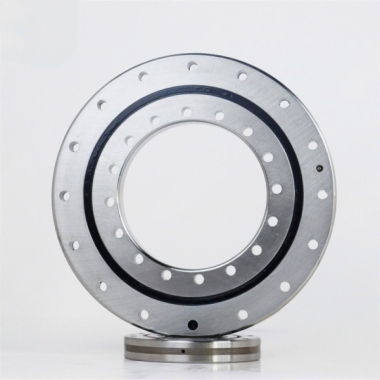
Integrated BXU Series by BYBearings: high rigidity & P2 ...
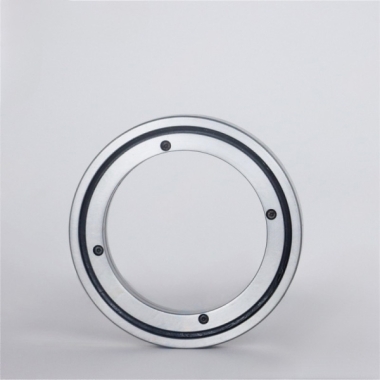
BRE series crossed roller bearings: High rigidity and multi-...
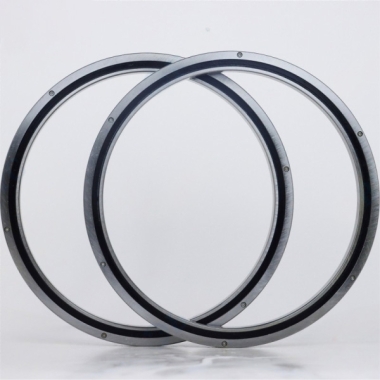
BRA Series Crossed Roller Bearings by BYBearings: Ultra-slim...
BYBearings is a professional manufacturer of BRB (RB) series...
 +8618939019135
 sales@bybearings.com
 +8618939019135