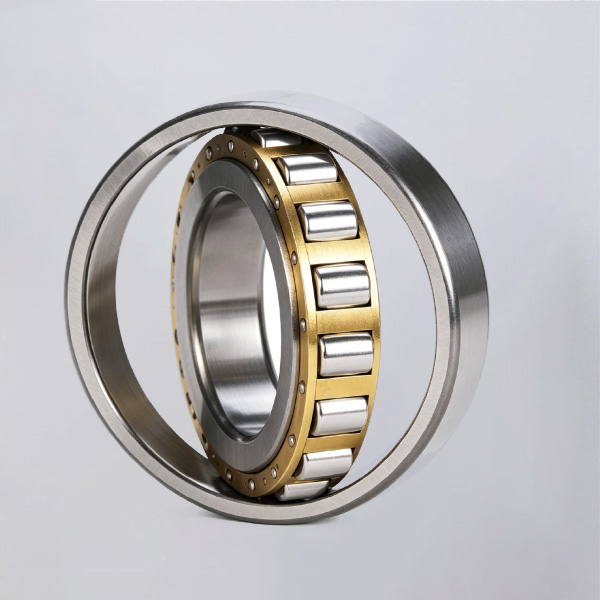
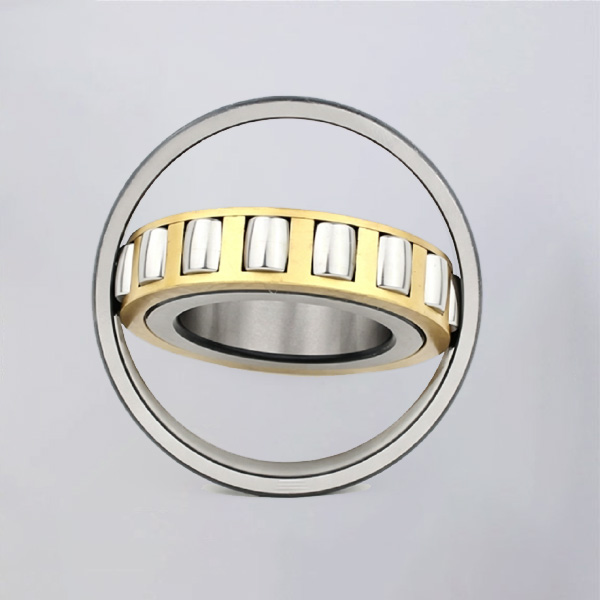
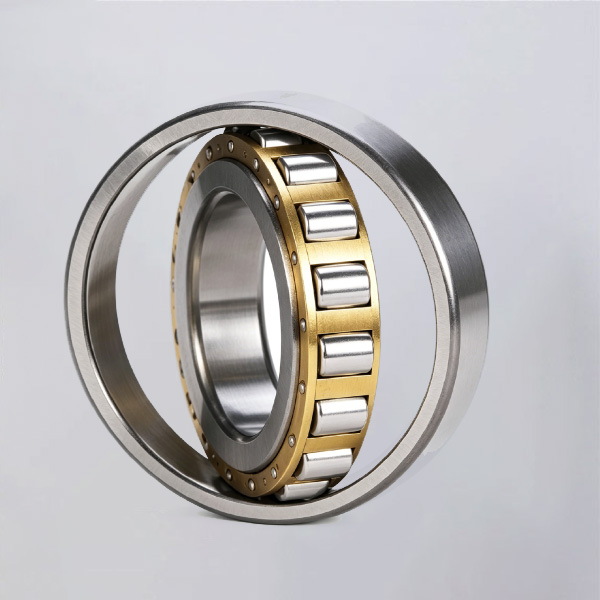
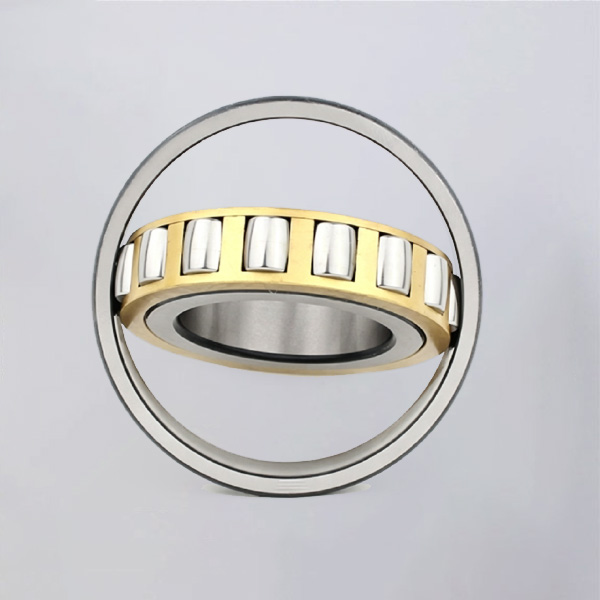

The 202 and 203 series single row spherical roller bearings are engineered for compact light-duty rotary equipment that demands stable load bearing and basic self-aligning capacity. Differentiated from double-row spherical roller bearing ranges, this line adopts a single row of symmetrical barrel rollers matched with a spherical outer ring raceway, which effectively offsets slight shaft deflection and assembly misalignment without sacrificing rotational stability.
Supplied with two standard cage options: glass fibre reinforced TVP polyamide cages and solid machined brass M cages. The bearing structure steadily bears radial loads plus limited bidirectional axial loads under medium rotating speeds. Small overall footprint and lightweight body greatly save radial and axial assembly space, enabling seamless installation and integration into miniature rotary components with tight dimensional limits.
They are widely adopted for light-load rotary parts across multiple industries, including small industrial fans, light conveyor rollers, compact agricultural machinery, miniature automation devices, textile processing equipment and other general light-duty mechanical systems.
Size range: Inner Diameter: 170-700mm
Material: GCr15/GCr15SiMn/G20Cr2Ni4A
Load Capacity: High radial and axial load capacity
Cage Types: CC / E /CA / MB / others
1. What Are 202 and 203 Series Spherical Roller Bearings
The 202 and 203 series are miniature and small-size double-row spherical roller bearings belonging to the light-duty small-sized spherical roller bearing category. Compact in overall dimension, they feature basic self-aligning performance and are applied to medium & small rotary mechanisms under light loads with minor eccentricity.The 202 series features small bearings with narrow cross-sections, while the 203 series refers to small bearings with widened cross-sections.
Examples: 20208, 20310
First digit "2": Double-row roller construction
02 = Small bearing with narrow cross-section; 03 = Small bearing with widened cross-section
Last two digits stand for bore size: 08 corresponds to 40 mm bore diameter, 10 corresponds to 50 mm bore diameter
Suffix CC: Stamped steel sheet cage; Tapered bore and lubrication grooves are rarely equipped for these series.
Compact footprint with minimal installation space occupation, perfect for small lightweight machinery
Basic self-aligning capacity to offset minor mounting misalignment
Simple structure, low cost and excellent interchangeability
The widened 203 series delivers higher load capacity than the narrow 202 series with identical bore size
Higher limiting speed than large-size spherical roller bearing series, suitable for medium-low speed and light-load working conditions
Small conveying equipment, miniature woodworking machine tools, light-duty fans, small food processing rollers, rotary shafts of packaging machinery, transmission components for small agricultural machinery
| Series | Bearing Models | d (mm) | D (mm) | T (mm) | Approx Weight (KGS) |
| 20204 | 20204 TVP / 20204 M | 20 | 47 | 14 | 0.11 |
| 20205 | 20205 TVP / 20205 M | 25 | 52 | 15 | 0.135 |
| 20206 | 20206 TVP / 20206 M | 30 | 62 | 16 | 0.2 |
| 20207 | 20207 TVP / 20207 M | 35 | 72 | 17 | 0.28 |
| 20208 | 20208 TVP / 20208 M | 40 | 80 | 18 | 0.37 |
| 20209 | 20209 TVP / 20209 M | 45 | 85 | 19 | 0.42 |
| 20210 | 20210 TVP / 20210 M | 50 | 90 | 20 | 0.48 |
| 20211 | 20211 TVP / 20211 M | 55 | 100 | 21 | 0.64 |
| 20212 | 20212 TVP / 20212 M | 60 | 110 | 22 | 0.8 |
| 20213 | 20213 TVP / 20213 M | 65 | 120 | 23 | 1.08 |
| 20214 | 20214 TVP / 20214 M | 70 | 125 | 24 | 1.12 |
| 20215 | 20215 TVP / 20215 M | 75 | 130 | 25 | 1.24 |
| 20216 | 20216 TVP / 20216 M | 80 | 140 | 26 | 1.5 |
| 20217 | 20217 TVP / 20217 M | 85 | 150 | 28 | 2.1 |
| 20218 | 20218 TVP / 20218 M | 90 | 160 | 30 | 2.76 |
| 20219 | 20219 TVP / 20219 M | 95 | 170 | 32 | 3.1 |
| 20220 | 20220 TVP / 20220 M | 100 | 180 | 34 | 3.9 |
| 20221 | 20221 TVP / 20221 M | 105 | 190 | 36 | 4.67 |
| 20222 | 20222 TVP / 20222 M | 110 | 200 | 38 | 5.5 |
| 20224 | 20224 TVP / 20224 M | 120 | 215 | 40 | 6.66 |
| 20226 | 20226 TVP / 20226 M | 130 | 230 | 40 | 7.3 |
| 20228 | 20228 TVP / 20228 M | 140 | 250 | 42 | 9 |
| 20230 | 20230 TVP / 20230 M | 150 | 270 | 45 | 10.5 |
| 20232 | 20232 TVP / 20232 M | 160 | 290 | 48 | 14.4 |
| 20234 | 20234 TVP / 20234 M | 170 | 310 | 52 | 17.9 |
| 20236 | 20236 TVP / 20236 M | 180 | 320 | 52 | 18.9 |
| 20238 | 20238 TVP / 20238 M | 190 | 340 | 55 | 22.4 |
| 20240 | 20240 TVP / 20240 M | 200 | 360 | 58 | 26.6 |
| 20244 | 20244 TVP / 20244 M | 220 | 400 | 65 | 37.4 |
| 20304 | 20304 TVP / 20304 M | 20 | 52 | 15 | 0.15 |
| 20305 | 20305 TVP / 20305 M | 25 | 62 | 17 | 0.25 |
| 20306 | 20306 TVP / 20306 M | 30 | 72 | 19 | 0.37 |
| 20307 | 20307 TVP / 20307 M | 35 | 80 | 21 | 0.5 |
| 20308 | 20308 TVP / 20308 M | 40 | 90 | 23 | 0.7 |
| 20309 | 20309 TVP / 20309 M | 45 | 100 | 25 | 0.88 |
| 20310 | 20310 TVP / 20310 M | 50 | 110 | 27 | 1.12 |
| 20311 | 20311 TVP / 20311 M | 55 | 120 | 29 | 1.56 |
| 20312 | 20312 TVP / 20312 M | 60 | 130 | 31 | 1.96 |
| 20313 | 20313 TVP / 20313 M | 65 | 140 | 33 | 2.65 |
| 20314 | 20314 TVP / 20314 M | 70 | 150 | 35 | 3.1 |
| 20315 | 20315 TVP / 20315 M | 75 | 160 | 37 | 3.76 |
| 20316 | 20316 TVP / 20316 M | 80 | 170 | 39 | 4.56 |
| 20317 | 20317 TVP / 20317 M | 85 | 180 | 41 | 5.24 |
| 20318 | 20318 TVP / 20318 M | 90 | 190 | 43 | 6.12 |
| 20319 | 20319 TVP / 20319 M | 95 | 200 | 45 | 7.08 |
| 20320 | 20320 TVP / 20320 M | 100 | 215 | 47 | 8.62 |
| 20322 | 20322 TVP / 20322 M | 110 | 240 | 50 | 11.8 |
| 20324 | 20324 TVP / 20324 M | 120 | 260 | 55 | 15.1 |
| 20326 | 20326 TVP / 20326 M | 130 | 280 | 58 | 18.5 |
| 20328 | 20328 TVP / 20328 M | 140 | 300 | 62 | 22.4 |
| 20330 | 20330 TVP / 20330 M | 150 | 320 | 65 | 27 |
Given the structural characteristics of crossed roller bearings (rollers arranged in a 90° cross pattern), our technical team uses 3D CAD and finite element analysis (FEA) software to accurately calculate raceway angles, spacing, and interference.
Customizing products based on customer operating conditions, we benchmark against P2/P4/P5 tolerance classes and simulate post-assembly rotational precision in advance. The blueprint serves as the sole standard guiding all subsequent turning, grinding, and inspection processes.
Turning and grinding are the core processes that determine the bearing's geometric precision. We use high-rigidity CNC lathes for step-by-step ring processing, ensuring basic inner/outer diameter and raceway dimensions through rough, semi-finish, and finish turning while leaving grinding allowances.
We employ plunge grinding with formed grinding wheels for the V-shaped raceways of crossed roller bearings, and perform combination matching for the split inner/outer rings to ensure rotational plane runout meets P5 or higher standards.
The assembly of crossed roller bearings is more delicate than standard bearings: rollers must be arranged in an alternating cross pattern and precisely guided by spacers or cages.
All components are ultrasonically cleaned, dried, and grouped according to measured dimensions. High rigidity and stable torque are then imparted to the crossed roller bearings through negative clearance or preload adjustments. Assembly is completed in a constant temperature and humidity cleanroom to ensure P4/P2 level precision.
As tolerance classes P5, P4, and P2 become progressively stricter, our inspection equipment and processes are upgraded accordingly:
We use high-precision roundness measuring instruments for dimensional tolerances, dial indicators with dedicated test mandrels for radial and axial runout, profilometers and Coordinate Measuring Machines (CMM) to verify raceway profiles and angles, and dedicated clearance and torque testers to determine clearance and starting torque.
The packaging process is equally strict, ensuring zero loss of precision for the crossed roller bearings from the factory until pre-installation.
Eco-friendly anti-rust oil is evenly sprayed to ensure no residual particles in the inner cavity. Each bearing is vacuum-sealed in a thickened PE bag and film for water and dust protection, then boxed using wrapping tape. The outer carton is lined with high-density foam and pearl cotton to prevent transport collisions, and is marked with the model, precision grade (P5/P4/P2), and production batch number.
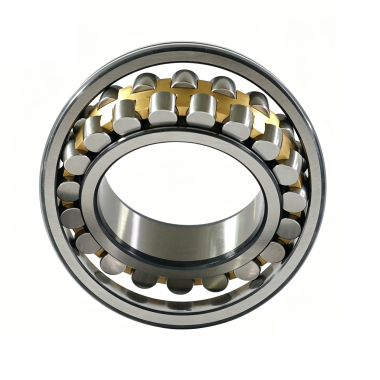
The 213 series double row spherical roller bearings feature ...
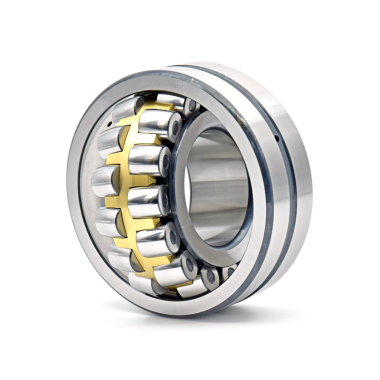
The 222 series spherical roller bearings are the most versat...
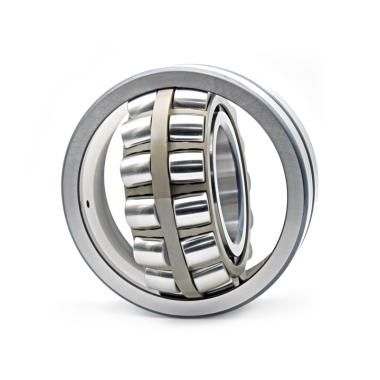
The 223 series spherical roller bearings adopt an extra-wide...
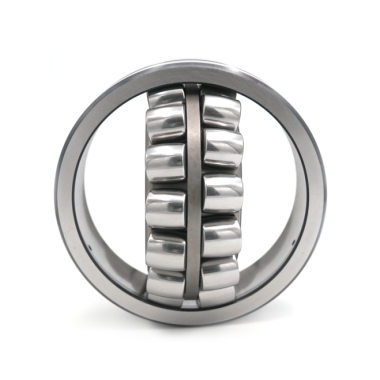
The 230 series spherical roller bearings are classified as u...
 +8618939019135
 Brent@bybearings.com
 +8618939019135