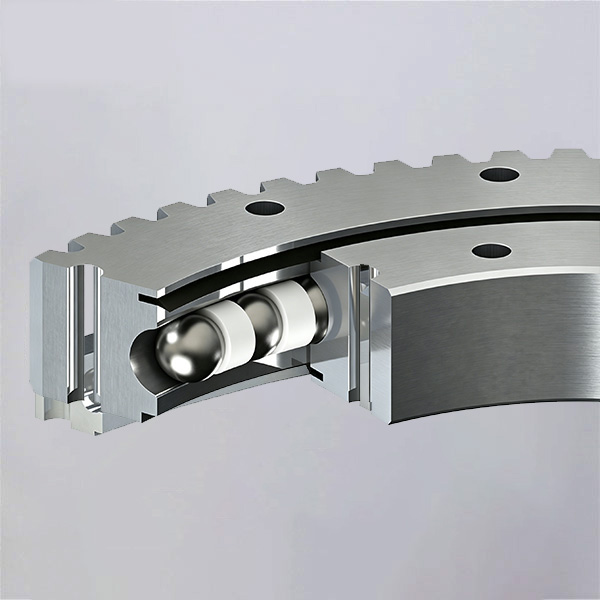
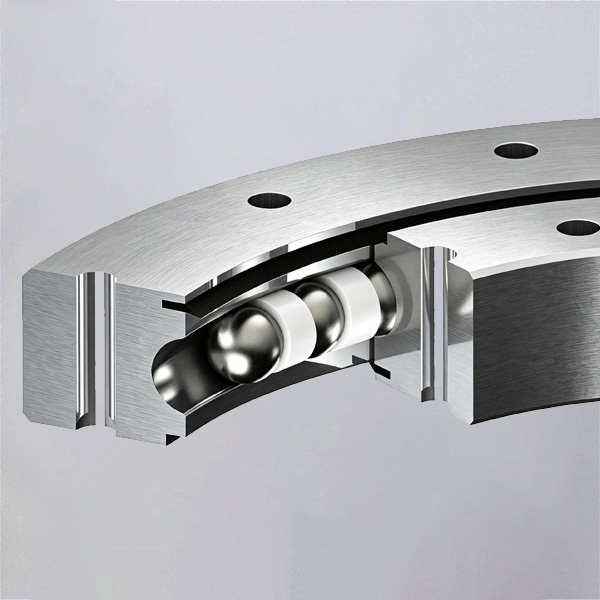
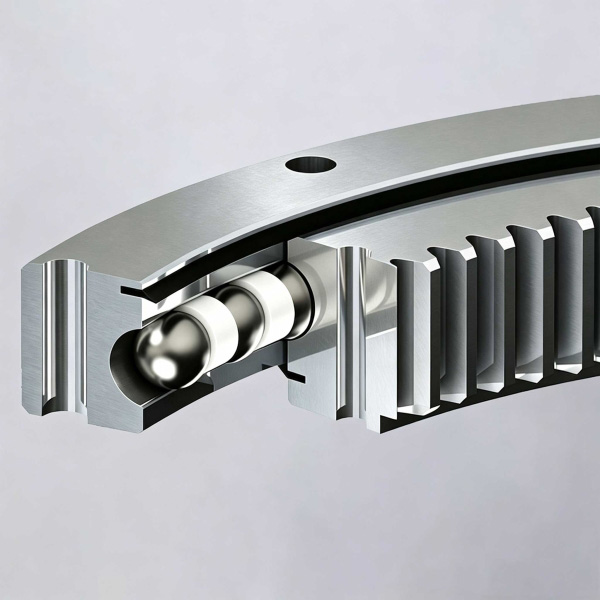
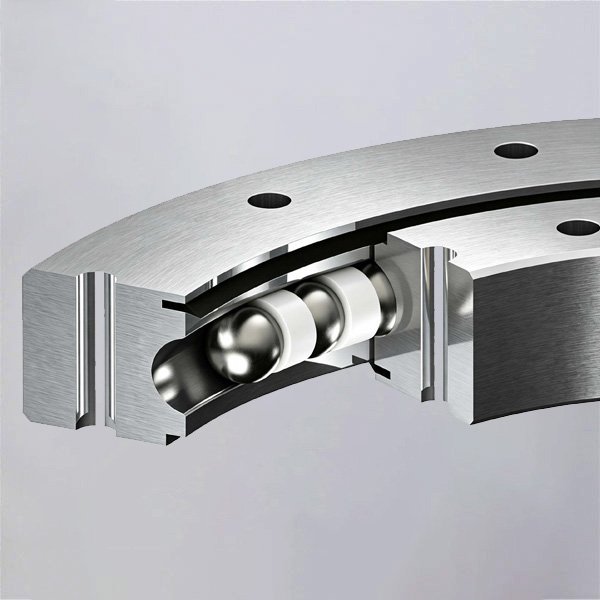
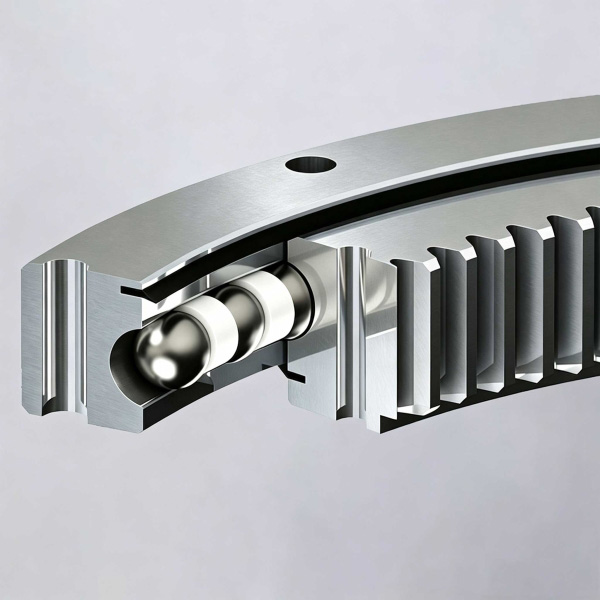

A four point contact ball slewing bearing is designed to support axial, radial, and overturning moment loads simultaneously while maintaining smooth rotational performance. Thanks to its compact structure and high load capacity, this type of slewing ring bearing is widely used in cranes, excavators, rotary tables, wind power equipment, aerial work platforms, and industrial automation systems.
Outer Diameter: 300 mm – 10,000 mm
Ball Diameter: 30 mm – 75 mm
Rated Load: 129 kN – 3410 kN
Gear Type: No Gear / Internal Gear / External Gear
Delivery Time: Approximately 30 Days
Ring Material: 42CrMo / 50Mn / C45
What Is a Four Point Contact Ball Slewing Bearing?
A four point contact ball slewing bearing is a specialized type of large-diameter rolling bearing designed to handle combined loads—axial loads, radial loads, and tilting moments—simultaneously using a single row of steel balls. The "four point contact" designation refers to the fact that each ball contacts the raceways at four distinct points under load conditions.
Unlike conventional ball bearings where each ball contacts the raceways at two points, the four point contact design uses a Gothic arch raceway profile. This unique geometry allows a single bearing to replace more complex bearing arrangements, reducing weight, space, and overall system cost.
Due to their excellent load-carrying efficiency and compact design, these bearings are widely used in applications such as construction machinery, cranes, wind turbines, port equipment, and automated industrial systems—wherever reliable rotation under combined loads is required.
Core Structure of a Four Point Contact Ball Slewing Bearing
The four point contact ball slewing bearing features a relatively simple yet highly effective structural design. The main components include:
Inner ring – Provides the inner raceway surface and mounting holes for connection to the rotating structure.
Outer ring – Provides the outer raceway surface and typically includes gear teeth or mounting provisions.
Single-row steel balls – A single row of balls transmits all loads simultaneously, reducing component count.
Cage or spacer – Separates the balls to prevent metal-to-metal contact, reduce friction, and ensure smooth rotation.
Sealing device – Protects the internal raceway and balls from contamination such as dust, water, and debris, while retaining lubricant.
Integral-Ring and Split-Ring Structures
To meet different installation and performance requirements, four point contact ball slewing bearings are available in both integral-ring and split-ring configurations:
Integral ring design – The inner and outer rings are manufactured as single, continuous pieces. This design provides higher rigidity and structural stability, making it ideal for applications with heavy loads and high precision requirements. The uninterrupted ring structure distributes stresses evenly and minimizes deformation under load.
Split ring design – One of the rings (typically the inner or outer ring) is divided into two separate sections. This design allows easier installation and adjustment, particularly in confined spaces or when replacing bearings in existing equipment. Before delivery, the split rings are securely connected with high-strength bolts to ensure reliable operation. The bolted assembly maintains the same load capacity and rotational accuracy as an integral ring when properly torqued.
Material Specifications
High-quality raw materials are selected to ensure durability and reliable performance under harsh operating conditions. Common materials include 42CrMo4, 50Mn, and other high-strength alloy steels. These materials provide excellent toughness, resistance to impact loads, and long-term dimensional stability.
The selection of appropriate materials is critical for slewing bearing performance. 42CrMo4 offers superior hardenability and resistance to fatigue, making it the preferred choice for heavy-duty applications. 50Mn provides a balanced combination of strength and cost-effectiveness for standard operating conditions. All materials undergo rigorous testing and certification to verify chemical composition and mechanical properties before entering production.
Heat Treatment
The raceway undergoes precision quenching treatment to improve wear resistance and fatigue strength. Induction hardening or flame hardening processes are applied to the raceway surfaces, achieving a hardness of 55–62 HRC. This heat treatment creates a hard, wear-resistant surface layer while maintaining a tough, ductile core that can absorb shock loads, preventing premature failure due to spalling or brinelling.
Proper heat treatment is one of the most critical factors in slewing bearing manufacturing. The hardened raceway surface provides the necessary resistance to rolling contact fatigue, while the softer core maintains toughness to absorb impact loads and prevent cracking. Computer-controlled induction hardening ensures consistent case depth and hardness distribution around the entire circumference of the raceway, eliminating soft spots that could lead to localized wear or early failure.
Key Features of a Four Point Contact Ball Slewing Bearing
Four point contact ball slewing bearings are engineered for applications requiring compact dimensions and high carrying capacity. Compared with traditional bearing structures, the four-point contact design enables one bearing to handle combined loads efficiently, eliminating the need for multiple bearings or complex arrangements.
Key advantages include:
High static and dynamic load capacity – The four-point contact geometry distributes loads across multiple contact points, allowing the bearing to support significant axial, radial, and moment loads simultaneously.
Compact and lightweight structure – Because a single row of balls handles all load directions, the overall bearing height and weight are significantly reduced compared to double-row designs. This is particularly valuable in mobile equipment where weight savings translate to improved fuel efficiency or higher payload capacity.
Stable rotational accuracy – The precise Gothic arch raceway profile ensures consistent ball contact and minimal runout, providing smooth, accurate rotation even under varying load conditions.
Smooth running performance – Optimized ball spacing and cage design reduce friction and vibration, resulting in quiet, stable operation.
Easy installation and maintenance – The simpler single-row design requires fewer mounting bolts and less complex alignment procedures. Split-ring options further simplify installation in retrofit applications.
Customizable gear configurations – As detailed below, gear options can be tailored to specific transmission requirements.
Full-Complement Ball Design
For heavy-load working conditions, full-complement ball designs (without cages) are available to increase bearing capacity. By eliminating the cage, more balls can be fitted into the raceway, increasing the load-carrying surface area. However, this structure may generate higher friction resistance during operation due to ball-to-ball contact and is generally recommended for low-speed applications.
Gear Options
According to different transmission requirements, the slewing bearing can be manufactured with:
Without gear – For applications where rotation is driven by other means or where the bearing functions only as a support element.
External gear – Gear teeth are cut on the outer circumference of the outer ring, typically used when the driving pinion is located outside the bearing.
Internal gear – Gear teeth are cut on the inner circumference of the outer ring (or inner ring), used when the driving pinion is located inside the bearing envelope.
Custom tooth profiles and gear parameters (module, number of teeth, pressure angle, and hardness) are also available upon request to match existing drive systems.
How Does a Four Point Contact Ball Slewing Bearing Work?
The working principle of a four point contact ball slewing bearing centers on its unique Gothic arch raceway geometry. Unlike standard circular raceways that contact the ball at two points (top and bottom), the Gothic arch profile has two contact points on each raceway—one on each side of the ball's equator.
Under no load, the balls contact each raceway at two points. When axial loads, radial loads, or tilting moments are applied, the balls shift slightly within the raceway, creating contact at up to four distinct points. This multi-point contact enables the bearing to resist loads from any direction without requiring additional ball rows.
Load response breakdown:
Axial loads (vertical) – The balls transfer thrust forces through the upper and lower contact points on both raceways.
Radial loads (horizontal) – The balls contact the side walls of the Gothic arch profile, preventing lateral movement.
Tilting moments – The combination of axial and radial contact points creates a stabilizing force couple that resists overturning.
When a drive pinion engages with the gear teeth on the bearing ring, rotation is transmitted. The cage or spacer ensures that balls maintain proper spacing, preventing jamming and reducing friction. Seals keep lubricant in and contaminants out, while the heat-treated raceway withstands repeated rolling contact fatigue.
Main Applications of Four Point Contact Ball Slewing Bearings
Four point contact ball slewing bearings are used across a wide range of industries where compact design, high load capacity, and reliable rotation are essential.
Application Industries Of Four Point Contact Ball Slewing Bearing
Four point contact ball slewing bearings are commonly used in:
Construction machinery – Including aerial work platforms, concrete pumps, and pile drivers. These applications benefit from the bearing's ability to handle shock loads and off-center forces.
Tower cranes and mobile cranes – Turntable connections require compact bearings that can support heavy lifting moments while rotating smoothly under load.
Excavators and drilling equipment – The bearing supports the rotating house while resisting digging forces and ground reactions.
Wind turbine systems – Pitch and yaw bearings benefit from the four-point design's ability to handle oscillating loads and maintain precision over long service intervals.
Port machinery – Ship unloaders, container cranes, and mobile harbor cranes require large-diameter bearings with high reliability in saltwater environments.
Rotary welding platforms – Positioning equipment for large fabrications needs smooth, accurate rotation with minimal backlash.
Automated industrial equipment – Rotary indexing tables, robotic positioners, and assembly turntables benefit from the bearing's compact size and precision.
How to Select the Right Four Point Contact Ball Slewing Bearing?
Selecting the appropriate four point contact ball slewing bearing requires careful evaluation of several technical parameters:
Load requirements – Calculate the maximum axial load (Fa), radial load (Fr), and tilting moment (M). The four-point design is ideal when all three load types are present simultaneously.
Rotational speed – Most slewing bearings operate at low speeds (below 10 rpm). For higher speeds, consider cage-guided designs and enhanced lubrication.
Operating environment – Dusty, wet, or corrosive conditions require appropriate seals (labyrinth, double lip) and surface protection (zinc primer, epoxy coating).
Gear configuration – Determine whether external gear, internal gear, or no gear is needed. Specify module, tooth count, and required gear hardness.
Mounting interface – Bolt circle diameter, bolt size, and bolt grade must match your machine's structure. Use high-strength bolts (Grade 10.9 or 12.9) with proper preload.
Integral vs. split ring – Choose integral rings for maximum rigidity. Choose split rings when installation access is limited or for replacement applications.
Material and heat treatment – Verify that the supplier uses high-quality raw materials and applies precision quenching to raceways. Request hardness test reports and material certificates.
Common Failures and Maintenance of Four Point Contact Ball Slewing Bearings
Even high-quality bearings can fail if proper maintenance is neglected.
Common failure modes:
Raceway spalling – Surface fatigue caused by cyclic overloading or inadequate heat treatment.
Brinelling – Permanent indentations from impact loads or improper mounting.
Wear and abrasion – Contamination ingress past damaged seals.
Lubrication failure – Grease breakdown, incorrect grease type, or insufficient regreasing frequency.
Bolt loosening or fracture – Incorrect torque or dynamic loads exceeding bolt capacity.
Maintenance best practices:
Regrease regularly – Typical intervals: every 100–500 operating hours or every 3–6 months.
Inspect seals – Replace damaged seals immediately to prevent contamination.
Check bolt torque – Retorque mounting bolts after the first 50–100 hours, then periodically thereafter.
Monitor rotational torque – Sudden increases indicate contamination or raceway damage.
Measure play – Increased axial or radial play suggests wear requiring inspection.
Customized Slewing Bearing Solutions From BY Bearings
We provide customized slewing bearing solutions based on operating conditions, installation dimensions, load requirements, and gear specifications. OEM and ODM services are available for global customers.
If you need technical support, drawings, or pricing information, please contact our engineering team for a tailored solution. BY Bearings is ready to help you find the right four point contact ball slewing bearing for your project.
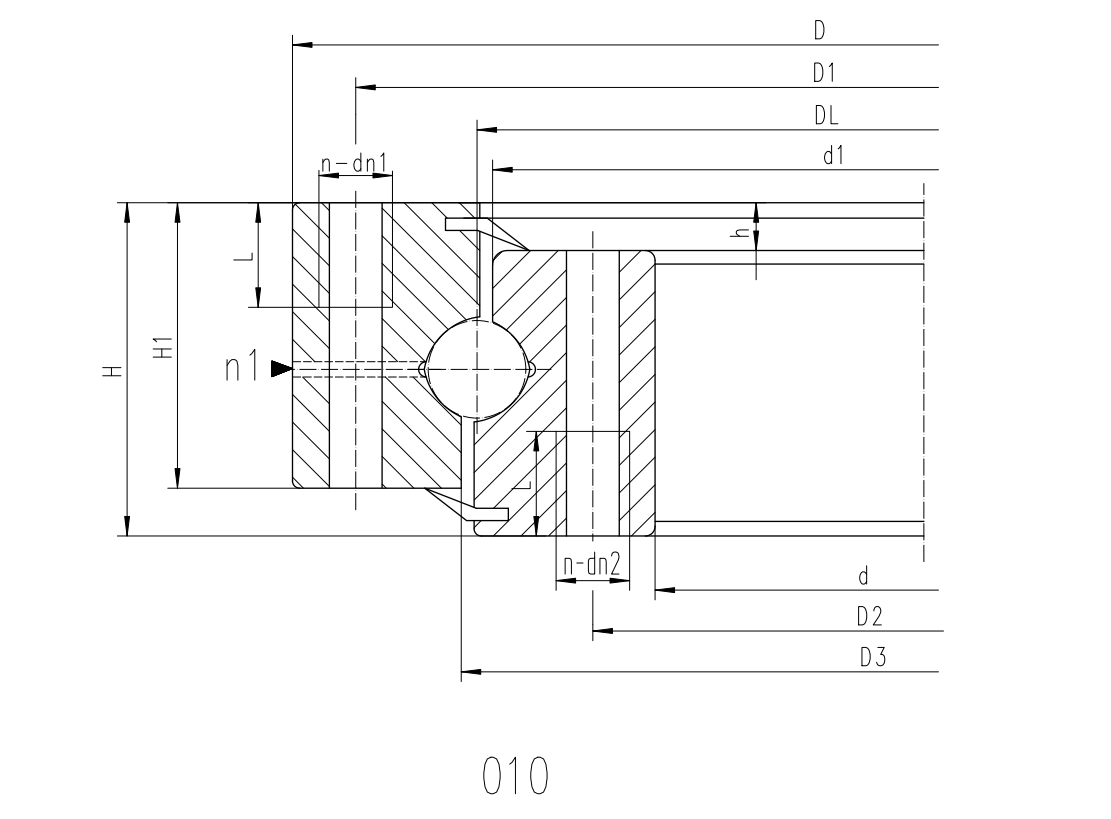
| Non-gear Type | ||||||||||
|---|---|---|---|---|---|---|---|---|---|---|
| Model | D (mm) | d (mm) | H (mm) | D1 (mm) | D2 (mm) | D3 (mm) | d1 (mm) | H1 (mm) | h (mm) | N.W (kg) |
| 010.30.500 | 602 | 398 | 80 | 566 | 434 | 501 | 498 | 70 | 10 | 84 |
| 010.30.560 | 662 | 458 | 80 | 626 | 494 | 561 | 558 | 70 | 10 | 92 |
| 010.30.630 | 732 | 528 | 80 | 696 | 564 | 631 | 628 | 70 | 10 | 104 |
| 010.30.710 | 812 | 608 | 80 | 776 | 644 | 711 | 708 | 70 | 10 | 121 |
| 010.40.800 | 922 | 678 | 100 | 878 | 722 | 801 | 798 | 90 | 10 | 200 |
| 010.40.900 | 1022 | 778 | 100 | 978 | 822 | 901 | 898 | 90 | 10 | 225 |
| 010.40.1000 | 1122 | 878 | 100 | 1078 | 922 | 1001 | 998 | 90 | 10 | 248 |
| 010.40.1120 | 1242 | 998 | 100 | 1198 | 1042 | 1121 | 1118 | 90 | 10 | 281 |
| 010.45.1250 | 1390 | 1110 | 110 | 1337 | 1163 | 1252 | 1248 | 100 | 10 | 399 |
| 010.45.1400 | 1540 | 1260 | 110 | 1487 | 1313 | 1402 | 1398 | 100 | 10 | 446 |
| 010.45.1600 | 1740 | 1460 | 110 | 1687 | 1513 | 1602 | 1598 | 100 | 10 | 507 |
| 010.45.1800 | 1940 | 1660 | 110 | 1887 | 1713 | 1802 | 1798 | 100 | 10 | 575 |
| 010.60.2000 | 2178 | 1825 | 144 | 2110 | 1891 | 2002 | 1998 | 132 | 12 | 1047 |
| 010.60.2240 | 2418 | 2065 | 144 | 2350 | 2131 | 2242 | 2238 | 132 | 12 | 1181 |
| 010.60.2500 | 2678 | 2325 | 144 | 2610 | 2391 | 2502 | 2498 | 132 | 12 | 1315 |
| 010.60.2800 | 2978 | 2625 | 144 | 2910 | 2691 | 2802 | 2798 | 132 | 12 | 1484 |
| 010.75.3150 | 3376 | 2922 | 174 | 3286 | 3014 | 3152 | 3147 | 162 | 12 | 2618 |
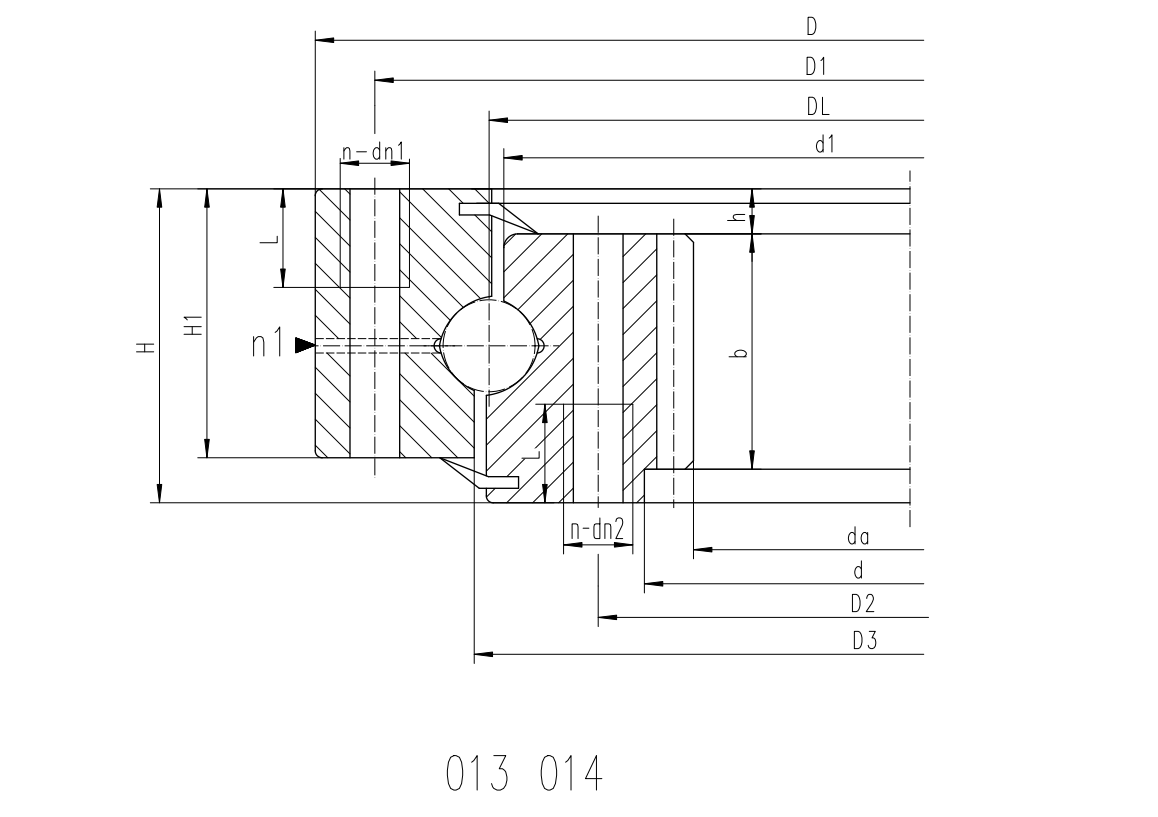
| Internal Gear Type | ||||||||||
|---|---|---|---|---|---|---|---|---|---|---|
| Model | D (mm) | d (mm) | H (mm) | D1 (mm) | D2 (mm) | D3 (mm) | d1 (mm) | H1 (mm) | h (mm) | N.W (kg) |
| 013.20.400 | 475 | 55 | 448 | 352 | 401 | 339 | 46 | 9 | 35 | |
| 013.20.450 | 531 | 55 | 500 | 400 | 451 | 449 | 46 | 9 | 40 | |
| 013.30.500 | 602 | 398 | 80 | 566 | 434 | 501 | 498 | 70 | 10 | 90 |
| 014.30.500 | 602 | 398 | 80 | 566 | 434 | 501 | 498 | 70 | 10 | 90 |
| 013.20.560 | 641 | 55 | 610 | 510 | 561 | 559 | 46 | 9 | 54 | |
| 013.30.560 | 662 | 458 | 80 | 626 | 494 | 561 | 558 | 70 | 10 | 102 |
| 014.30.560 | 662 | 458 | 80 | 626 | 494 | 561 | 558 | 70 | 10 | 102 |
| 013.30.630 | 732 | 528 | 80 | 696 | 564 | 631 | 628 | 70 | 10 | 116 |
| 014.30.630 | 732 | 528 | 80 | 696 | 564 | 631 | 628 | 70 | 10 | 116 |
| 013.20.710 | 797 | 55 | 762 | 658 | 711 | 709 | 46 | 9 | 71 | |
| 013.30.710 | 812 | 608 | 80 | 776 | 644 | 711 | 708 | 70 | 10 | 132 |
| 014.30.710 | 812 | 608 | 80 | 776 | 644 | 711 | 708 | 70 | 10 | 132 |
| 013.40.800 | 922 | 678 | 100 | 878 | 722 | 801 | 798 | 90 | 10 | 224 |
| 014.40.800 | 922 | 678 | 100 | 878 | 722 | 801 | 798 | 90 | 10 | 224 |
| 013.25.886 | 980 | 63 | 944 | 827 | 887 | 885 | 54 | 9 | 117 | |
| 013.40.900 | 1022 | 778 | 100 | 978 | 822 | 901 | 898 | 90 | 10 | 252 |
| 014.40.900 | 1022 | 778 | 100 | 978 | 822 | 901 | 898 | 90 | 10 | 252 |
| 013.40.1000 | 1122 | 878 | 100 | 1078 | 922 | 1001 | 998 | 90 | 10 | 292 |
| 014.40.1000 | 1122 | 878 | 100 | 1078 | 922 | 1001 | 998 | 90 | 10 | 292 |
| 013.25.1077 | 1169 | 63 | 1134 | 1017 | 1078 | 1076 | 54 | 9 | 147 | |
| 013.30.1120 | 1232 | 79 | 1188 | 1052 | 1121 | 1118 | 63 | 9 | 216 | |
| 013.40.1120 | 1242 | 998 | 100 | 1198 | 1042 | 1121 | 1118 | 90 | 10 | 333 |
| 014.40.1120 | 1242 | 998 | 100 | 1198 | 1042 | 1121 | 1118 | 90 | 10 | 333 |
| 013.30.1250 | 1362 | 79 | 1318 | 1182 | 1251 | 1248 | 63 | 9 | 243 | |
| 013.45.1250 | 1390 | 1110 | 110 | 1337 | 1163 | 1252 | 1248 | 100 | 10 | 467 |
| 014.45.1250 | 1390 | 1110 | 110 | 1337 | 1163 | 1252 | 1248 | 100 | 10 | 467 |
| 013.30.1400 | 1512 | 89 | 1468 | 1332 | 1401 | 1398 | 63 | 9 | 311 | |
| 013.45.1400 | 1540 | 1260 | 110 | 1487 | 1313 | 1402 | 1398 | 100 | 10 | 529 |
| 014.45.1400 | 1540 | 1260 | 110 | 1487 | 1313 | 1402 | 1398 | 100 | 10 | 529 |
| 013.40.1500 | 1634 | 94 | 1582 | 1418 | 1501 | 1498 | 81 | 9 | 431 | |
| 013.30.1600 | 1712 | 89 | 1668 | 1532 | 1601 | 1598 | 63 | 9 | 351 | |
| 013.45.1600 | 1740 | 1460 | 110 | 1687 | 1513 | 1602 | 1598 | 100 | 10 | 607 |
| 014.45.1600 | 1740 | 1460 | 110 | 1687 | 1513 | 1602 | 1598 | 100 | 10 | 620 |
| 013.40.1700 | 1834 | 94 | 1782 | 1618 | 1701 | 1698 | 81 | 9 | 499 | |
| 013.45.1800 | 1940 | 1660 | 110 | 1887 | 1713 | 1802 | 1798 | 100 | 10 | 721 |
| 014.45.1800 | 1940 | 1660 | 110 | 1887 | 1713 | 1802 | 1798 | 100 | 10 | 721 |
| 013.50.1800 | 1971 | 109 | 1905 | 1695 | 1802 | 1798 | 99 | 9 | 800 | |
| 013.50.2000 | 2171 | 109 | 2105 | 1895 | 2002 | 1998 | 99 | 9 | 868 | |
| 013.60.2000 | 2178 | 1825 | 144 | 2110 | 1891 | 2002 | 1998 | 132 | 12 | 1265 |
| 014.60.2000 | 2178 | 1825 | 144 | 2110 | 1891 | 2002 | 1998 | 132 | 12 | 1265 |
| 013.50.2240 | 2411 | 109 | 2345 | 2135 | 2242 | 2238 | 99 | 9 | 1009 | |
| 013.60.2240 | 2418 | 2065 | 144 | 2350 | 2131 | 2242 | 2238 | 132 | 12 | 1393 |
| 014.60.2240 | 2418 | 2065 | 144 | 2350 | 2131 | 2242 | 2238 | 132 | 12 | 1393 |
| 013.50.2490 | 2661 | 109 | 2595 | 2385 | 2492 | 2488 | 99 | 9 | 1106 | |
| 013.60.2500 | 2678 | 2325 | 144 | 2610 | 2391 | 2502 | 2498 | 132 | 12 | 1580 |
| 014.60.2500 | 2678 | 2325 | 144 | 2610 | 2391 | 2502 | 2498 | 132 | 12 | 1580 |
| 013.50.2800 | 2971 | 109 | 2905 | 2652 | 2802 | 2798 | 99 | 9 | 1265 | |
| 013.60.2800 | 2978 | 2625 | 144 | 2910 | 2691 | 2802 | 2798 | 132 | 12 | 1800 |
| 014.60.2800 | 2978 | 2625 | 144 | 2910 | 2691 | 2802 | 2798 | 132 | 12 | 1800 |
| 013.75.3150 | 3376 | 2922 | 174 | 3286 | 3014 | 3152 | 3147 | 162 | 12 | 2840 |
| 014.75.3150 | 3376 | 2922 | 174 | 3286 | 3014 | 3152 | 3147 | 162 | 12 | 2840 |
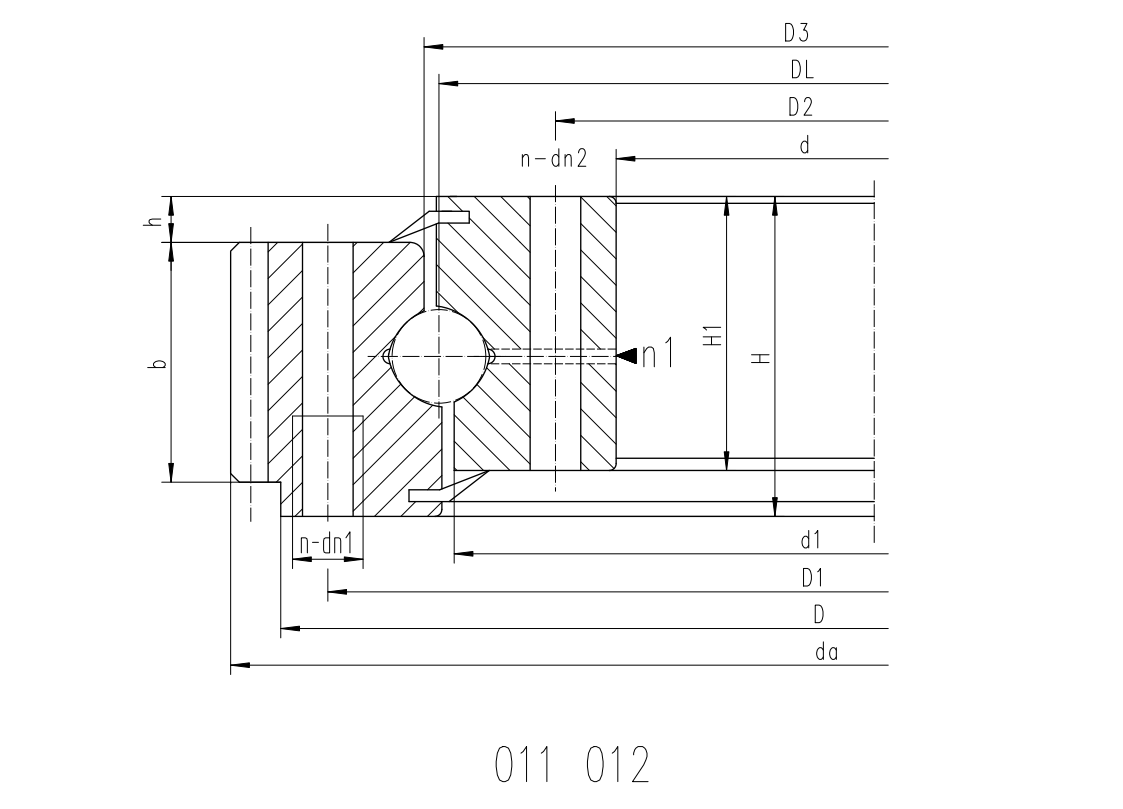
| External Gear Type | ||||||||||
|---|---|---|---|---|---|---|---|---|---|---|
| Model | D (mm) | d (mm) | H (mm) | D1 (mm) | D2 (mm) | D3 (mm) | d1 (mm) | H1 (mm) | h (mm) | N.W (kg) |
| 011.20.400 | 325 | 55 | 448 | 352 | 401 | 399 | 46 | 9 | 37 | |
| 011.20.450 | 369 | 55 | 500 | 400 | 451 | 449 | 46 | 9 | 41 | |
| 011.30.500 | 602 | 398 | 80 | 566 | 434 | 501 | 498 | 70 | 10 | 89 |
| 012.30.500 | 602 | 398 | 80 | 566 | 434 | 501 | 498 | 70 | 10 | 89 |
| 011.20.560 | 479 | 55 | 610 | 510 | 561 | 559 | 46 | 9 | 56 | |
| 011.30.560 | 662 | 458 | 80 | 626 | 494 | 561 | 558 | 70 | 10 | 100 |
| 012.30.560 | 662 | 458 | 80 | 626 | 494 | 561 | 558 | 70 | 10 | 100 |
| 011.20.630 | 543 | 55 | 682 | 578 | 631 | 629 | 46 | 9 | 64 | |
| 011.30.630 | 732 | 528 | 80 | 696 | 564 | 631 | 628 | 70 | 10 | 118 |
| 012.30.630 | 732 | 528 | 80 | 696 | 564 | 631 | 628 | 70 | 10 | 118 |
| 011.20.710 | 623 | 55 | 762 | 658 | 711 | 709 | 46 | 9 | 70 | |
| 011.30.710 | 812 | 608 | 80 | 776 | 644 | 711 | 708 | 70 | 10 | 131 |
| 012.30.710 | 812 | 608 | 80 | 776 | 644 | 711 | 708 | 70 | 10 | 131 |
| 011.25.764 | 671 | 63 | 823 | 706 | 765 | 763 | 54 | 9 | 100 | |
| 011.20.800 | 894 | 704 | 70 | 858 | 742 | 800 | 797 | 60 | 10 | 120 |
| 012.20.800 | 894 | 704 | 70 | 858 | 742 | 800 | 797 | 60 | 10 | 120 |
| 011.25.800 | 904 | 692 | 78 | 864 | 736 | 800 | 797 | 68 | 10 | 150 |
| 012.25.800 | 904 | 692 | 78 | 864 | 736 | 800 | 797 | 68 | 10 | 154 |
| 011.40.800 | 922 | 678 | 100 | 878 | 722 | 801 | 798 | 90 | 10 | 219 |
| 012.40.800 | 922 | 678 | 100 | 878 | 722 | 801 | 798 | 90 | 10 | 219 |
| 011.25.900 | 1004 | 792 | 78 | 964 | 836 | 900 | 897 | 68 | 10 | 170 |
| 012.25.900 | 1004 | 792 | 78 | 964 | 836 | 900 | 897 | 68 | 10 | 176 |
| 011.40.900 | 1022 | 778 | 100 | 978 | 822 | 901 | 898 | 90 | 10 | 244 |
| 012.40.900 | 1022 | 778 | 100 | 978 | 822 | 901 | 898 | 90 | 10 | 244 |
| 011.25.980 | 887 | 63 | 1039 | 922 | 981 | 979 | 54 | 9 | 130 | |
| 011.25.1000 | 1104 | 892 | 78 | 1064 | 936 | 1000 | 997 | 68 | 10 | 191 |
| 012.25.1000 | 1104 | 892 | 78 | 1064 | 936 | 1000 | 997 | 68 | 10 | 194 |
| 011.35.1000 | 1120 | 876 | 90 | 1074 | 926 | 1000 | 996 | 80 | 10 | 238 |
| 012.35.1000 | 1120 | 876 | 90 | 1074 | 926 | 1000 | 996 | 80 | 10 | 244 |
| 011.40.1000 | 1122 | 878 | 100 | 1078 | 922 | 1001 | 998 | 90 | 10 | 294 |
| 012.40.1000 | 1122 | 878 | 100 | 1078 | 922 | 1001 | 998 | 90 | 10 | 284 |
| 011.25.1120 | 1013 | 79 | 1183 | 1057 | 1121 | 1119 | 54 | 9 | 191 | |
| 011.35.1120 | 1240 | 996 | 90 | 1194 | 1046 | 1120 | 1116 | 80 | 10 | 286 |
| 012.35.1120 | 1240 | 996 | 90 | 1194 | 1046 | 1120 | 1116 | 80 | 10 | 289 |
| 011.40.1120 | 1242 | 998 | 100 | 1198 | 1042 | 1121 | 1118 | 90 | 10 | 318 |
| 012.40.1120 | 1242 | 998 | 100 | 1198 | 1042 | 1121 | 1118 | 90 | 10 | 318 |
| 011.30.1180 | 1068 | 79 | 1248 | 1112 | 1181 | 1178 | 63 | 9 | 238 | |
| 011.25.1250 | 1143 | 79 | 1313 | 1187 | 1251 | 1249 | 54 | 9 | 232 | |
| 011.35.1250 | 1370 | 1126 | 90 | 1324 | 1176 | 1250 | 1246 | 80 | 10 | 317 |
| 012.35.1250 | 1370 | 1126 | 90 | 1324 | 1176 | 1250 | 1246 | 80 | 10 | 324 |
| 011.40.1250 | 1390 | 1108 | 102 | 1336 | 1164 | 1250 | 1246 | 90 | 12 | 416 |
| 012.40.1250 | 1390 | 1108 | 102 | 1336 | 1164 | 1250 | 1246 | 90 | 12 | 412 |
| 011.45.1250 | 1390 | 1110 | 110 | 1337 | 1163 | 1252 | 1248 | 100 | 10 | 438 |
| 012.45.1250 | 1390 | 1110 | 110 | 1337 | 1163 | 1252 | 1248 | 100 | 10 | 438 |
| 011.30.1320 | 1208 | 89 | 1388 | 1252 | 1321 | 1318 | 63 | 9 | 313 | |
| 011.35.1400 | 1520 | 1276 | 90 | 1474 | 1326 | 1400 | 1396 | 80 | 10 | 354 |
| 012.35.1400 | 1520 | 1276 | 90 | 1474 | 1326 | 1400 | 1396 | 80 | 10 | 364 |
| 011.40.1400 | 1540 | 1258 | 102 | 1486 | 1314 | 1400 | 1396 | 90 | 12 | 470 |
| 012.40.1400 | 1540 | 1258 | 102 | 1486 | 1314 | 1400 | 1396 | 90 | 12 | 465 |
| 011.40.1400 | 1266 | 94 | 1482 | 1318 | 1401 | 1398 | 81 | 9 | 424 | |
| 011.45.1400 | 1540 | 1260 | 110 | 1487 | 1313 | 1402 | 1398 | 100 | 10 | 501 |
| 012.45.1400 | 1540 | 1260 | 110 | 1487 | 1313 | 1402 | 1398 | 100 | 10 | 501 |
| 011.30.1500 | 1388 | 89 | 1568 | 1432 | 1501 | 1498 | 63 | 9 | 355 | |
| 011.40.1600 | 1466 | 94 | 1682 | 1518 | 1601 | 1598 | 81 | 9 | 503 | |
| 011.40.1600 | 1740 | 1458 | 102 | 1686 | 1514 | 1600 | 1596 | 90 | 12 | 554 |
| 012.40.1600 | 1740 | 1458 | 102 | 1686 | 1514 | 1600 | 1596 | 90 | 12 | 561 |
| 011.45.1600 | 1740 | 1460 | 110 | 1687 | 1513 | 1602 | 1598 | 100 | 10 | 584 |
| 012.45.1600 | 1740 | 1460 | 110 | 1687 | 1513 | 1602 | 1598 | 100 | 10 | 584 |
| 011.50.1600 | 1762 | 1434 | 124 | 1704 | 1496 | 1600 | 1595 | 112 | 12 | 750 |
| 012.50.1600 | 1762 | 1434 | 124 | 1704 | 1496 | 1600 | 1595 | 112 | 12 | 763 |
| 011.40.1800 | 1666 | 94 | 1882 | 1718 | 1801 | 1798 | 81 | 9 | 558 | |
| 011.40.1800 | 1940 | 1658 | 102 | 1886 | 1714 | 1800 | 1796 | 90 | 12 | 612 |
| 012.40.1800 | 1940 | 1658 | 102 | 1886 | 1714 | 1800 | 1796 | 90 | 12 | 637 |
| 011.45.1800 | 1940 | 1660 | 110 | 1887 | 1713 | 1802 | 1798 | 100 | 10 | 652 |
| 012.45.1800 | 1940 | 1660 | 110 | 1887 | 1713 | 1802 | 1798 | 100 | 10 | 639 |
| 011.50.1800 | 1964 | 1634 | 124 | 1904 | 1696 | 1800 | 1795 | 112 | 12 | 887 |
| 012.50.1800 | 1964 | 1634 | 124 | 1904 | 1696 | 1800 | 1795 | 112 | 12 | 885 |
| 011.50.1900 | 2139.2 | 1729 | 109 | 2005 | 1795 | 1902 | 1898 | 99 | 9 | 861 |
| 011.60.2000 | 2178 | 1825 | 144 | 2110 | 1891 | 2002 | 1998 | 132 | 12 | 1202 |
| 012.60.2000 | 2178 | 1825 | 144 | 2110 | 1891 | 2002 | 1998 | 132 | 12 | 1169 |
| 011.50.2130 | 2380.8 | 1959 | 109 | 2235 | 2025 | 2132 | 2128 | 99 | 9 | 978 |
| 011.60.2240 | 2418 | 2065 | 144 | 2350 | 2131 | 2242 | 2238 | 132 | 12 | 1294 |
| 012.60.2240 | 2418 | 2065 | 144 | 2350 | 2131 | 2242 | 2238 | 132 | 12 | 1294 |
| 011.50.2355 | 2604.8 | 2184 | 109 | 2460 | 2250 | 2357 | 2353 | 99 | 9 | 1075 |
| 011.60.2500 | 2678 | 2325 | 144 | 2610 | 2391 | 2502 | 2498 | 132 | 12 | 1509 |
| 012.60.2500 | 2678 | 2325 | 144 | 2610 | 2391 | 2502 | 2498 | 132 | 12 | 1509 |
| 011.50.2645 | 2892.8 | 2474 | 109 | 2750 | 2540 | 2647 | 2643 | 99 | 9 | 1199 |
| 011.60.2800 | 2978 | 2625 | 144 | 2910 | 2691 | 2802 | 2798 | 132 | 12 | 1696 |
| 012.60.2800 | 2978 | 2625 | 144 | 2910 | 2691 | 2802 | 2798 | 132 | 12 | 1696 |
| 011.75.3150 | 3376 | 2922 | 174 | 3286 | 3014 | 3152 | 3147 | 162 | 12 | 2873 |
| 012.75.3150 | 3376 | 2922 | 174 | 3286 | 3014 | 3152 | 3147 | 162 | 12 | 2873 |
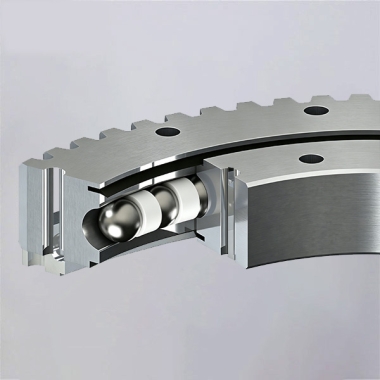
BY Bearings: custom 4-point contact slewing bearings for hea...
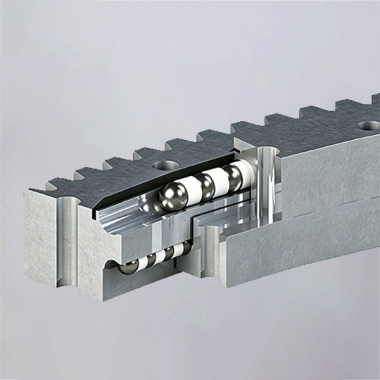
Double-row ball slewing bearings carry heavy loads. BY Beari...
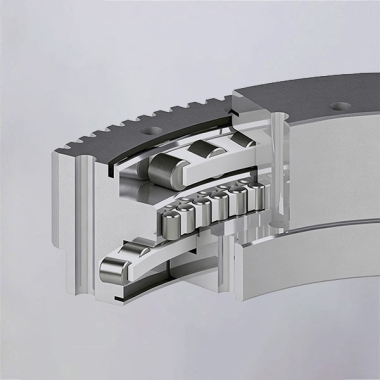
Three-row roller slewing bearing :structure, features, appli...
 +8618939019135
 sales@bybearings.com
 +8618939019135