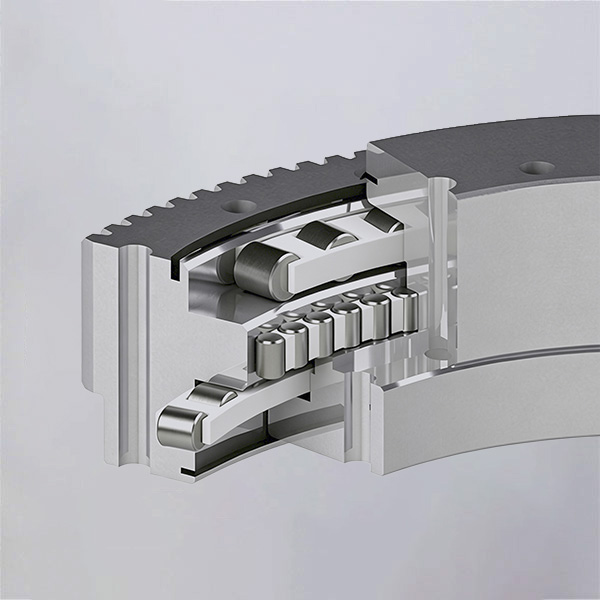
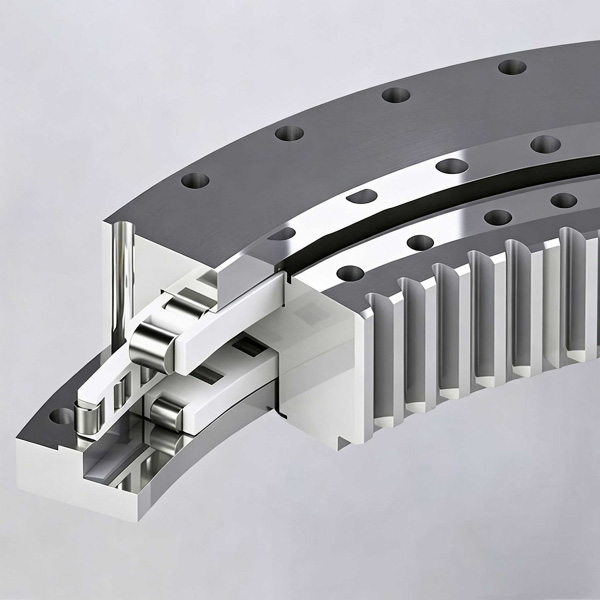

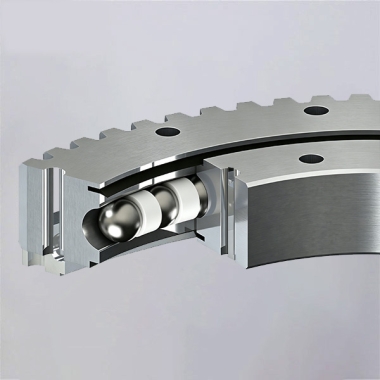
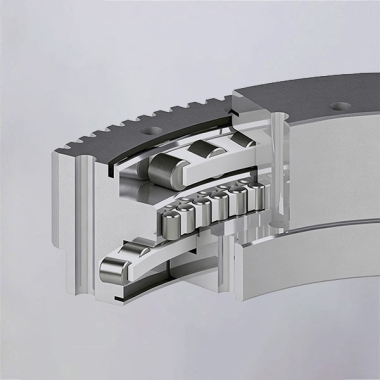
Three-row roller slewing bearings are engineered for heavy-duty applications requiring ultra-high load capacity, compact structure, and reliable performance under combined axial, radial, and overturning moment loads. This type of slewing bearing features a three-row cylindrical roller structure with independent upper, lower, and radial raceways. By distributing loads in different directions to separate rows of rollers, it effectively reduces the overall bearing diameter while significantly enhancing load-bearing efficiency and structural rigidity.
As one of the heavy-load slewing bearing series with exceptional carrying capacity, three-row roller slewing bearings are widely applied in heavy machinery and equipment, including lifting machinery, mining equipment, material handling systems, marine engineering machinery, and other large-scale rotating facilities that demand superior load support.
Raceway Quenching Hardness: HRC 55–62
External Diameter Range: 300 mm – 10,000 mm
Outer Diameter: 634 mm – 5,282 mm
Roller Diameter: 25 mm – 50 mm
Rated Load: 275 kN – 6,050 kN
Gear Type: No Gear / Internal Gear / External Gear
Lead Time: Approximately 30 Days
Ring Material: 42CrMo / 50Mn / C45
What Is a Three-row Roller Slewing Bearing?
In the realm of heavy industry, infrastructure, and large-scale mechanical engineering, managing massive loads while facilitating smooth rotational movement is an immense engineering challenge. When equipment must support extraordinary weights—often running into hundreds or even thousands of tons—standard bearings simply cannot withstand the operational stresses. To overcome this, engineers rely on specialized heavy-duty slewing bearings. Among the various configurations available, the three-row roller slewing bearing stands as the ultimate pinnacle of load-bearing capacity, rigidity, and precision.
A three-row roller slewing bearing is a highly engineered rotational component designed to support exceptionally heavy, slow-turning, or oscillating loads. Unlike single-row or double-row ball bearings, which rely on point contact between the rolling elements and the raceways, a three-row roller bearing utilizes cylindrical rollers with line contact. This design distributes stress over a significantly larger surface area.
BY Bearing specializes in providing high-capacity, precision-engineered rotational solutions that can be customized to meet customer requirements, capable of withstanding simultaneous axial loads, radial loads, and massive overturning moments. Utilizing premium materials (such as 42CrMo or 50Mn), precision heat treatment processes, and an outstanding track record of serving heavy-duty machinery across more than 100 countries, BY Bearing ensures exceptional load capacity, ultimate structural integrity, and reliable operation in the most critical applications.
Core Structure of a Three-row Roller Slewing Bearing
The unparalleled performance of this bearing begins with its sophisticated architecture. The three-row roller slewing bearing boasts a robust structural design with the following key features:
Three independent raceway design: The upper, lower, and radial raceways are entirely separated from one another. This spatial independence ensures that different load vectors do not interfere with the performance of adjacent rolling elements.
Three rows of cylindrical rollers: Each of the three raceways houses a dedicated set of cylindrical rollers positioned for directional load distribution. One row absorbs downward axial loads, a second row handles upward axial loads, and the third row manages radial forces.
Integrated inner and outer ring structure: The rings are forged from high-quality steel and machined to exact tolerances, providing extraordinary structural rigidity for the entire assembly.
Cage or spacer separation system: To prevent the cylindrical rollers from rubbing against one another and causing friction, a highly stable cage or spacer separation system is integrated, ensuring smooth and quiet rolling motion.
Flexible gearing options: Depending on the drive train of the machinery, these bearings can be manufactured with an optional internal gear, external gear, or in a completely gearless design.
Because each row of rollers independently bears specific directional loads, the bearing enables optimal load distribution, granting the machinery outstanding resistance to complex, multi-directional combined loads.
Key Features of a Three-row Roller Slewing Bearing
Designed for rigorous, heavy-duty working conditions, this slewing bearing delivers remarkable performance advantages over traditional slew rings:
Ultra-high load capacity: It offers unmatched axial and radial load capacity alongside exceptional overturning moment resistance.
Compact footprint: Despite its massive load-bearing capacity, it features a remarkably compact structure with high rigidity, helping to reduce the overall dimensions and weight of the surrounding machinery.
Optimized load distribution: The line contact of the cylindrical rollers ensures uniform stress distribution, enabling highly stable low-speed rotation even under extreme pressure.
Superior longevity: With excellent structural strength, these bearings exhibit minimal wear over long operational lifespans, reducing downtime.
Harsh environment reliability: They deliver consistent, reliable performance under heavy loads and within highly abrasive, corrosive, or extreme-temperature working environments.
Compared with single-row and double-row slewing bearings, the three-row roller design achieves a substantial upgrade in load capacity, making it the preferred choice for heavy machinery with extreme load requirements.
Premium Materials & Precision Heat Treatment
The extreme forces acting upon a three-row roller bearing mean that the choice of metallurgy and processing is critical to preventing premature failure.
Material Specifications
To ensure exceptional durability, high tensile strength, and long-term operational reliability, premium-grade materials are strictly adopted during manufacturing. The rings are typically forged from high-quality carbon structural steel or alloy steel, such as 42CrMo or 50Mn. These materials offer excellent yield strength and toughness, ensuring the bearing can flex slightly under extreme stress without cracking or undergoing permanent deformation.
Heat Treatment
The raceways where the cylindrical rollers travel undergo a precise, localized induction quenching heat treatment process. This thermal processing significantly enhances the surface hardness of the raceway tracks while maintaining a tough, ductile core within the steel rings. By increasing surface hardness, the bearing gains superior resistance to sub-surface fatigue, spalling, and abrasive wear, ensuring a prolonged service life even when operating continuously at maximum capacity.
How Does a Three-row Roller Slewing Bearing Work?
To understand the mechanical brilliance of a three-row cylindrical roller slewing bearing, one must look at how forces are compartmentalized within the unit.
In heavy equipment—such as an offshore crane lifting a deep-sea payload—the forces acting upon the slewing ring are rarely straight up and down. Instead, there is a massive downward weight (axial load), a sideways force from wind or swinging (radial load), and a tipping force caused by the extended boom (overturning moment).
In a three-row roller bearing, these forces are physically divided and managed by the three independent rows of rollers:
The Vertical Load Row: The horizontal raceways at the top and bottom contain rollers that handle vertical forces. One row takes the downward weight of the superstructure, while the opposite row secures the connection against upward pulling or tilting forces.
The Radial Load Row: Positioned vertically between the inner and outer rings, the third set of rollers acts as a barrier against horizontal or radial sliding forces.
When a drive pinion engages with the bearing’s gear teeth (whether internal or external), it rotates the inner or outer ring smoothly. Because the three rows of rollers segregate the axial, radial, and moment loads, none of the rollers are subjected to convoluted multi-directional stress. This division of labor results in effortless, friction-minimized rotation and exceptional stability under pressure.
Main Applications of Three-row Roller Slewing Bearings
Three-row roller slewing bearings are widely utilized in heavy-duty industrial sectors where extreme load capacity, structural rigidity, and operational reliability are absolute requirements.
In the lifting and construction machinery sector, these robust bearings serve as essential components in high-tonnage crawler cranes, harbor mobile cranes, shipyard heavy-lift cranes, and massive bridge-building equipment. They provide the necessary overturning moment resistance and stability to safely support heavy lifting booms and rotating superstructures.
For mining and mineral processing equipment, they deliver the immense rotational strength required for bucket wheel excavators, large-scale stackers, reclaimers, and massive rotary crushers. These machines operate in highly demanding, abrasive environments, and the line contact of the cylindrical rollers ensures that shock loads are evenly absorbed.
In material transportation and handling systems, these slewing rings facilitate the continuous, smooth operation of heavy-duty bulk handling equipment and large-scale ship loaders and unloaders.
Within marine and offshore engineering machinery, three-row roller bearings are engineered to endure harsh, corrosive saltwater elements while maintaining precise movement. They are critical for the safe functioning of deck cranes, offshore platform revolving cranes, and turret mooring systems for FPSO (Floating Production, Storage, and Offloading) vessels.
Additionally, they are heavily relied upon in heavy-duty rotary platforms and industrial automation equipment, such as ladle turrets in steel mills, where they ensure precise, controlled rotation under immense weight and high-temperature conditions.
How to Select the Right Three-row Roller Slewing Bearing?
Selecting the appropriate three-row roller bearing requires meticulous engineering calculations to ensure safety, efficiency, and longevity. When choosing a bearing for your application, several critical parameters must be evaluated:
Load Analysis: You must calculate the maximum operational loads, including the static and dynamic axial loads, radial loads, and overturning moments. The bearing’s rated capacity must comfortably exceed these maximum anticipated stresses.
Rotational Speed: Although three-row roller bearings are typically utilized in slow-rotating or oscillating applications, the required rotational speed (RPM) and duty cycle will influence the internal clearance and lubrication requirements.
Operating Environment: Consider external factors such as operating temperatures, exposure to seawater, dust, chemicals, or heavy vibrations. These factors dictate the need for specialized seals (e.g., double-lip NBR seals) or anti-corrosive surface coatings.
Dimensional Constraints: Evaluate the available mounting space, including the inner diameter, outer diameter, total height, and the pitch circle diameter (PCD) of the mounting bolt holes.
Drive Configuration: Determine whether internal gearing, external gearing, or a gearless connection is required to interface with your slewing drive motor or gearbox.
Consulting with an experienced engineering team helps ensure that your machinery is paired with a bearing that optimizes performance without over-engineering costs.
Common Failures and Maintenance of Three-row Roller Slewing Bearings
To prevent catastrophic equipment downtime and ensure operator safety, routine inspections and preventative maintenance are absolutely essential.
Preventative Maintenance Tips:
Lubrication Management: Establish a strict, consistent greasing schedule. Replenish the bearing with high-quality, extreme-pressure (EP) lithium or complex calcium grease at regular intervals. Pumping fresh grease purges old lubricant and flushes out accumulated contaminants like dust or metal particles, maintaining a protective film over the cylindrical rollers.
Mounting Bolt Torque Inspections: High-tensile mounting bolts are subjected to immense fatigue. These bolts must be checked periodically with a torque wrench to ensure they meet the recommended torque specifications, preventing ring rocking, fatigue, and bolt shearing.
Seal Inspection: Visually inspect the rubber seals regularly for signs of cracking, hardening, tearing, or dislodgement. Intact seals are the first line of defense in keeping abrasive dust and moisture out of the isolated raceways.
Troubleshooting Common Issues:
Abnormal Noise or Vibration: Grinding or clicking noises are often caused by insufficient lubrication, raceway indentations, or damaged cylindrical rollers. Immediately inspect the purged grease for metal particles and check the bearing clearance.
Stiff or Heavy Rotation: If the bearing becomes difficult to rotate, it may indicate excessive overloading, deformation of the surrounding mounting structure, or severe, uneven wear inside the raceway.
Lubricant Leakage: If grease begins bypassing the rubber seals, it could indicate damaged sealing lips or over-pressurization of the internal cavity during aggressive manual greasing. Replace damaged seals promptly and adjust grease application volumes.
Customized Slewing Bearing Solutions From BY Bearings
Every heavy-duty industrial application presents its own unique set of spatial limitations, load profiles, and environmental challenges. Off-the-shelf catalog components are not always a perfect fit for highly specialized machinery.
We provide customized three-row roller slewing bearing solutions tailored directly to customer engineering drawings, specific load requirements, precise installation dimensions, and severe operating environments. Comprehensive OEM and ODM services are readily available, covering custom gear module design, specialized high-temperature or sub-zero sealing systems, automated lubrication distribution channels, and special raw material processing or surface treatments.
Need the right slewing bearing for your project? At BY Bearings, the price of slewing bearings depends on size, material, and order volume. We offer factory-direct rates to keep your heavy-duty applications within budget without compromising on quality. Contact us today for expert technical advice, a free consultation, or a fast quote for your standard or custom bearing needs!
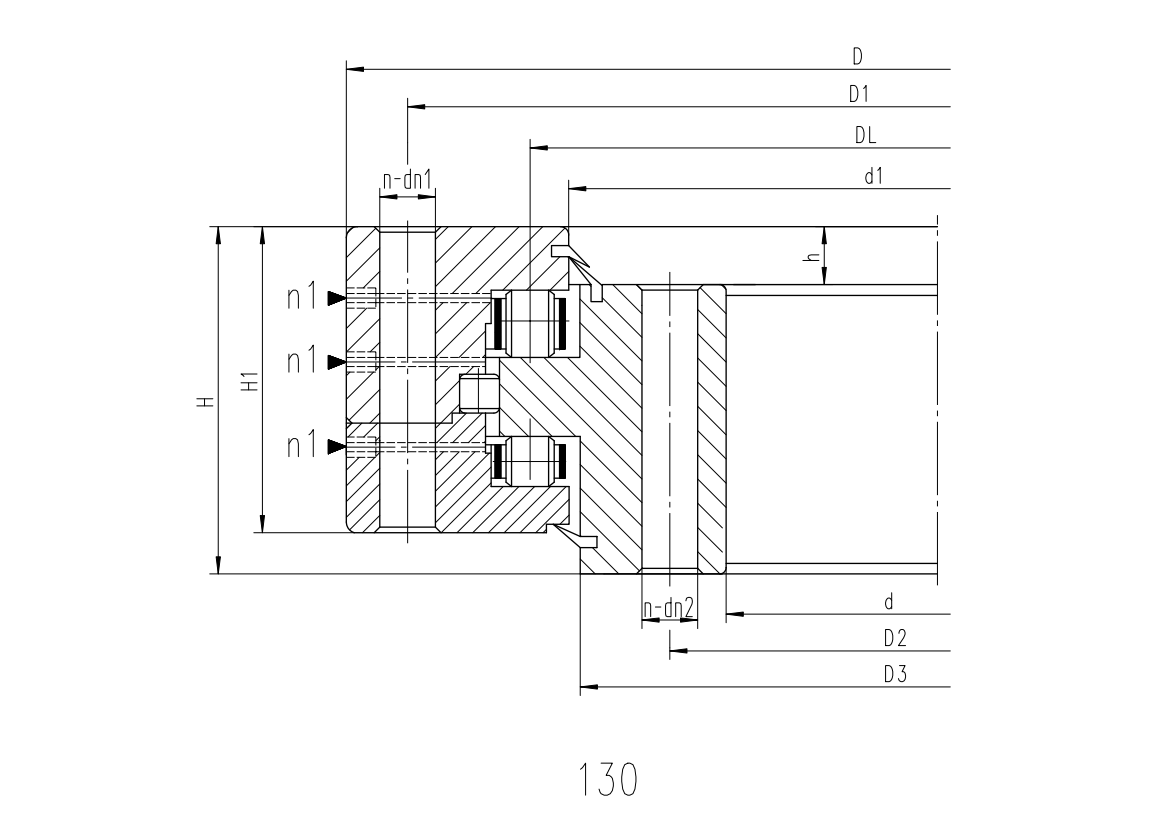
| Non-gear Type | ||||||||||
|---|---|---|---|---|---|---|---|---|---|---|
| Model | D (mm) | d (mm) | H (mm) | D1 (mm) | D2 (mm) | D3 (mm) | d1 (mm) | H1 (mm) | h (mm) | N.W (kg) |
| 130.25.500 | 634 | 366 | 148 | 598 | 402 | 474 | 463 | 138 | 32 | 201 |
| 130.25.560 | 694 | 426 | 148 | 658 | 462 | 534 | 523 | 138 | 32 | 225 |
| 130.25.630 | 764 | 496 | 148 | 728 | 532 | 604 | 593 | 138 | 32 | 255 |
| 130.25.710 | 844 | 576 | 148 | 808 | 612 | 684 | 673 | 138 | 32 | 285 |
| 130.32.800 | 964 | 636 | 182 | 920 | 680 | 770 | 759 | 172 | 40 | 482 |
| 130.32.900 | 1064 | 736 | 182 | 1020 | 780 | 870 | 859 | 172 | 40 | 545 |
| 130.32.1000 | 1164 | 836 | 182 | 1120 | 880 | 970 | 959 | 172 | 40 | 606 |
| 130.32.1120 | 1284 | 956 | 182 | 1240 | 1000 | 1090 | 1079 | 172 | 40 | 683 |
| 130.40.1250 | 1445 | 1055 | 220 | 1393 | 1107 | 1213 | 1200 | 210 | 50 | 1094 |
| 130.40.1400 | 1595 | 1205 | 220 | 1543 | 1257 | 1363 | 1350 | 210 | 50 | 1228 |
| 130.40.1600 | 1795 | 1405 | 220 | 1743 | 1457 | 1563 | 1550 | 210 | 50 | 1409 |
| 130.40.1800 | 1995 | 1605 | 220 | 1943 | 1657 | 1763 | 1750 | 210 | 50 | 1593 |
| 130.45.2000 | 2221 | 1779 | 231 | 2155 | 1845 | 1967 | 1945 | 219 | 54 | 2046 |
| 130.45.2240 | 2461 | 2019 | 231 | 2395 | 2085 | 2207 | 2185 | 219 | 54 | 2307 |
| 130.45.2500 | 2721 | 2279 | 231 | 2655 | 2345 | 2467 | 2445 | 219 | 54 | 2720 |
| 130.45.2800 | 3021 | 2579 | 231 | 2955 | 2645 | 2767 | 2745 | 219 | 54 | 3079 |
| 130.50.3150 | 3432 | 2868 | 270 | 3342 | 2958 | 3104 | 3090 | 258 | 65 | 4778 |
| 130.50.3550 | 3832 | 3268 | 270 | 3742 | 3358 | 3504 | 3490 | 258 | 65 | 5437 |
| 130.50.4000 | 4282 | 3718 | 270 | 4192 | 3808 | 3954 | 3940 | 258 | 65 | 6039 |
| 130.50.4500 | 4782 | 4218 | 270 | 4692 | 4308 | 4454 | 4440 | 258 | 65 | 6847 |
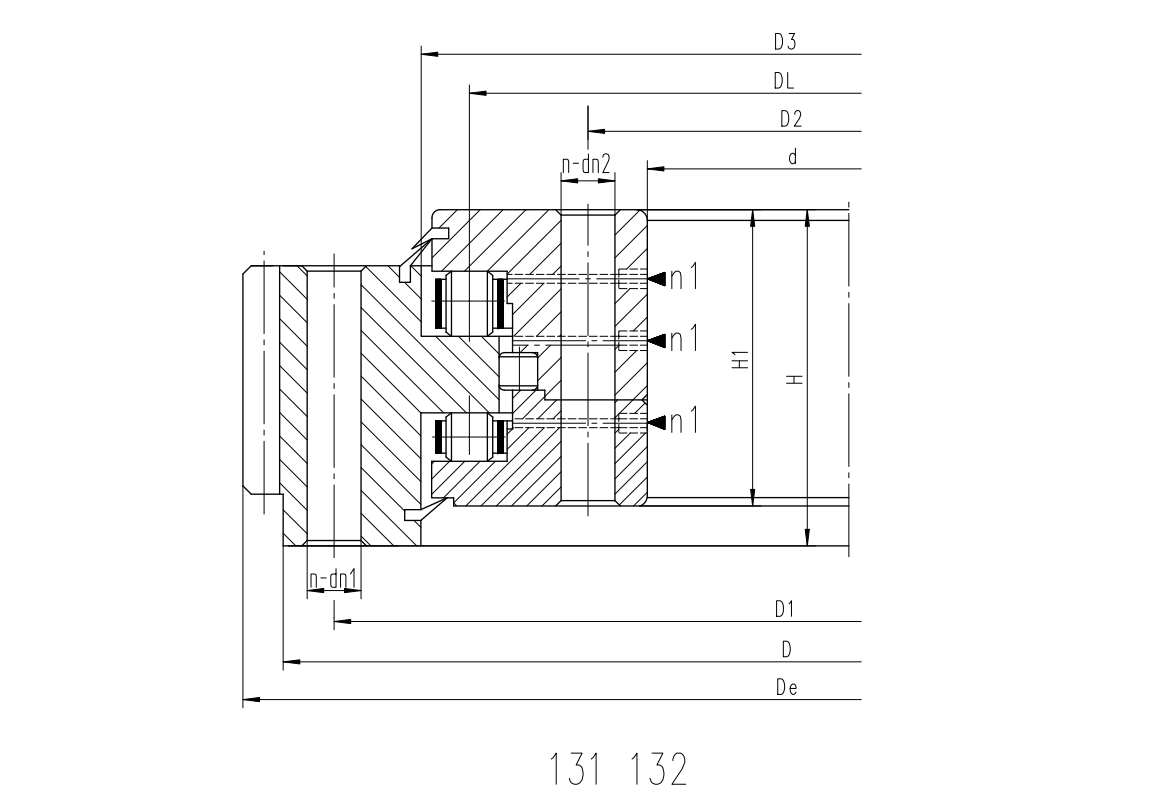
| External Gear Type | ||||||||||
|---|---|---|---|---|---|---|---|---|---|---|
| Model | D (mm) | d (mm) | H (mm) | D1 (mm) | D2 (mm) | D3 (mm) | d1 (mm) | H1 (mm) | h (mm) | N.W (kg) |
| 131.25.500 | 634 | 366 | 148 | 598 | 402 | 537 | 526 | 138 | 32 | 211 |
| 132.25.500 | 634 | 366 | 148 | 598 | 402 | 537 | 526 | 138 | 32 | 210 |
| 131.25.560 | 694 | 426 | 148 | 658 | 462 | 597 | 586 | 138 | 32 | 236 |
| 132.25.560 | 694 | 426 | 148 | 658 | 462 | 597 | 586 | 138 | 32 | 235 |
| 131.25.630 | 764 | 496 | 148 | 728 | 532 | 667 | 656 | 138 | 32 | 275 |
| 132.25.630 | 764 | 496 | 148 | 728 | 532 | 667 | 656 | 138 | 32 | 270 |
| 131.25.710 | 844 | 576 | 148 | 808 | 612 | 747 | 736 | 138 | 32 | 310 |
| 132.25.710 | 844 | 576 | 148 | 808 | 612 | 747 | 736 | 138 | 32 | 306 |
| 131.32.800 | 964 | 636 | 182 | 920 | 680 | 841 | 830 | 172 | 40 | 515 |
| 132.32.800 | 964 | 636 | 182 | 920 | 680 | 841 | 830 | 172 | 40 | 512 |
| 131.32.900 | 1064 | 736 | 182 | 1020 | 780 | 941 | 930 | 172 | 40 | 577 |
| 132.32.900 | 1064 | 736 | 182 | 1020 | 780 | 941 | 930 | 172 | 40 | 591 |
| 131.32.1000 | 1164 | 836 | 182 | 1120 | 880 | 1041 | 1030 | 172 | 40 | 662 |
| 132.32.1000 | 1164 | 836 | 182 | 1120 | 880 | 1041 | 1030 | 172 | 40 | 662 |
| 131.32.1120 | 1284 | 956 | 182 | 1240 | 1000 | 1161 | 1150 | 172 | 40 | 746 |
| 132.32.1120 | 1284 | 956 | 182 | 1240 | 1000 | 1161 | 1150 | 172 | 40 | 746 |
| 131.40.1250 | 1445 | 1055 | 220 | 1393 | 1107 | 1300 | 1290 | 210 | 50 | 1194 |
| 132.40.1250 | 1445 | 1055 | 220 | 1393 | 1107 | 1300 | 1290 | 210 | 50 | 1183 |
| 131.40.1400 | 1595 | 1205 | 220 | 1543 | 1257 | 1450 | 1440 | 210 | 50 | 1364 |
| 132.40.1400 | 1595 | 1205 | 220 | 1543 | 1257 | 1450 | 1440 | 210 | 50 | 1345 |
| 131.40.1600 | 1795 | 1405 | 220 | 1743 | 1457 | 1650 | 1637 | 210 | 50 | 1577 |
| 132.40.1600 | 1795 | 1405 | 220 | 1743 | 1457 | 1650 | 1637 | 210 | 50 | 1545 |
| 131.40.1800 | 1995 | 1605 | 220 | 1943 | 1657 | 1850 | 1837 | 210 | 50 | 1766 |
| 132.40.1800 | 1995 | 1605 | 220 | 1943 | 1657 | 1850 | 1837 | 210 | 50 | 1782 |
| 131.20.2000 | 1853 | 132 | 2105 | 1905 | 2030 | 2032 | 123 | 26 | 958 | |
| 131.25.2000 | 1819 | 147 | 2125 | 1885 | 2036 | 2026 | 138 | 30 | 1277 | |
| 131.45.2000 | 2221 | 1779 | 231 | 2155 | 1845 | 2055 | 2033 | 219 | 54 | 2254 |
| 132.45.2000 | 2221 | 1779 | 231 | 2155 | 1845 | 2055 | 2033 | 219 | 54 | 2235 |
| 131.25.2240 | 2059 | 147 | 2366 | 2125 | 2276 | 2266 | 138 | 30 | 1447 | |
| 131.32.2240 | 2022 | 181 | 2395 | 2100 | 2281 | 2270 | 172 | 42 | 2074 | |
| 131.45.2240 | 2461 | 2019 | 231 | 2395 | 2085 | 2295 | 2273 | 219 | 54 | 2626 |
| 132.45.2240 | 2461 | 2019 | 231 | 2395 | 2085 | 2295 | 2273 | 219 | 54 | 2584 |
| 131.25.2500 | 2319 | 147 | 2625 | 2385 | 2536 | 2526 | 138 | 30 | 1645 | |
| 131.32.2500 | 2282 | 181 | 2655 | 2360 | 2541 | 2530 | 172 | 42 | 2373 | |
| 131.45.2500 | 2721 | 2279 | 231 | 2655 | 2345 | 2555 | 2533 | 219 | 54 | 2925 |
| 132.45.2500 | 2721 | 2279 | 231 | 2655 | 2345 | 2555 | 2533 | 219 | 54 | 2867 |
| 131.25.2800 | 2619 | 147 | 2925 | 2685 | 2836 | 2826 | 138 | 30 | 1874 | |
| 131.32.2800 | 2582 | 181 | 2955 | 2660 | 2841 | 2830 | 172 | 42 | 2705 | |
| 131.40.2800 | 2562 | 220 | 2965 | 2640 | 2850 | 2837 | 210 | 50 | 3430 | |
| 131.45.2800 | 3021 | 2579 | 231 | 2955 | 2645 | 2855 | 2833 | 219 | 54 | 3221 |
| 132.45.2800 | 3021 | 2579 | 231 | 2955 | 2645 | 2855 | 2833 | 219 | 54 | 3233 |
| 131.32.3150 | 2932 | 181 | 3305 | 3010 | 3191 | 3180 | 172 | 42 | 2969 | |
| 131.40.3150 | 2912 | 220 | 3315 | 2990 | 3200 | 3187 | 210 | 50 | 4003 | |
| 131.50.3150 | 3432 | 2868 | 270 | 3342 | 2958 | 3213 | 3196 | 258 | 65 | 5276 |
| 132.50.3150 | 3432 | 2868 | 270 | 3342 | 2958 | 3213 | 3196 | 258 | 65 | 5260 |
| 131.32.3550 | 3332 | 181 | 3705 | 3410 | 3591 | 3580 | 172 | 42 | 3411 | |
| 131.40.3550 | 3312 | 220 | 3715 | 3390 | 3600 | 3587 | 210 | 50 | 4468 | |
| 131.50.3550 | 3832 | 3268 | 270 | 3742 | 3358 | 3613 | 3596 | 258 | 65 | 5998 |
| 132.50.3550 | 3832 | 3268 | 270 | 3742 | 3358 | 3613 | 3596 | 258 | 65 | 5944 |
| 131.32.4000 | 3782 | 181 | 4155 | 3860 | 4041 | 4030 | 172 | 42 | 3940 | |
| 131.40.4000 | 3762 | 220 | 4165 | 3840 | 4050 | 4037 | 210 | 50 | 5045 | |
| 131.50.4000 | 4282 | 3718 | 270 | 4192 | 3808 | 4063 | 4046 | 258 | 65 | 6833 |
| 132.50.4000 | 4282 | 3718 | 270 | 4192 | 3808 | 4063 | 4046 | 258 | 65 | 6772 |
| 131.40.4500 | 4262 | 220 | 4665 | 4340 | 4550 | 4537 | 210 | 50 | 5681 | |
| 131.50.4500 | 4782 | 4218 | 270 | 4692 | 4308 | 4563 | 4546 | 258 | 65 | 7809 |
| 132.50.4500 | 4782 | 4218 | 270 | 4692 | 4308 | 4563 | 4546 | 258 | 65 | 7674 |
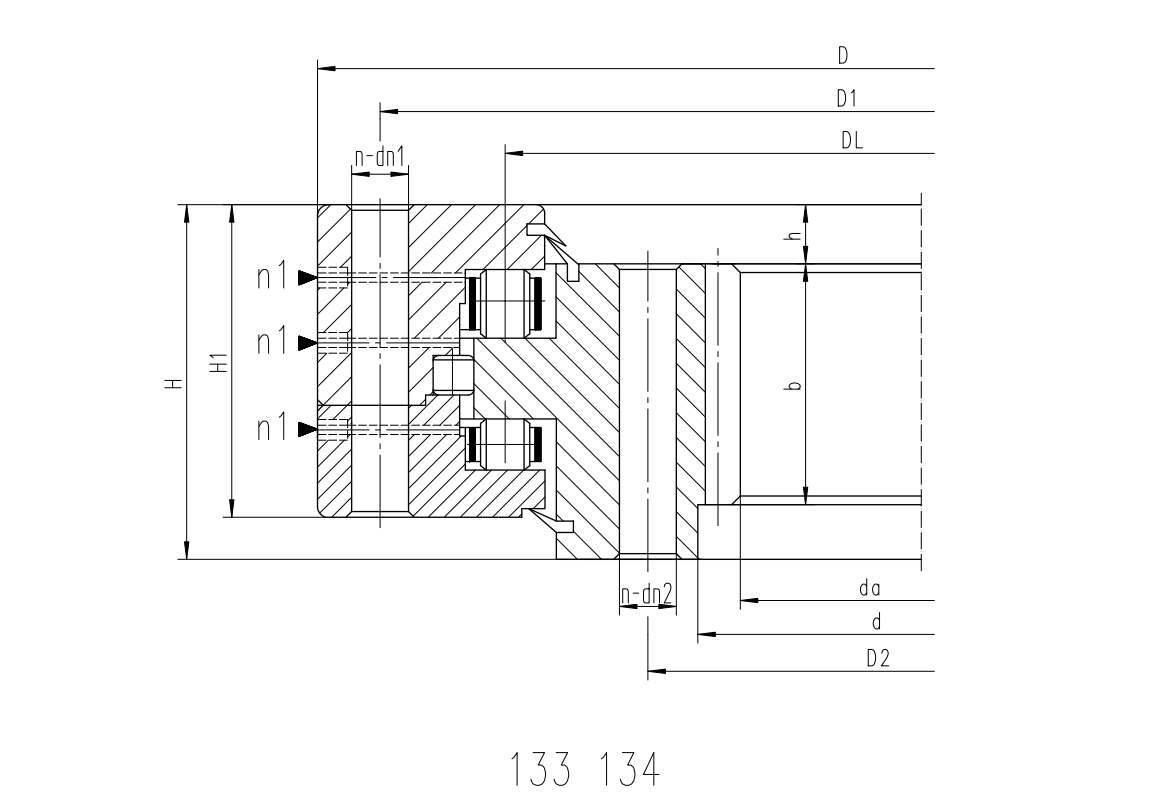
| Internal Gear Type | ||||||||||
|---|---|---|---|---|---|---|---|---|---|---|
| Model | D (mm) | d (mm) | H (mm) | D1 (mm) | D2 (mm) | D3 (mm) | d1 (mm) | H1 (mm) | h (mm) | N.W (kg) |
| 133.25.500 | 634 | 366 | 148 | 598 | 402 | 474 | 463 | 138 | 32 | 208 |
| 134.25.500 | 634 | 366 | 148 | 598 | 402 | 474 | 463 | 138 | 32 | 207 |
| 133.25.560 | 694 | 426 | 148 | 658 | 462 | 534 | 523 | 138 | 32 | 233 |
| 134.25.560 | 694 | 426 | 148 | 658 | 462 | 534 | 523 | 138 | 32 | 232 |
| 133.25.630 | 764 | 496 | 148 | 728 | 532 | 604 | 593 | 138 | 32 | 265 |
| 134.25.630 | 764 | 496 | 148 | 728 | 532 | 604 | 593 | 138 | 32 | 263 |
| 133.25.710 | 844 | 576 | 148 | 808 | 612 | 684 | 673 | 138 | 32 | 302 |
| 134.25.710 | 844 | 576 | 148 | 808 | 612 | 684 | 673 | 138 | 32 | 298 |
| 133.32.800 | 964 | 636 | 182 | 920 | 680 | 770 | 759 | 172 | 40 | 507 |
| 134.32.800 | 964 | 636 | 182 | 920 | 680 | 770 | 759 | 172 | 40 | 505 |
| 133.32.900 | 1064 | 736 | 182 | 1020 | 780 | 870 | 859 | 172 | 40 | 579 |
| 134.32.900 | 1064 | 736 | 182 | 1020 | 780 | 870 | 859 | 172 | 40 | 572 |
| 133.32.1000 | 1164 | 836 | 182 | 1120 | 880 | 970 | 959 | 172 | 40 | 649 |
| 134.32.1000 | 1164 | 836 | 182 | 1120 | 880 | 970 | 959 | 172 | 40 | 644 |
| 133.32.1120 | 1284 | 956 | 182 | 1240 | 1000 | 1090 | 1079 | 172 | 40 | 733 |
| 134.32.1120 | 1284 | 956 | 182 | 1240 | 1000 | 1090 | 1079 | 172 | 40 | 726 |
| 133.40.1250 | 1445 | 1055 | 220 | 1393 | 1107 | 1213 | 1200 | 210 | 50 | 1179 |
| 134.40.1250 | 1445 | 1055 | 220 | 1393 | 1107 | 1213 | 1200 | 210 | 50 | 1178 |
| 133.40.1400 | 1595 | 1205 | 220 | 1543 | 1257 | 1363 | 1350 | 210 | 50 | 1317 |
| 134.40.1400 | 1595 | 1205 | 220 | 1543 | 1257 | 1363 | 1350 | 210 | 50 | 1320 |
| 133.40.1600 | 1795 | 1405 | 220 | 1743 | 1457 | 1563 | 1550 | 210 | 50 | 1527 |
| 134.40.1600 | 1795 | 1405 | 220 | 1743 | 1457 | 1563 | 1550 | 210 | 50 | 1521 |
| 133.40.1800 | 1995 | 1605 | 220 | 1943 | 1657 | 1763 | 1750 | 210 | 50 | 1741 |
| 134.40.1800 | 1995 | 1605 | 220 | 1943 | 1657 | 1763 | 1750 | 210 | 50 | 1746 |
| 133.20.2000 | 2147 | 132 | 2095 | 1895 | 1968 | 1969 | 123 | 26 | 947 | |
| 133.25.2000 | 2181 | 147 | 2115 | 1875 | 1974 | 1963 | 138 | 30 | 1262 | |
| 133.45.2000 | 2221 | 1779 | 231 | 2155 | 1845 | 1967 | 1945 | 219 | 54 | 2220 |
| 134.45.2000 | 2221 | 1779 | 231 | 2155 | 1845 | 1967 | 1945 | 219 | 54 | 2218 |
| 133.25.2240 | 2421 | 147 | 2355 | 2115 | 2214 | 2203 | 138 | 30 | 1476 | |
| 133.32.2240 | 2458 | 181 | 2380 | 2085 | 2210 | 2199 | 172 | 42 | 2111 | |
| 133.45.2240 | 2461 | 2019 | 231 | 2395 | 2085 | 2207 | 2185 | 219 | 54 | 2569 |
| 134.45.2240 | 2461 | 2019 | 231 | 2395 | 2085 | 2207 | 2185 | 219 | 54 | 2528 |
| 133.25.2500 | 2681 | 147 | 2615 | 2375 | 2474 | 2463 | 138 | 30 | 1622 | |
| 133.32.2500 | 2718 | 181 | 2640 | 2345 | 2470 | 2459 | 172 | 42 | 2321 | |
| 133.45.2500 | 2721 | 2279 | 231 | 2655 | 2345 | 2467 | 2445 | 219 | 54 | 3005 |
| 134.45.2500 | 2721 | 2279 | 231 | 2655 | 2345 | 2467 | 2445 | 219 | 54 | 2976 |
| 133.25.2800 | 2981 | 147 | 2915 | 2675 | 2774 | 2763 | 138 | 30 | 1855 | |
| 133.32.2800 | 3018 | 181 | 2940 | 2645 | 2770 | 2759 | 172 | 42 | 2669 | |
| 133.40.2800 | 3038 | 220 | 2960 | 2635 | 2763 | 2750 | 210 | 50 | 3374 | |
| 133.45.2800 | 3021 | 2579 | 231 | 2955 | 2645 | 2767 | 2745 | 219 | 54 | 3372 |
| 134.45.2800 | 3021 | 2579 | 231 | 2955 | 2645 | 2767 | 2745 | 219 | 54 | 3370 |
| 133.32.3150 | 3368 | 181 | 3290 | 2995 | 3120 | 3109 | 172 | 42 | 2947 | |
| 133.40.3150 | 3388 | 220 | 3310 | 2985 | 3113 | 3100 | 210 | 50 | 3867 | |
| 133.50.3150 | 3432 | 2868 | 270 | 3342 | 2958 | 3104 | 3090 | 258 | 65 | 5201 |
| 134.50.3150 | 3432 | 2868 | 270 | 3342 | 2958 | 3104 | 3090 | 258 | 65 | 5234 |
| 133.32.3550 | 3768 | 181 | 3690 | 3395 | 3520 | 3509 | 172 | 42 | 3467 | |
| 133.40.3550 | 3788 | 220 | 3710 | 3385 | 3513 | 3500 | 210 | 50 | 4380 | |
| 133.50.3550 | 3832 | 3268 | 270 | 3742 | 3358 | 3504 | 3487 | 258 | 65 | 5920 |
| 134.50.3550 | 3832 | 3268 | 270 | 3742 | 3358 | 3504 | 3487 | 258 | 65 | 5992 |
| 133.32.4000 | 4218 | 181 | 4140 | 3845 | 3970 | 3959 | 172 | 42 | 3847 | |
| 133.40.4000 | 4238 | 220 | 4160 | 3835 | 3963 | 3950 | 210 | 50 | 5051 | |
| 133.50.4000 | 4282 | 3718 | 270 | 4192 | 3808 | 3954 | 3940 | 258 | 65 | 6569 |
| 134.50.4000 | 4282 | 3718 | 270 | 4192 | 3808 | 3954 | 3940 | 258 | 65 | 6582 |
| 133.40.4500 | 4738 | 220 | 4660 | 4335 | 4463 | 4450 | 210 | 50 | 5635 | |
| 133.50.4500 | 4782 | 4218 | 270 | 4692 | 4308 | 4454 | 4437 | 258 | 65 | 7392 |
| 134.50.4500 | 4782 | 4218 | 270 | 4692 | 4308 | 4454 | 4437 | 258 | 65 | 7463 |
BY Bearings: custom 4-point contact slewing bearings for hea...
Double-row ball slewing bearings carry heavy loads. BY Beari...
Three-row roller slewing bearing :structure, features, appli...
 +8618939019135
 sales@bybearings.com
 +8618939019135